AI visual inspection for pharma packaging: blisters, labels, tamper evidence

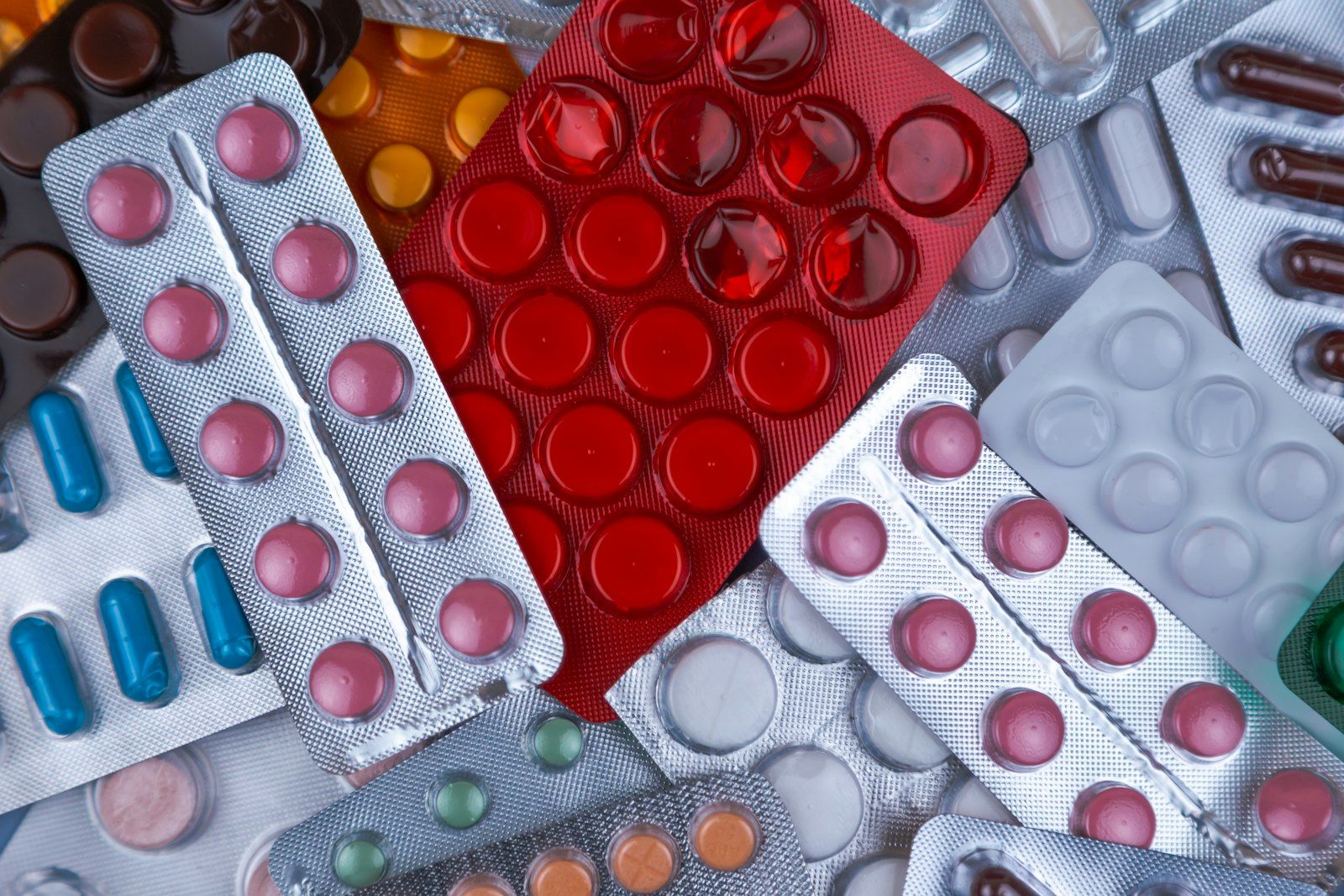
Packaging defects show up as a recurring cause in FDA and EMA pharmaceutical recall data year after year. Label mix-ups, blister seal failures, missing tamper evidence and illegible lot or expiry codes are not glamorous defects. They are also the defects that cost the most to unwind once a carton has left the warehouse.
Pharma packaging is one of the hardest QC jobs on the factory floor. Every carton carries a legal promise about contents, dose, expiry and provenance. A single misread lot code can trigger a recall worth millions. That is why the industry has invested in vision for decades. What is new is that AI visual inspection now handles the long tail of defects that rule-based vision has always struggled with, and it does so on a line running at 300 to 600 units per minute.
This post covers the defect families worth automating, where classic rule-based vision still wins, where AI visual inspection earns its keep, and how Enao Vision deploys an iPhone-based station on a pharma packaging line in days rather than weeks.
The four defect families on a pharma packaging line
Pharma QC teams usually group packaging defects into four families. Each one has a different failure mode and a different best-fit inspection tool.
1. Blister seal and cavity defects
Blister packs fail in small, visually subtle ways. An under-sealed pocket leaks moisture. A pinhole in the foil lets oxygen through. A missing or broken tablet in a pocket is a dose error waiting to happen. Fixed-rule vision catches the obvious cases (empty pocket, obvious seal break), but the long tail of partial seals, foil wrinkles and micro-pinholes is where inspection gets expensive.
AI visual inspection trained on a few hundred good-and-bad examples per SKU catches these subtle failures without hand-coded rules. The neural network learns what a good seal looks like and flags anything that deviates. That is the same pattern we write about in our guide to anomaly detection in manufacturing.
2. Label and carton print defects
This is the recall-risk category. A wrong label on a carton is a patient safety event. The specific failures are: incorrect SKU on carton, damaged or skewed label, ink smear on lot code, illegible expiry date, missing Braille embossing (required in the EU under Directive 2001/83/EC), and print defects on the variable-data fields.
Barcode and OCR engines handle the structured data well. They struggle on two fronts: low-contrast print on reflective foil, and fast changeovers where lighting shifts between SKUs. Both of those are exactly the cases where an AI model trained on the full range of line conditions outperforms a rule-based engine. See our lighting guide for AI visual inspection for why line lighting is the single biggest lever for print inspection accuracy.
3. Tamper evidence and closure integrity
Tamper bands on bottles, induction seals under caps, and child-resistant closures each have their own QC pattern. The failure modes are small, three-dimensional, and often only visible from a specific angle. A missing tamper band is obvious. A tamper band that is present but torn at one edge is the kind of defect that slips through a sampling-based QC regime and shows up later as a consumer complaint.
AI visual inspection handles these well because the model learns from the full distribution of good bottles, not a single reference template. That is the same logic we apply in food and beverage label and seal inspection, where the failure modes rhyme even if the regulatory frame is different.
4. Serialization and track-and-trace codes
Under the FDA's DSCSA and the EU's Falsified Medicines Directive, every saleable unit carries a 2D code with GTIN, serial number, lot and expiry. Inspection here has two jobs: verify the code is readable by a cold-reader, and verify the human-readable text next to it matches the code contents. The code-to-text mismatch is a classic failure mode after a printer ribbon change, and it is the kind of defect that costs a full batch rework when it is caught in the distribution center instead of on the line.
Where fixed-rule vision still wins
Rule-based machine vision is still the right tool for high-contrast, high-speed dimensional checks. Measuring blister dimensions, detecting presence or absence of a tablet in a pocket, reading a high-contrast printed lot code at 600 BPM: these are solved problems with a traditional vision system. There is no reason to re-solve them with a neural network. The useful mental model: rule-based vision handles the known-good inspection rules; AI visual inspection handles the long tail of 'I know it when I see it' defects. Our machine vision inspection guide walks through the decision tree for picking the right tool for each station.
Why AI visual inspection earns its keep in pharma
Pharma packaging lines share three features that favour AI-based inspection. First, SKU variety is high. A contract manufacturer may run 30 to 80 distinct SKUs through the same line in a month, each with its own artwork, carton size and label geometry. Recoding a rule-based system for each changeover is expensive; training a model that generalizes across the SKU family is not.
Second, the defect cost asymmetry is extreme. A missed dimensional variance costs a rework. A missed wrong-label event can cost a recall. That asymmetry justifies a second line of defense on the visually ambiguous defects, even if the first line of defense is already a rule-based system.
Third, GMP documentation requirements mean every inspection event already generates an audit trail. Adding an AI model that writes its decisions into the same batch record is incremental work, not a new compliance project. This is the same pattern Ford described in its MAIVS smartphone inspection program, where the inspection record sat alongside the existing quality documentation rather than replacing it.
How an Enao station fits on a pharma packaging line
Enao Vision deploys an iPhone-based inspection station that runs the model on-device. Hardware to get a station running lands under €1,000: a refurbished iPhone, a mount, cables and a ring light. The station connects to a local PLC or line controller over OPC UA and writes pass/fail plus image to the batch record. Data stays on-premise by default, which simplifies the 21 CFR Part 11 conversation with quality.
Deployment is fast because no PhD-level data scientist is needed to train the model. A line supervisor walks the line, labels 200 to 500 images per defect class, and the model is ready for a shadow run by the next shift. That is the same pattern we cover in what is AI visual inspection, and it is how we keep the total cost of ownership below a classic industrial camera plus IPC plus GPU bundle.
The honest limits
A few things AI visual inspection does not solve in pharma. It does not replace serialization readers for aggregated case codes; those are still a dedicated job for industrial cold-readers. It does not guarantee a zero false-reject rate on Day 1; a model that has seen 300 good examples will over-flag until it has seen 3,000. And it does not remove the GMP validation work; the model is part of the quality system and gets validated like any other QC device. What it does is widen the set of defects a single station can catch, and it does that without adding a new hardware vendor to the line.
Where to go next
If you are scoping a pharma packaging QC upgrade, three things are worth reading alongside this post. Our guide to AOI beyond PCB covers the general pattern of AOI in non-electronics lines. The industrial image processing guide is the foundational piece on how a vision system is structured. And the case study on Ford's smartphone-based inspection program is the best public-domain proof point for smartphone-based visual inspection at scale.
Want to see what an Enao deployment looks like on a pharma line? Try the demo and we will share deployment checklists, operator acceptance playbooks, and a reference bill of materials for a pharma blister or carton inspection station.
Get started
Want to see how Enao Vision works on your line? You can get started for free using an iPhone you already have, or try the demo to compare notes with other quality and operations teams putting AI on the shopfloor.
Explore with AI
Discuss this article with your favorite AI assistant
