Industrial image processing in 2026: the complete guide

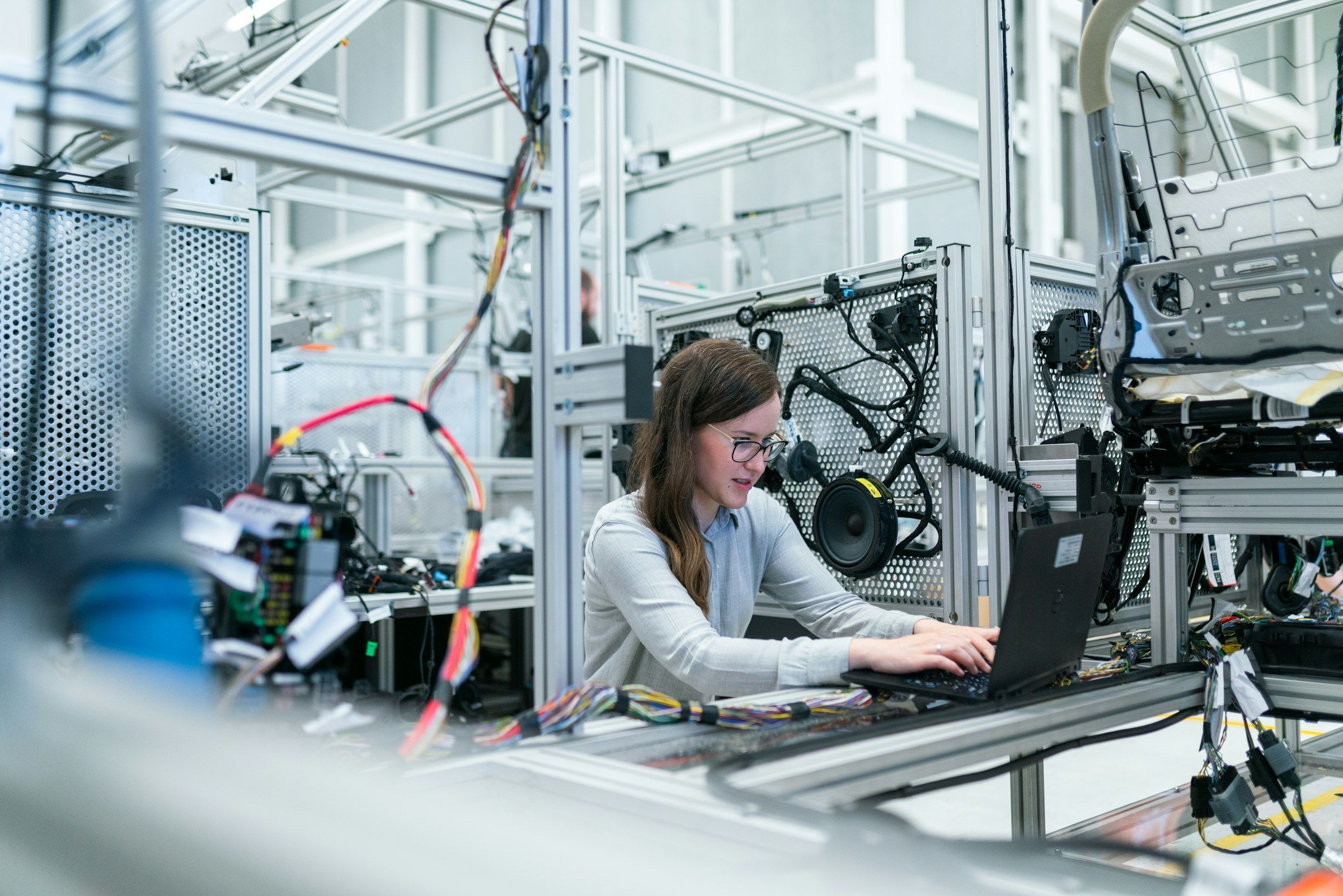
Industrial image processing runs quietly in the background of almost every modern production line. It inspects, measures, identifies and guides, and in manufacturing-heavy economies like Germany, Japan and the US, it is a core part of the quality infrastructure rather than a nice-to-have.
The landscape changed in 2026. Traditional camera systems from Basler, Cognex and Keyence now share the market with AI-first platforms that use smartphones as sensors. Entry-level costs have dropped by an order of magnitude, which opens the door for mid-size manufacturers that previously could not justify a six-figure machine vision project. This guide walks through what industrial image processing actually does, the four components you need, the vendor landscape and how to pick a system that fits your production reality.
What does industrial image processing mean?
Industrial image processing is the use of cameras and software to automatically evaluate images of products or processes. In English it usually goes by "machine vision." In practice, a camera captures an image, a computer analyzes it and the system makes a decision: the part is good, the barcode is correct or the component is mounted wrong.
The difference from consumer image processing is context. In manufacturing, speed, repeatability and robustness drive everything. Systems run 24/7, in factory lighting, dust and vibration, and they have to reach a decision in milliseconds so the line does not stop.
How does industrial image processing work?
Every system follows the same chain: capture an image, process the image, output a decision. It needs four components that have to work together.
The camera captures the image. Industrial applications usually run on 2 to 12 megapixels, and what really matters is the frame rate and long-term stability. Classic vendors like Basler, Allied Vision and Sony sell industrial cameras from roughly €500 upward. AI-first platforms now use iPhone sensors instead, which the consumer market has already pushed to 48 megapixels with built-in image stabilization.
The lighting is the most underestimated factor on the whole stack. Bad lighting blinds even the best camera. Ring lights, bar lights, dome lights and backlights are the four common configurations, each with a specific use case. Spend €200 more on diffused lighting before you spend €5,000 on a higher-resolution camera.
The software analyzes the image. This is where rule-based and AI-based systems split. Rule-based software works with fixed thresholds like pixel counts, edge detection and color comparisons. AI-based software learns from example images what "good" and "bad" actually mean. More on the cost split below.
The compute runs the software. Traditionally it sits on an industrial PC in a control cabinet next to the line. Modern AI platforms push the compute to the endpoint, for example the GPU inside an iPhone. That removes cables, cabinets and a lot of installation overhead.
What sits inside an industrial image processing system?
An industrial image processing system is more than a camera and a screen. It runs five layers of software and hardware in series for every inspection task. Knowing the layers helps when you compare vendor architectures or scope a project.
Image acquisition feeds the digital image from the camera over GigE Vision, USB3 or Camera Link. Frame rate, exposure and trigger jitter are the three numbers that decide whether the system can keep pace with the line.
Image analysis is the core. A high-resolution sensor outputs a 2D or 3D digital image that gets pre-processed (denoise, contrast, color normalization), then split into regions of interest. Object recognition algorithms either match against geometric templates (rule-based) or feed the image into a deep learning model trained on a labeled data set. Segmentation, classification and regression each get their own pass depending on what the inspection task actually asks for.
Decision logic converts the model output into a Pass/Fail signal, often combined with rule-based checks. This is where computer vision meets traditional automation.
Connectivity lets inspection systems publish that signal upstream. MQTT, OPC UA and PROFINET are the dominant protocols on production processes today. System integration with PLCs, MES and ERP is what turns a single inspection station into a quality assurance backbone for the whole plant.
Compute is the last layer. A high-performance industrial PC, an edge GPU or, in the AI-first camp, the GPU inside an iPhone runs the model inline. Inline placement matters because it removes the round trip to a server and keeps inspection real-time even on high-speed lines. The shift to on-device compute is the single biggest architectural change in industrial image processing systems since 2020. It only pays off, however, if your data processing pipeline tolerates compressed inputs and your camera latency budget is below 50 ms.
The five layers explain why product quality outcomes vary so much vendor to vendor. The same camera in a different software stack produces different defect detection results, and that gap is what AI-first vendors compete on.
Two ways to categorize industrial image processing
The question comes up in almost every first conversation. The answer depends on which axis you cut along. Two useful axes:
By analysis method: rule-based or AI-based. Rule-based systems are fast, deterministic and well-documented, but hit a wall when defect patterns vary. AI-based systems handle variation but need training data. Most production lines today run hybrid: a rule verifies dimensions while an AI model catches surface defects.
By dimension: 2D or 3D. 2D image processing works with flat images and detects contrast, pattern and shape. 3D image processing captures spatial information through laser scanning, structured light or stereo cameras. You need it wherever volume, form or surface topology matters, like in automotive assembly or weld seam inspection.
Our guide on anomaly detection versus defect detection in manufacturing covers the two main AI approaches in more detail.
Where industrial image processing is used
Four application areas cover about 90 percent of industrial installations.
Quality control uses cameras to check for surface defects, missing parts, wrong orientation and color drift. This is the highest-volume use case and the area where AI has grown fastest over the past two years.
Measurement captures dimensions and tolerances during the process. Measuring a crankshaft to tenths of a millimeter while it moves on the conveyor is now a real-time operation.
Identification and traceability reads barcodes, Data Matrix codes, serial numbers and plain text. Every packaging line and every pharma production line has at least one of these installed.
Robot guidance gives the robot coordinates for where to pick or place a part. This is where industrial image processing overlaps with robotics, and the integration of the two fields is one of the strongest growth drivers in 2026.
Industrial image processing vendors
The market splits into two camps in 2026.
Traditional vendors have sold complete solutions of camera, lighting, industrial PC and software for decades. Basler in Germany is the largest German-origin vendor and mostly sells cameras and frame grabbers. Cognex in the US owns the premium segment for code reading and barcode scanning. Keyence competes on technical conservatism and a massive field sales operation. Sick is strong in automotive. Zeiss, Omron, Teledyne and Matrox round out the field. A full installation from a traditional vendor typically runs €20,000 to €80,000 per inspection station, with integration and commissioning usually billed on top.
AI-first vendors have appeared over the past five years and take a software-centric approach. Landing AI in the US emerged from Andrew Ng's orbit and targets enterprise accounts. Maddox.ai, Ethon.ai and Elementary ML each serve a specific niche. Enao Vision in Berlin uses iPhones as the sensor, and the hardware to run a pilot (refurbished iPhone, lamp, cables, mount) comes in under €1,000 and gets you running in days, not months. AI-first vendors do not compete on maximum frame rate or pixel resolution. They compete on setup time, flexibility and total cost over five years.
Which camp fits you depends less on technology than on your production structure. A high-speed stamping line that runs the same part for years suits a traditional system. A contract shop with weekly product changes benefits far more from a flexible AI solution. For a direct comparison, see our breakdown of the best AI machine vision systems for manufacturing.
What a typical installation costs
The cost spread is enormous, and it hinges on three levers: hardware, software and integration.
A traditional system per inspection station:
- Camera: €500 to €5,000
- Lighting: €300 to €2,000
- Industrial PC: €1,500 to €8,000
- Software license: €2,000 to €15,000 (often per camera, often annual)
- Mechanics and wiring: €2,000 to €10,000
- Integrator labor: €5,000 to €15,000
- Total: €20,000 to €80,000 per station, three to six months from order to production use.
An AI-first platform with an iPhone sensor changes the math. The hardware to run Enao (refurbished iPhone, lamp, cables, mount) costs under €1,000, and we bring three weeks of onboarding. It goes live in days. Subscription software sits in the low-to-mid three-figure monthly range per workstation. The question is no longer whether AI-based systems are cheaper but whether your process tolerances work with a consumer-grade sensor. For 95 percent of surface inspection in discrete manufacturing, the answer is yes.
What has changed since 2024
Three developments have reset industrial image processing over the past two years.
First, on-device AI has matured. The GPU inside an iPhone 15 or 16 runs neural networks fast enough to analyze images in real time without sending them to the cloud. That reduces latency, cuts privacy risk and simplifies the IT architecture on the factory floor.
Second, setup costs have collapsed. Where an integrator billed €20,000 for commissioning two years ago, a production associate now trains the model themselves with 50 example images. Software vendors have cut the barriers deliberately so production teams can operate without external dependencies.
Third, the labor shortage is driving adoption. Manufacturers across Germany, Japan and the US cannot find enough quality inspectors. Teams that used to rely on manual sampling have to close the gap with technology. Industrial image processing in 2026 is less an efficiency project and more a necessity project.
Core algorithms that run under the hood
Every industrial image processing system, whether it runs on a smart camera, a rack-mounted PC, or an iPhone, relies on a small set of foundational software algorithms. Morphology handles shape analysis: dilations, erosions, opening and closing operations that clean up noisy binary images before defect classification runs. OCR reads printed text on labels, batch codes, and expiration dates, which matters far more on packaging lines than most buyers realise. Barcode and 2D matrix code recognition sit next to OCR in the pipeline and share most of the pre-processing steps. Segmentation carves the image into regions of interest so downstream models see only what matters. Edge detection finds boundaries between materials or between a part and the background. These techniques were the whole toolkit ten years ago. In 2026 they still run underneath every AI model, because deep learning on top of raw pixels without a clean pre-processed input rarely holds up on a real production line.
Time-of-flight sensing adds a third dimension to the image. Instead of measuring reflected colour, a time-of-flight camera measures how long light takes to bounce back. That gives depth per pixel, which is what mobile robots and industrial pick-and-place cells use to see the world in three dimensions. Modern iPhones ship with a time-of-flight sensor called LiDAR, which is why Enao Vision customers can run depth-aware automated inspection on the same hardware that reads barcodes and detects surface defects.
Automated inspection, process control, and predictive maintenance
Industrial image processing rarely lives alone. It plugs into automated inspection stations that decide pass or fail, into process control loops that adjust upstream parameters when defects trend up, and into predictive maintenance systems that watch the imaging rig itself for drift. A camera whose exposure histogram is shifting week over week is telling you the light source is aging or the lens is dusty. Good software flags that before the defect miss rate rises. This is quiet plumbing that separates a proof of concept from a system that survives three shifts a day for two years.
Process control integration is the second half of the plumbing. When defect rates climb on a stamping line, the image processing system can trigger a PLC signal to slow the line, alert the operator, and log the event for later root cause analysis. That closed loop is the difference between a passive inspection camera and an active quality control participant, and it is one of the questions worth asking every vendor.
Mobile robots and the image processing they carry
Mobile robots, whether autonomous mobile robots (AMRs) or automated guided vehicles (AGVs), all carry cameras. The image processing that runs on those robots handles navigation, obstacle avoidance, and sometimes point-of-use inspection. The pipeline is the same as a fixed inspection cell: acquire, pre-process with morphology and edge detection, segment, classify. The difference is that the compute has to fit in a battery-powered chassis, which is why lightweight software algorithms and efficient GPU inference matter even more on mobile than on a fixed line. Vendors who quote the same throughput numbers for fixed and mobile deployments are usually stretching the truth on one or the other.
Point-of-use inspection from an AMR is one of the newer 2026 patterns. Instead of building a fixed inspection cell at every station, one robot rolls between stations, captures images, and runs the same image processing pipeline on each. The economics only work when the software runs on modest hardware, which is where deep learning models optimised for edge devices earn their keep.
How to pick the right system for your line
Three questions clear up direction in the first 30 minutes.
How often do you change products? If your line runs the same part for months, a deeply integrated classical system pays off. If you change weekly or daily, you need a solution with fast retraining or changeover setup.
How variable are your defects? Uniform defects like missing screws or unreadable codes are rule-based territory. Surface defects, color drift and small deformations need AI.
Where does data have to live? Traditional systems mostly run locally. AI platforms offer cloud or on-device options. For regulated industries like pharma or automotive, this one question can decide the entire architecture.
A practical rule from our own customer work: start small. Put a pilot on one line, check one defect type, run two weeks side by side with the manual process. If detection rates convince you, scale. Shops that try to wire up ten stations on day one almost always land in a setup thicket that drags on for months. As we covered in our guide on lean production with AI and automation, incremental adoption beats big-bang rollouts every time.
Getting started
Industrial image processing in 2026 is no longer a project for large corporations with in-house vision teams. Mid-size manufacturers with 50 to 500 employees now set up first systems themselves, pushed by customer quality demands and QA staffing shortages.
If you are deciding where to start, take the defect type that costs you the most money today. Calculate what a one-percent reduction in scrap would yield over a year. That number is your budget for the pilot.
You need a refurbished iPhone, a lamp, cables and a mount for a first pilot (under €1,000 in hardware), plus hands-on onboarding from us. If you want to compare notes with other production leaders putting industrial image processing into practice, join the try the demo and share your questions.
For an industry-specific worked example on extrusion lines, see how the same approach catches die lines, plate-out, sink marks and dimensional drift on Enao's PVC profile inspection page.
Get started
Want to see how Enao Vision works on your line? You can get started for free using an iPhone you already have, or try the demo to compare notes with other quality and operations teams putting AI on the shopfloor.
Explore with AI
Discuss this article with your favorite AI assistant
