AI for food and beverage QC: label, seal, fill, cap defects

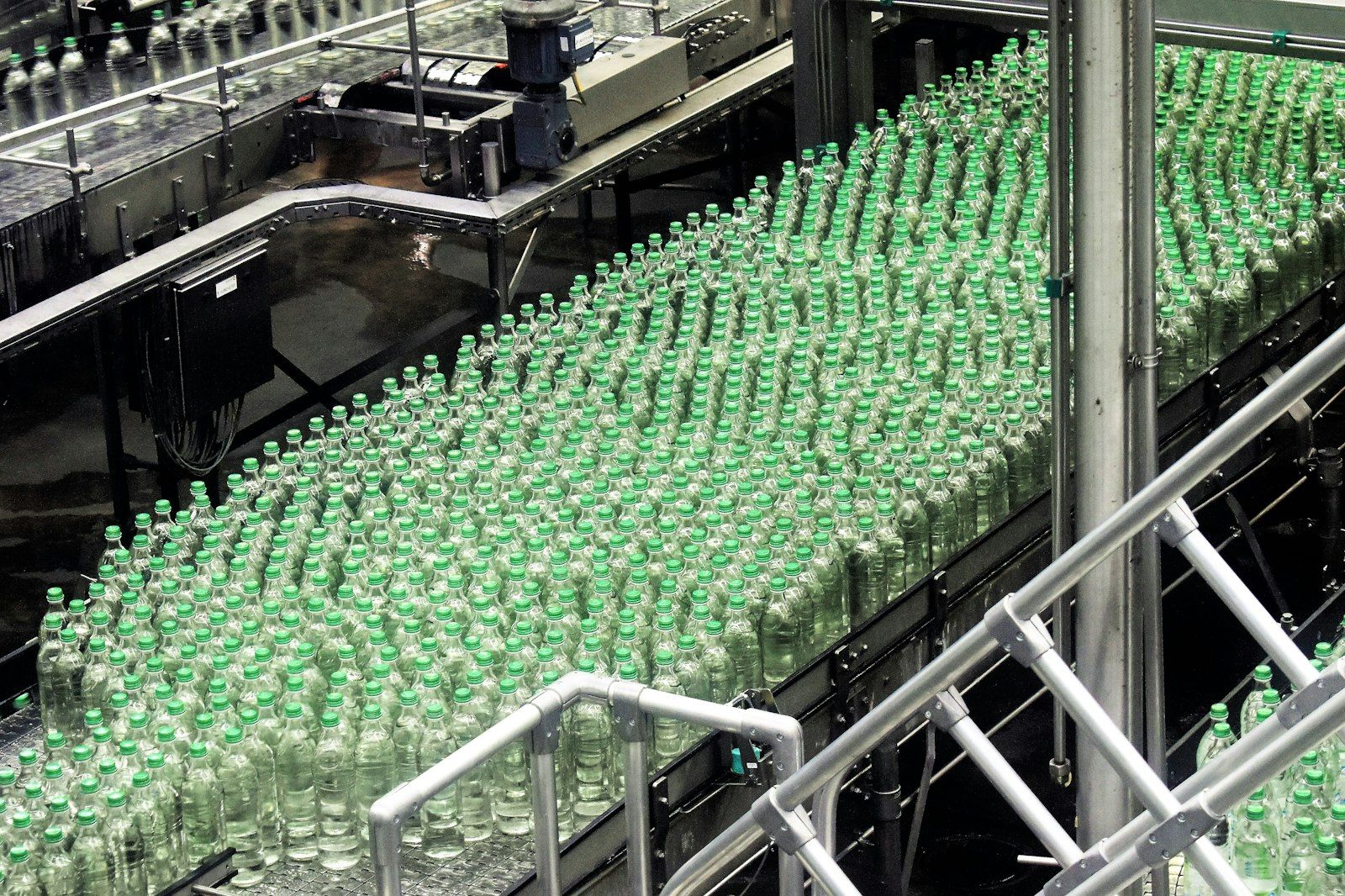
Label and seal issues dominate the packaging-related tail of FDA food recall data. Those are exactly the defects a fixed-rule vision system misses at line speed. AI visual inspection is quietly rewriting the category.
Food and beverage has been cautious about AI on the line for a reason. Recall costs are eye-watering, line downtime is priced per minute, and the installed base of fixed-rule AOI is deep. What changed in 2025 is that consumer-grade hardware now handles high-BPM lines, including 600 bottles per minute, not just dedicated industrial cabinets.
Label defects
Three label defect classes dominate recall data. Misregistration of the primary label onto the wrong bottle, lot-code legibility drift as the inkjet head clogs through a shift, and wrong artwork shipped when the line changed over between brands.
Each of these is a hard case for rule-based AOI. Misregistration drifts across hundreds of millimetres during the shift as label rolls stretch. Inkjet legibility is a visual pattern that degrades in stages. Wrong artwork is a recognition task, not a geometric tolerance.
AI models learn these patterns from a few thousand labeled good and bad shots and hold calibration across a shift. More importantly, they handle new SKUs with a five-minute retrain, not a two-hour recipe update.
Seal defects
Induction seals on peanut butter, baby food, and pharma-grade foods have tight regulatory requirements. Incomplete seals let air in. Heat-seal wrinkles on coffee pouches produce slow leakers that do not fail a bulge test for weeks but fail shelf-life by months.
AI inspection catches both at line speed because the model learns the correct seal geometry per SKU, not a tolerance box. Wrinkled or incomplete seals show up as high-anomaly flags within the same 30-millisecond window the product spends under the camera.
Fill defects
Under-fill is the marketing claim risk. Overfill is the cost risk. Container breakage on the line is the downtime risk.
All three show up in camera data in different ways. Fill level is an edge-detection problem. Container breakage is an anomaly problem because a cracked bottle looks unlike any good bottle in ways a rule cannot fully enumerate. A single camera with two models running concurrently handles all three on the lines we have deployed.
What 600 BPM means for camera choice
Six hundred bottles per minute is ten bottles per second. Each bottle has roughly 100 milliseconds in the inspection zone before it exits frame. Inference, decision, and reject-gate trigger all need to fit in that window.
Modern edge compute on consumer hardware handles 50-millisecond inference comfortably. That leaves 50 milliseconds for camera capture and reject-gate control. Industrial cameras still win on sub-millisecond sync when multiple cameras per bottle are needed, but single-camera stations have hit parity.
What AI brings that fixed-rule AOI does not
Three specific things. Zero programming time for a new SKU, because the model learns from images rather than a rule set. Better recall on defects that sit in the gap between classes (a smudged lot code is neither missing nor wrong-shaped, it is degraded). And lower false-positive rates, which in a food plant translates directly to fewer legitimate products sent to scrap.
For the broader manufacturing picture, see the 20 manufacturing use cases and our end-of-line QC overview. For a broader foundation, the pillar on machine vision inspection covers the full category.
Enao Vision ships food-grade stainless housings around iPhones for label, seal and fill applications. In our deployments, OEE uplift is typically visible within the first few shifts, and sites without wired ethernet run on an optional 5G hotspot. The value is not the camera; it is the speed of onboarding a new SKU and the recall that never happens.
The category is shifting. Fixed-rule AOI will keep its place on monolithic single-SKU lines. Every bottling or packaging line that changes over more than once per shift is a candidate for AI inspection, and the 71 percent of packaging-related recalls is the reason the shift is happening now.
Related reading: Enao's automated savoury snack inspection page walks through the same approach for chips, crisps and extruded snacks, with the seven defect families and a recipe for the optical setup.
Bakery extension: Enao's automated cookie and biscuit inspection page walks through the same approach for soft-bake cookies, rotary-moulded biscuits, and decorated lines, with the seven defect families and the optical setup.
Running a bottling, label or seal line and want to compare notes? Other teams working through 300+ BPM constraints hang out in our try the demo.
Get started
Want to see how Enao Vision works on your line? You can get started for free using an iPhone you already have, or try the demo to compare notes with other quality and operations teams putting AI on the shopfloor.
Explore with AI
Discuss this article with your favorite AI assistant
