10 defects AI catches that humans miss

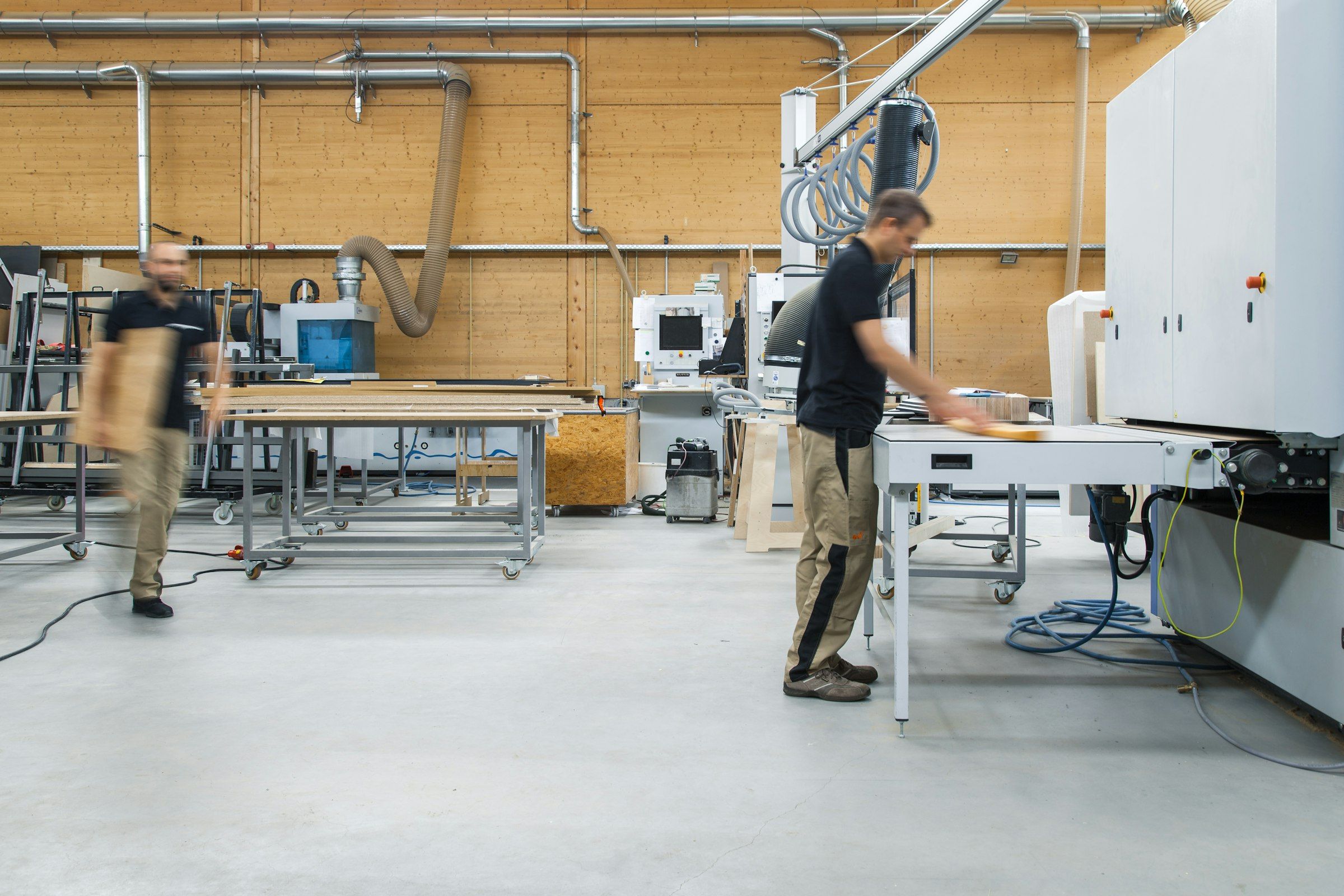
Defects AI catches that humans miss are visual quality flaws where the gap between trained inspector accuracy and machine vision accuracy is biggest. Quality Digest's 2024 industry survey put average manual visual inspection accuracy at 80%. On a line running 10,000 parts per shift, that means 2,000 mistakes go out the door every day from inspection alone. The 10 defects below are the ones where the gap is widest, based on four years of side-by-side comparisons on real production lines.
This is not a pitch that humans are bad at inspection. Humans are still excellent at novel, context-heavy calls. They are predictably weak at the 10 defect types below, for reasons a well-trained AI model turns on its head.
1. Why do humans miss sub-millimetre surface defects at line speed?
Above roughly 25 parts per minute, humans lose the ability to reliably spot defects smaller than 0.5 mm. AI cameras running at 60 frames per second plus resolve 10 times that detail and never blink. This gap is biggest on ceramic tiles, where pinholes below 0.3 mm cause returns that nobody could have caught manually.
2. How do slow-drift color shifts fool manual inspectors?
Manual inspectors anchor to the last part they saw. When a colour shifts by 2 to 5 Delta E over an eight-hour shift, each individual part looks fine relative to the previous one. By shift end the product is visibly off-spec. AI models evaluate every part against a fixed reference and catch the drift within a handful of parts.
3. Why are low-contrast defects on textured surfaces so hard for humans?
Wood grain, brushed metal, stucco and fabric weaves all camouflage defects. Humans adapt well to one texture but struggle to carry the skill across product families. Trained models handle multi-texture inspection without context-switching cost.
4. How does AI handle presence-absence on complex sub-assemblies?
On a sub-assembly with 40+ components, humans can reliably track maybe 12 to 15 as "must be present". Every additional component is an increase in miss rate. AI checks every component on every part, every time. This is the biggest driver of ROI in our manual assembly use case.
5. Why do orientation errors on symmetric-looking parts slip through?
Bearings, diodes, spacers, seals and some fasteners have subtle markings that indicate correct orientation. Humans rely on touch and expectation, which is why orientation errors often make it into the field before anyone notices. A model trained on both orientations catches 99.5%+ of rotational errors.
6. How do intermittent defects at shift transitions reveal AI's edge?
Quality drops measurably in the last 90 minutes of every shift. That is when fatigue-related misses concentrate. AI accuracy stays flat for 24 hours straight. Our end-of-line quality control post has the shift-variance charts.
7. What makes translucent material inclusions so hard to see?
Bubbles and inclusions inside translucent plastics, glass and resins are extremely hard to see under standard lighting. Humans compensate with tilting, lifting and back-lighting, which slows throughput. Models trained on tuned illumination see through these materials consistently.
8. How does AI catch non-conformant weld seam profiles?
Humans can spot obvious weld spatter. They struggle with subtle seam-profile deviations that correlate with fatigue failures downstream. Laser-profile plus deep-learning analysis measures the actual bead geometry and flags non-conformant profiles before they ship.
9. Why do tiny foreign particles escape the human eye?
Metal flakes, plastic shavings and hair contaminants under 0.2 mm are below the reliable detection threshold of the human eye at normal distances. Vision systems with tuned macro optics handle this routinely and are the foundation of most food and pharma contamination screening.
10. How does AI catch combined-cause defects?
Some defects are a combination of two or three subtle signals that individually look fine. A slight color shift plus a small dimensional drift plus a faint surface mark. Humans rarely connect the three; they rely on one dominant signal. Multi-modal AI models combine all three and flag the compound defect.
What this list does not say
None of this says AI replaces inspectors. A good quality operation uses AI to remove the 10 failure modes above from the manual workload, which frees inspectors to focus on context-heavy novel calls that AI still handles poorly. The right frame is AI plus inspector, not AI instead of inspector. Our lighting guide shows how this split works in practice when the hardware is right.
A sensible next step: pull one returns report from the last quarter and map each return to the list above. If more than 30% of returns match one of these 10 patterns, a two-week AI pilot on one line usually pays back within a quarter. For more context on what modern AI visual inspection does, see what is AI visual inspection. For the full evaluation framework when choosing a platform, the visual inspection software buyer's guide has the checklist.
If you want to test the defect patterns above on your own line, send three images of any defect type and Enao Vision will run them through our demo model within 48 hours.
Frequently asked questions about defects AI catches that humans miss
Where is the human-vs-AI inspection gap biggest?
On sub-millimetre defects at line speed, low-contrast or translucent surface flaws, slow color drifts across shifts, and combined-cause defects where two minor flaws compound. Inspectors hold the line on parts that need judgement, context, or rework decisions, and on rare scenarios the model has not seen yet.
Does this mean AI replaces visual inspectors?
No. AI carries the high-volume, low-judgement portion so trained inspectors spend their time on edge cases, root-cause analysis, and supplier feedback. The team keeps its ownership of quality, with one extra pair of eyes that does not get tired.
What defect-catch rate is realistic for a well-trained AI model?
On a stable line with a clean dataset and the patterns above, recall in the high 90s for the targeted defect classes is achievable, alongside a false-positive rate the team can live with. The honest answer is that you measure on your own line during a pilot before quoting numbers internally.
How fast does an AI inspection pilot pay back?
Most pilots quantify a payback inside one shift cycle once they map avoided rework, escape complaints, and inspector hours back to the bottom line. With hardware under €1,000 (a refurbished iPhone, a lamp, a mount), the upfront cost is small enough that the return shows up in the first month rather than the first quarter.
Key takeaways
- Quality Digest's 2024 survey put average manual visual inspection accuracy near 80%, which sets a clear baseline against which AI gains are measured.
- The biggest catch gap shows up on sub-millimetre, low-contrast, translucent, slow-drift, and combined-cause defects, exactly the cases line speed and fatigue blunt human attention.
- AI is not a replacement for trained inspectors; it is the second pair of eyes that keeps watching when the line speeds up or the shift turns over.
- Map each pattern back to a returns line, a complaint code, or a rework cell on your shop floor before scoping a pilot, otherwise you are buying capability without a payback.
- A pilot starts with a refurbished iPhone, a lamp, and a mount, hardware well under €1,000, with the data, training, and tuning living inside Enao Vision rather than on your team's desk.
