End-of-line quality control with AI in 2026

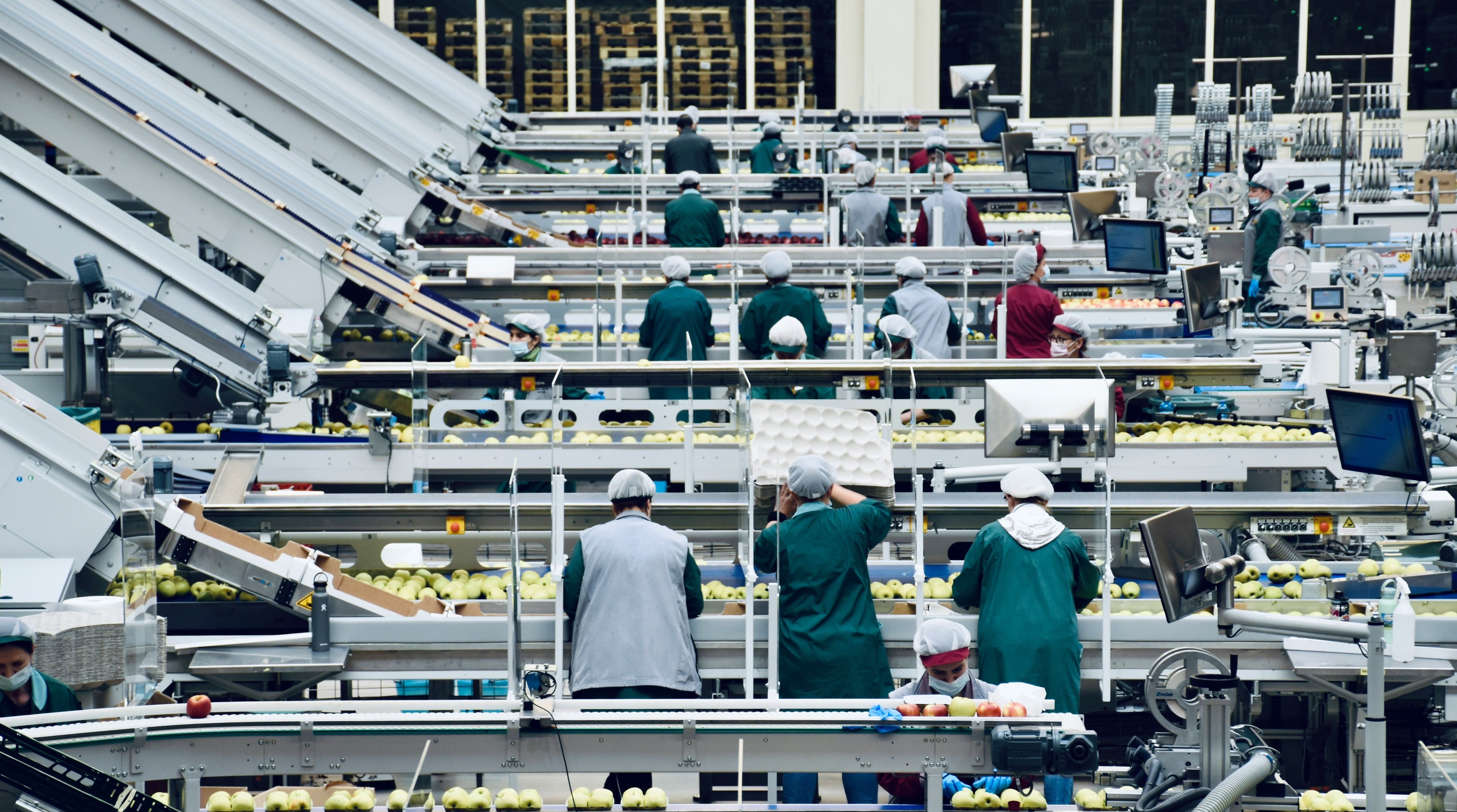
End-of-line (EOL) inspection is the final check before a product leaves your factory. If one defective item slips through, it lands with the customer. Now you have a recall.
This step is your last chance to catch a defect. If your quality inspection still depends on tired eyes or rigid rule-based cameras, you are taking risks in 2026. AI-powered vision inspection changes that. We work with customers in F&B, automotive, electronics, and medical devices who hold high quality standards, and we can share how they added AI-based quality control to the end of the production line.
What is End-of-Line inspection?
End-of-line (EOL) inspection is a final check within the manufacturing process. Finished goods are tested for completeness, product quality, and functional performance before they ship.
In industries like automotive, electronics, pharma, and medical devices, end-of-line testing is not optional. It is how companies stay compliant, keep customers safe, and protect their brand.
Common EOL visual inspections include:
- Surface defects (scratches, cracks, burns, discoloration)
- Assembly verification (wrong components, missing parts or items)
- Label and code accuracy (barcodes, lot numbers)
- Seal and packaging integrity
Here are examples of what manufacturers use EOL visual inspections for:
- Automotive: Ball bearings, brake hoses, exhaust filters, gear components, connectors, wiper systems
- Medical / Pharma: Syringes, medical hoses, dental implants, medical chips
- Electronics: PCBs, cell contacting systems, data cables
- Energy: High-voltage cables, wire inspection, vacuum interrupters
- Consumer goods: Cosmetic containers, packaging foils, coffee capsules
The gaps in manual and rules-based inspection
In the past, teams felt forced to choose between human experience and machine speed. Many companies that cared about quality and budgets stayed with manual inspections. Others picked automation with fast cameras and rigid rules for defect detection.
Older defect detection setups had high-quality cameras and stiff software. The cameras ran at the speed of the factory floor, but the analysis often failed. These machine vision systems needed thousands of defect samples to train. Some used only anomaly detection, passing or failing items without a reason. They still missed defects when no data existed.
Human inspectors bring decision making and expertise. Their biggest challenge is fatigue. After hours on the line, attention drops. What one inspector flags as a defect, another lets through. A growing business also means training new staff, which takes time and money. On a fast-moving production line, critical non-conformances get missed. The Sandia National Laboratories review of visual inspection by Judi See found that inspectors correctly rejected only about 85% of defective items, while also incorrectly rejecting 35% of acceptable parts. That missing 15% has real costs: rework, written-off stock, and warranty claims. In the worst case, with precision manufacturing, it becomes a safety issue and can trigger large recalls. In recent years, tens of millions of vehicles in the US have been affected by safety recalls each year, according to the National Highway Traffic Safety Administration.
With AI developments, it is not an either-or between humans and automated defect detection anymore, but a team effort.
How AI-based quality control supports EOL vision inspection
AI and hardware advances make vision inspection more accessible than ever. Specialised cameras can be swapped for iPhones that take poster quality photos. Rules-based anomaly detection now sits next to AI defect detection that can describe the problem and set acceptable bounds. The setup installs quickly without stopping the manufacturing process. Calibration takes minutes, not days, and the system can run all day.
We are not suggesting that manual vision inspection be fully replaced by machines. Instead, AI-based quality control helps people focus on items with problems. For example, Enao Vision's AI-powered end-of-line testing uses deep learning software trained on real production data. The system learns what "good" looks like, and flags anything that falls outside that standard. Staff on the line see what the issue is (discoloration, missing parts, etc.) and decide if the item needs to be removed. This focuses limited human energy on the critical cases.
How supervised AI quality control is better than traditional machine vision
Traditional rule-based vision systems need every possible defect pre-programmed. If a new defect type appears, the system misses it. Generalised AI models, like Enao Vision's, work out of the box and learn from new data. Our machine vision model performs surface inspection and detects defects even without examples, because it understands the overall pattern of quality. This generalisation also extends to new product variations, saving inspectors time the longer the model runs. In contrast, traditional machine vision requires a large sample of defects for every new product.
What Enao Vision's EOL systems inspect for customers
Enao Vision's customers use our solution across many cases. Some examples include checking package completeness before household electronics get sealed, or screw counts and hole sizes for automotive parts. The end-of-line inspection cases fall into these common production types:
- Injection-molded plastic parts (flash, cracks, sink marks, contamination)
- Rubber seals and gaskets (tears, surface defects, dimensional issues)
- Metal components (scratches, dents, corrosion, weld defects)
- Electronic assemblies and PCBs (missing components, solder defects)
- Packaging and labels (seal integrity, misalignment, OCR verification)
- Medical devices (burrs, particulates, fill levels)
Using AI quality control inline, EOL, or standalone
You might have guessed: AI quality control does not just have to sit at end-of-line. It can run anywhere in the manufacturing process. For Enao users, the camera fits into manual assembly stations and tight spaces because it is just an iPhone. No proprietary hardware, no special rigs.
Adding a generalised AI quality control solution like Enao Vision is also not an either-or. If you have an existing automated optical inspection system, you can keep it as a baseline and run Enao Vision alongside. Or, you can pilot on a small line that still uses manual inspection. Our lightweight setup is designed to work out of the box: an iPhone with a 5G hotspot included, mount, and lighting tuned to your needs. Calibration is done with the iPhone in place, so the rollout should not slow production. Specialised lighting and hardware should not block testing for months.
You should also have full traceability of every inspected item. With Enao Vision, every item inspected is logged. Every defect is documented with images, timestamps, and classification data. This supports your quality management system (QMS), tracks non-conformances, and keeps you audit ready. Beyond visual checks, the same camera feeds functional testing data into your records, so functional performance and surface quality live in one place. This is possible because of the user-centric software we have built for the factory floor.
Defects that escape your factory cost far more to fix than defects caught at end-of-line. Automated quality inspection is now more accessible than ever. It is faster to deploy, cost-effective, and low-risk compared to traditional industrial solutions with years-long contracts. AI-powered end-of-line testing is the reliable, scalable way to protect product quality.
Get started
Ready to upgrade your end-of-line inspection? You can get started for free using an iPhone you already have, or try the demo to compare notes with other quality and operations teams putting AI on the shopfloor.
Explore with AI
Discuss this article with your favorite AI assistant
