AI tools every process engineer should know in 2026

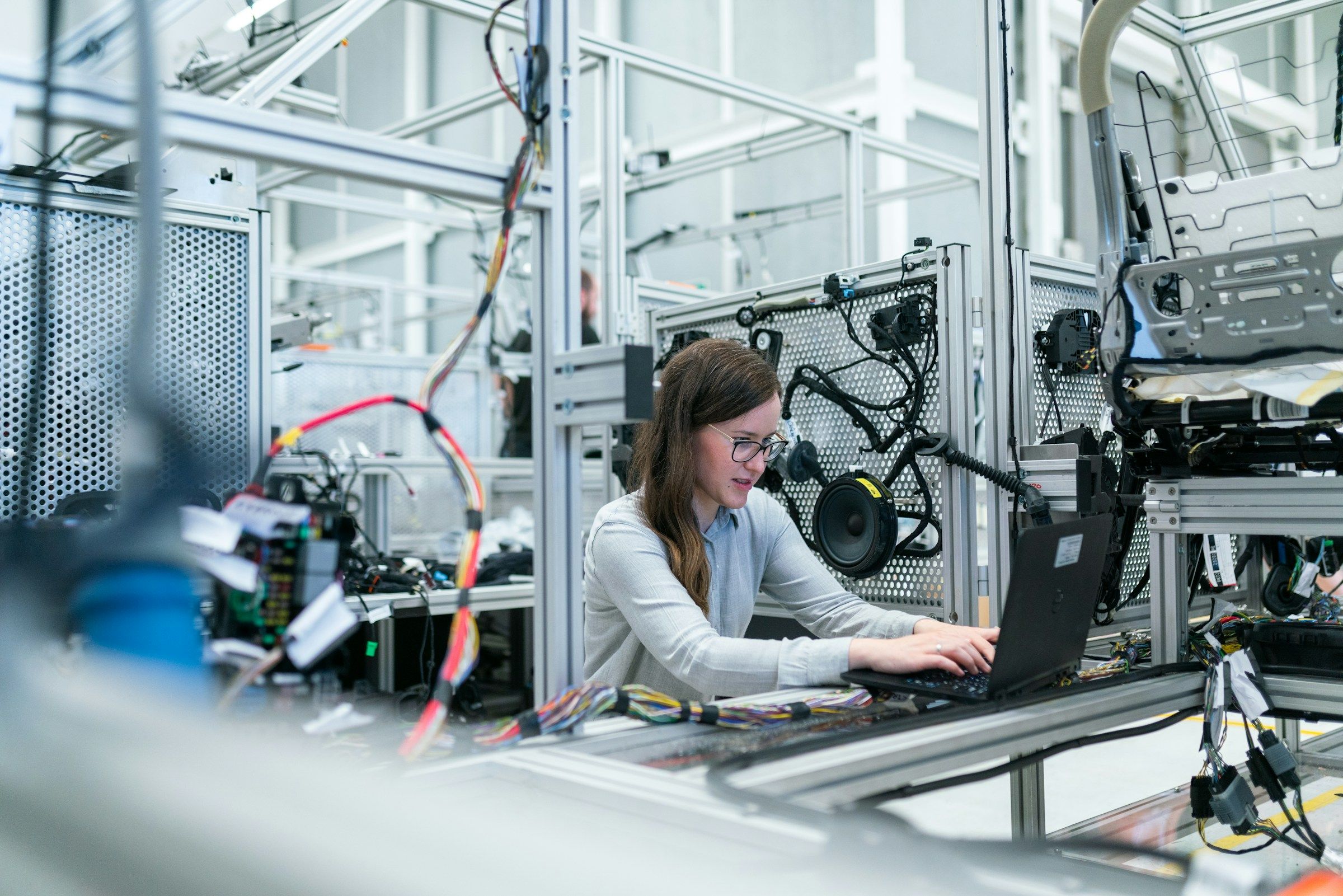
AI tools for process engineers in 2026 fall into two piles. The pile of things you actually open this week, and the pile of demoware from analyst reports that you never quite get round to. This piece is a working list from the first pile. Five categories where the tools are mature enough to use on a Tuesday, a short take on what to pay for and what to skip, and a quick play for getting a sceptical colleague to try one. Most of what is worth using is free. The paid budget you need for the rest is small. The trap is buying a vertical-specific tool when a general one would do the same job.
Five categories where AI is now table-stakes
The categories that matter for a process engineer in 2026 are not the ones the analyst reports tell you they are. The analyst reports talk about predictive maintenance and digital twins. Those exist, they are useful, and most of you will not touch them this year unless you work at a large plant with a dedicated data team.
The categories that show up in your week every week are different.
The first is writing assistance. Reports, emails to suppliers, root-cause writeups, change requests, training materials. A process engineer in 2026 writes more than a process engineer in 2018, because the documentation expectations have grown and the time available has not. An AI assistant that turns 20 minutes of writing into 6 minutes is worth more than most fancy analytics modules.
The second is data querying. Pulling a number from a CSV, joining two exports from different systems, finding the outlier shift in the last 90 days. Most process engineers in mid-sized plants do not have a data team. They have an inbox of CSVs and an analyst with a queue. AI tools that let you query data in natural language are now the fastest path from question to answer.
The third is document reading. Vendor PDFs, machine manuals, calibration certificates, standards documents. A 70-page PDF you can ask questions of is a different experience from a 70-page PDF you scroll through with Ctrl-F.
The fourth is computer vision for inspection and monitoring. This used to be a six-month project with a custom integrator. In 2026 a process engineer can stand up a basic visual inspection on a line in an afternoon using consumer hardware and a vision model. We have written separately about what that looks like for production monitoring.
The fifth is translation and language tools. Plants with sites in multiple countries are constantly translating between shopfloor languages, vendor English, and head-office whatever. The tools for this got good fast and are basically free.
Free tools that actually work on the shopfloor
Across these five categories, the free or near-free tools that I see process engineers actually using on Tuesdays are a short list.
For writing assistance, the major chat assistants (Claude, ChatGPT, Gemini, Copilot) all have free tiers that handle the report-drafting use case well. The choice between them matters less than the discipline of using one consistently. Pick whichever your IT department blesses for non-sensitive use. The free tier covers most weeks. Paste the rough notes, ask for a tightened version, edit.
For data querying, the same chat assistants now handle CSV upload reasonably well in the free tier. Drop the export, ask the question, sanity-check the answer against the source. The first few times you do this you will catch errors. After a month you develop a sense for which questions the tool handles well and which it does not.
For document reading, the same again. Drop the vendor PDF, ask the specific question, get the answer with a quoted source line you can verify. Saves the hour of scrolling.
For computer vision specifically, the open-source ecosystem is now strong enough that you can prototype a basic inspection without buying anything. The tools require more setup than the chat assistants, but if you have the inclination to tinker, they are real.
For translation, the free tiers of DeepL and Google Translate are both excellent. DeepL is meaningfully better on technical German and French. Both handle Slovak, Czech, Polish, and Turkish well enough for shopfloor use.
The total subscription cost to do most of the AI work a process engineer actually needs in a week is zero euros. That sentence would not have been true 18 months ago.
Paid tools worth budgeting for
Three categories cross the line from "nice free tier" to "worth a budget conversation with your manager."
The first is a paid tier of one chat assistant. Pick one and pay for it. The 20 euros a month buys you longer context windows, faster responses, and (in some cases) access to tool integrations that matter. Process engineers who use these tools daily save several hours a week. The math is not close.
The second is a paid tier of a vision platform if you are running camera-based inspection or monitoring on more than one or two lines. The open-source path is real, but at scale the operations overhead (managing models, deploying updates, handling edge cases) becomes its own job. A paid platform takes that off your plate. Pricing varies widely. Get three quotes.
The third is original-text editing tools (Grammarly, Linguix, the Microsoft Editor add-on) if a meaningful chunk of your written communication is in a second language. The free tiers are fine for occasional use. The paid tiers earn back their cost on the first vendor email you do not have to rewrite three times.
That is the paid budget conversation in 2026 for a process engineer. Maybe 50 euros a month, total, for the tools that actually earn their seat.
The tools I would skip
For balance, here is what I would not pay for as a process engineer in a mid-sized plant in 2026.
Standalone predictive maintenance suites that promise to predict failures from your existing sensor data. The math is sound in principle and the demos look good. The reality on most plants is that the historian data is too sparse, too inconsistent, or too poorly labeled to support the model the vendor trained on their reference customer. If you do not already have a dedicated data team, the implementation cost will exceed the value for at least two years.
"AI-powered" MES bolt-on modules. Most of these are a thin wrapper around a chat assistant with your data piped in, sold for ten times the price of just using a chat assistant directly. If the value is the integration, evaluate the integration on its own merits. If the value is the AI, you can get the AI for free.
Custom-trained chatbots for plant documentation. The pitch is compelling. The reality is that maintaining the document corpus, retraining as documents change, and explaining to operators why the bot got something wrong adds up to more work than the bot saves. The general chat assistants reading your documents ad-hoc cover the same ground without the corpus maintenance.
Marketing automation labeled as AI. If it is marketing automation, call it marketing automation. None of this is in a process engineer's job description.
The pattern is the same in each case. The tools worth paying for are general-purpose ones that you control. The tools worth skipping are vertical-specific ones that lock you into a vendor's interpretation of your job.
How to introduce a new tool to a sceptical team
The other half of using AI tools as a process engineer in 2026 is getting the rest of the plant to use them. Plant cultures vary, but the sceptical team is the modal team.
The play I see working consistently is small, named, and useful.
Small: pick one specific use case where the tool will save someone time this week. Not "AI for our plant." A specific task. The shift handover writeup. The supplier non-conformance email. The 1,400-line CSV that needs to be turned into a one-page summary.
Named: give the use case a person's name. "Tom, this would have saved you 40 minutes yesterday." Not "the maintenance team." A specific colleague who will agree the use case is real.
Useful: ship one round of the result, then ask Tom if it was useful. If yes, do it again next week. If no, find out why and adjust. Do this for three weeks before broadening.
The plants where AI tools spread organically are the plants where the first three weeks were one process engineer, one use case, one colleague who said "that was useful, do it again." The plants where AI tools fail are the plants where the head of operations announced an AI initiative at the all-hands and bought three platforms before anyone had used one.
If you are the process engineer in the first plant, you are five years ahead of the second. For more on the role itself and where it sits in 2026, see our piece on what process engineering actually is in 2026. For the connection to OEE-side metrics, hidden costs of unplanned downtime covers where these tools deliver the most cash value first.
FAQ
Which AI tool should I learn first if I have never used one? One of the major chat assistants. Use the free tier daily for two weeks. Build the habit of drafting in it before you write directly. After two weeks you will have a clear sense of which use cases work for you.
Do I need to learn Python to use AI tools as a process engineer? No, not for the categories that matter most. Chat assistants and tools cover the work without code. Python helps if you want to go deeper into custom analysis or vision pipelines, but it is not the entry point.
What about data privacy when uploading plant data to a chat assistant? This is the conversation to have with your IT department before you start. Most major vendors offer enterprise tiers with data residency controls. For sensitive data, those are the paths to use. For non-sensitive analysis, the consumer tiers are usually fine.
How fast is this space moving? Fast enough that the tools in the "paid" and "skip" lists may swap categories within a year. The categories themselves (writing, data, documents, vision, translation) are stable. The specific products are not.
Is AI replacing process engineers? Not in any sense that matches the actual job. The job is judgment, escalation, coordination, and ownership across a plant. The tools handle pieces of it faster. The job itself does not get smaller.
Try the camera-based piece today
Most of this piece is tool-agnostic. The one category where Enao Vision shows up directly is the computer-vision-on-the-shopfloor category. If you want to see what an iPhone-based inspection or monitoring setup looks like in practice on one of your lines, the fastest path is to spin up an account and try it.
Start free or try the demo to compare AI-tool stacks with other process engineers.
Explore with AI
Discuss this article with your favorite AI assistant
