What is process engineering

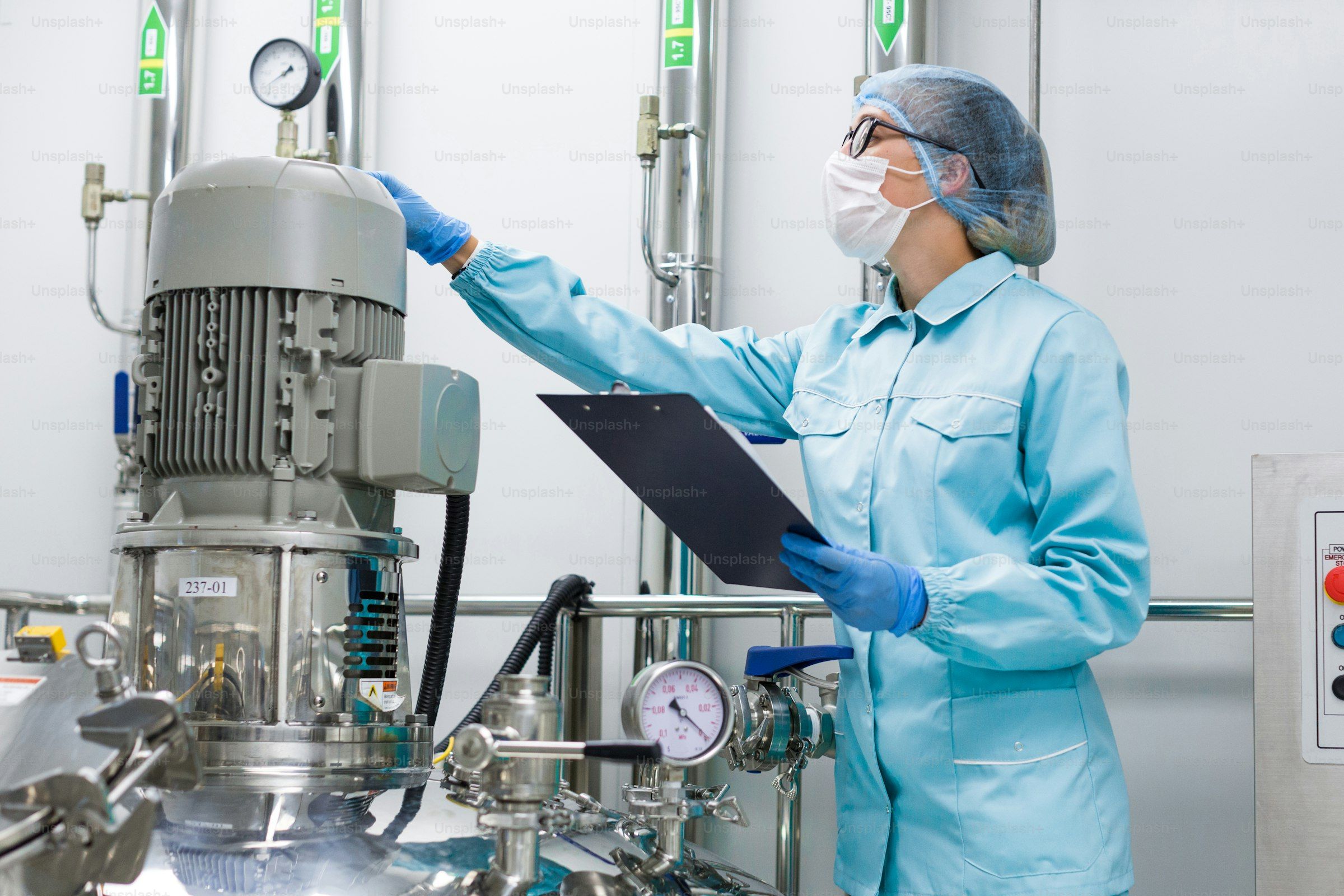
Walk into any chemical plant, an automotive assembly line or a modern food factory and you will find someone whose job is to make the process work better. They are not the operator who runs the machine, and they are not the maintenance technician who fixes it when it breaks. They are the person who looks at the whole flow, from raw materials in to finished product out, and asks how to make it faster, cheaper, safer or cleaner without breaking anything else. That person is a process engineer.
Process engineering used to mean one specific thing: chemistry at industrial scale, mostly in refineries and chemical plants. The role has widened a lot since then. Today it covers discrete manufacturing, semiconductor fabs, pharmaceuticals, food and beverage, energy and an increasing share of factories where the process is built around vision systems and on-device AI. The core question stays the same. What does the process do, what does it cost and how do we improve it.
This guide walks through what process engineering actually is in 2026, who does the work, the tools they use and how the role has shifted as AI and modern sensors have moved into the plant. It is written for the person who is either considering the career, hiring someone into it or trying to figure out where the role fits inside their own manufacturing organization.
A working definition
Process engineering is the design, operation, troubleshooting and continuous improvement of the chain of steps that turns raw materials into a finished product. The steps can be chemical reactions, mechanical assembly, vision-based inspection, packaging or anything else that has to happen in a controlled, repeatable way.
A process engineer owns three things. They own the design of the process, often expressed through process flow diagrams, piping and instrumentation diagrams (P&ID) or, in discrete manufacturing, the layout and balance of an assembly line. They own the day-to-day performance of the process, including throughput, yield, quality, energy use and safety. And they own the improvement of the process over time, which is where lean manufacturing, six sigma and statistical process control sit.
Chemical engineering is the historical root of process engineering, and a lot of the canon (mass balance, energy balance, thermodynamics, fluid mechanics, unit operations) still comes straight from chemical plants. But the discipline has spread well beyond chemistry. A process engineer in a battery factory needs to know assembly lines and electrochemistry. A process engineer at a contract food manufacturer needs to understand microbiology, fluid mechanics and food safety regulations. A process engineer in a discrete plant building consumer electronics needs to know assembly, vision inspection, robotics and sometimes a fair bit of data analysis. The job is broader than the chemical industry it came from.
What a process engineer actually does
The job has three modes, and most process engineers move between them constantly.
In design mode, the process engineer builds the process before it exists, or redesigns it when the product changes. This is where process design tools come in, including process simulation software, P&ID software, CAD for layout and increasingly, simulation of vision and AI inspection systems. The output is a documented, sized, costed process. For chemical plants this lands as a P&ID stack and a set of unit operations. For discrete plants it lands as a line layout, takt time calculations, equipment specifications and the inspection plan.
In commissioning and operation mode, the process engineer makes sure the designed process actually runs. They write the standard operating procedures, define the control points, set the alarm thresholds and train the operators. When the process drifts, they troubleshoot. Troubleshooting is the largest single use of a process engineer's time in any plant we have visited. The role draws heavily on analytical skills, because most real-world process problems are not single-variable. A yield drop in a chemical reactor or a fault rate spike in a vision-inspected assembly line usually has three or four contributing causes that have to be untangled with data.
In improvement mode, the process engineer runs continuous improvement projects on the existing line. This is where lean manufacturing, six sigma, statistical process control and modern data analysis come together. The improvement work is often what separates a good process engineer from a great one. Anyone with the right degree can make a process run. Making it run 15 percent better next quarter than it did last quarter is a different skill.
Across all three modes, the process engineer also has a project management role. They scope the work, run risk assessments, schedule the change, coordinate with maintenance, quality, production planning, IT and safety, then verify the result. That coordination is the part of the job that does not show up in the textbooks but takes up most of a real engineer's week.
The path into the role
The two most common educational paths into process engineering are chemical engineering and mechanical engineering, with a smaller stream coming from industrial engineering or manufacturing engineering programs. A bachelor's degree is the floor for most entry-level roles, and a master's degree is common in pharmaceuticals, semiconductors and senior chemical plant roles where the science gets deeper.
Chemical engineering remains the strongest single feeder. The reason is that the analytical toolkit (mass balance, energy balance, unit operations, thermodynamics, chemistry of chemical reactions) generalizes well outside of chemical plants. A chemical engineer can usually transition into food, pharma, semiconductors or any process-heavy industry with a few months of domain learning.
Mechanical engineering is the second feeder, and it is the path most people in discrete manufacturing take. The mechanical engineer brings strong intuition for materials, motion, fluid mechanics and the mechanical reality of how a line actually moves. They tend to learn the chemistry on the job rather than the other way around.
A growing third path comes through industrial engineering or operations research backgrounds. These engineers tend to be stronger on the lean manufacturing, statistical process control and data analysis side, and lighter on the underlying physics. In modern factories where the bottleneck is data and decision-making rather than chemistry, this background has become more valuable.
Beyond the degree, every process engineer job description in 2026 asks for the same four skill clusters. Technical fundamentals: thermodynamics, mass and energy balance, mathematics, chemistry, fluid mechanics and unit operations. Analytical skills: the ability to read a dataset, build a model and pressure-test a hypothesis with tools that range from Excel and Minitab through Python and statistical process control software. Continuous improvement: lean manufacturing, six sigma (most senior process engineers carry at least a Green Belt) and total productive maintenance. Soft skills: project management, plain-language communication with operators and the patience to spend weeks chasing a root cause.
Where process engineers actually work
The range of industries that employ process engineers is wider in 2026 than at any point in the discipline's history.
Chemical plants and petrochemical refineries are still the largest employers and where the deepest technical work happens. The unit operations, process simulation and P&ID-heavy design work are all most concentrated here. Pharmaceuticals and biotech sit close to chemical plants in technical depth and add a heavy regulatory layer of validation, batch records and good manufacturing practice.
Discrete manufacturing (automotive, consumer electronics, white goods, industrial equipment) is the largest growth area for process engineers in 2026. The work centers on assembly lines, takt time, line balance, vision inspection, robotics and the integration of AI-driven quality systems. The chemical engineering canon is still relevant but applied differently.
Food and beverage is its own world, with strong overlap with chemical engineering on the unit operations side and a heavy hygiene and food safety overlay. Energy, including conventional power, renewables and battery production, is a fast-growing employer that blends chemical, mechanical and increasingly digital process design. Semiconductors and microelectronics are the most technically demanding of all process engineering jobs and pay accordingly, with hundreds of variables to manage at a scale closer to statistical control than classical chemical engineering.
In every one of these sectors the question is the same. What is the current cost and quality of the process. What is the achievable cost and quality. What is the shortest path between the two.
How the role has changed in the AI era
For most of the last 50 years, process engineering was a relatively stable discipline. Process simulation software got better, sensors got cheaper, P&ID software replaced paper, but the underlying job did not change much. The last three years have changed that more than any period since the introduction of process simulation in the 1980s.
The first change is in sensing. Vision systems, iPhone-class cameras and on-device AI models have made it possible to inspect every part on a line in real time at a cost that was unimaginable five years ago. A process engineer in 2026 has, for the first time, the option to instrument every step of a discrete process with continuous quality data. The classic statistical process control approach of sampling and inferring is being replaced, in many plants, with 100 percent inspection.
The second change is in data. Cheap cloud storage and modern data analysis tools mean a process engineer can hold and query several years of process data per line. Questions that took a six-month PhD project a decade ago can often be answered in an afternoon now.
The third change is in modeling. Machine learning, applied with care, has become a useful addition to the toolkit for anomaly detection on equipment performance, predictive maintenance and yield prediction. It does not replace the fundamentals (you still need mass and energy balance to read what the model is telling you) but it accelerates the cycle from question to answer.
The fourth change is in deployment. Modern process engineers can stand up a real-time inspection system on a single line in a week, with hardware costs under €1,000 per line, using a refurbished iPhone, a lamp and a mount. The economic threshold for "is this worth instrumenting" has collapsed, which changes which problems are worth solving.
For the process engineer entering the field in 2026, the technical fundamentals (chemistry, mechanical engineering, fluid mechanics, thermodynamics, lean manufacturing, six sigma, statistical process control) all still matter. The engineer who can also work fluently with modern AI tooling, vision systems and data analysis has a meaningfully wider job market than one who cannot.
Process engineering inside continuous improvement
The continuous improvement function in most manufacturing organizations is where process engineering, lean manufacturing and operations management overlap. In smaller companies, the process engineer and the continuous improvement lead are often the same person. In larger companies, the process engineer designs and runs the process while the continuous improvement team finds and prioritizes the improvement projects.
Either way, the loop is the same. Measure the current performance of the process, identify the largest loss, run a structured root cause analysis, design a countermeasure, implement it and verify the result. The process engineer's value sits mostly in the first and last steps, the parts that need real technical depth. The middle steps are where lean, six sigma and good project management do the work.
The single most useful thing a process engineer can do for a continuous improvement program is make the process measurable in close to real time. A process measured once a shift can be improved once a shift. A process measured once a minute can be improved every minute. The investment in real-time measurement, whether through sensors, vision or data integration, is usually what unlocks the rest of the improvement work.
The simple version
A process engineer designs, runs and improves the process that turns raw materials into a finished product. The job draws on chemistry, mechanical engineering, mathematics, data analysis, lean manufacturing and a fair bit of project management. It pays well, the work is concrete and the career path stays open across industries, from chemical plants to assembly lines to modern AI-equipped factories.
The discipline started in chemistry and it has spread to almost every industry that runs a production process. In 2026, the most interesting work is happening where classical process engineering meets modern AI and vision systems on the shopfloor. That is where the next generation of process engineers will earn their reputation.
Get started on the shopfloor
If you want to see what modern process engineering looks like in practice, Enao Vision deploys vision-based inspection on a single iPhone for under €1,000 of hardware per line. Most teams have it running good count, bad count and downtime detection inside a week. Start a free trial and see what real-time process data does for your line.
Join the community
We run a free Slack community for shopfloor builders, continuous improvement leads and process engineers who want to compare notes outside of LinkedIn. Members swap root cause investigations, statistical process control playbooks and deployment lessons in the open. Join the community.
Explore with AI
Discuss this article with your favorite AI assistant
