Production monitoring system without PLC integration: the camera-first guide

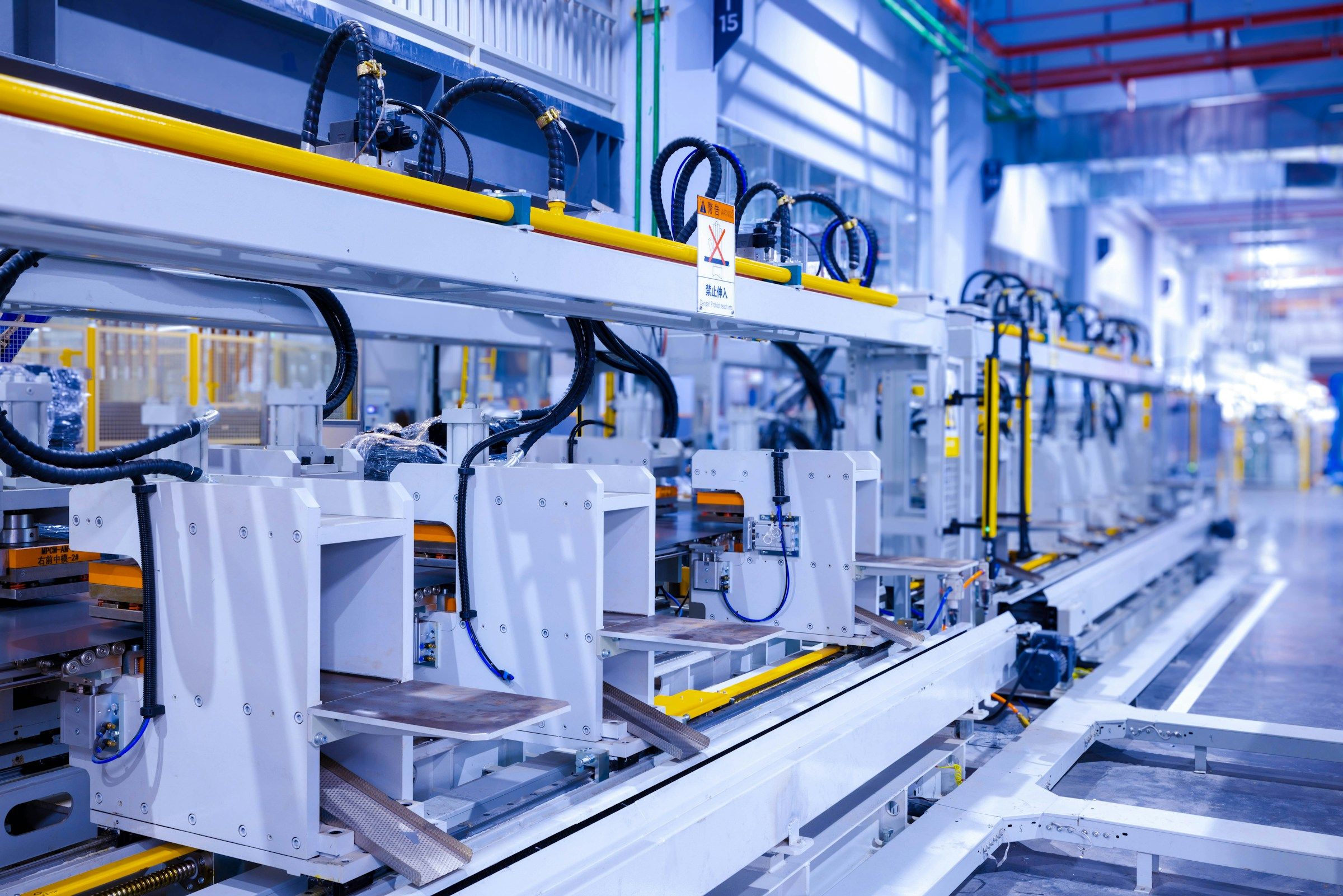
Most production monitoring software was designed for a plant that already has a modern PLC on every line, a stable ethernet backbone in the cell, and a controls engineer who has time to map every register to a tag. If that is your plant, the existing leaders in the category will serve you well.
This guide is for the other plant. The one where two of the lines run a controller from 2008, the network drops in the punch press cell, and the controls engineer left in February and has not been replaced. You still need a production monitoring system. You still need to know what each line did this shift. You just cannot wait six months for an integration project to finish before you start.
The camera-first path skips the PLC layer and reads what the line is doing from the line itself. The trade-offs are real, but the cost curve and the time-to-value curve are dramatically different. This piece walks through what production monitoring actually means in 2026, what the PLC integration tax looks like in numbers, what a camera can and cannot see, and when you should still pick the classic integration path anyway.
What "production monitoring" actually means in 2026
The phrase covers four things that used to be sold as separate systems and now live in one dashboard for most buyers.
The first is real-time production count. How many parts has the line made this shift, this hour, this minute. Plotted against the target so the shift lead can see drift before it becomes a problem.
The second is downtime tracking. When did the line stop, for how long, and why. This feeds the availability pillar of OEE and is the input every root-cause conversation depends on. We covered the eight reason codes that matter in our piece on downtime tracking software.
The third is quality and reject monitoring. How many parts went through the inspection step, how many failed, and what the failure pattern looks like across the shift.
The fourth is performance and cycle-time monitoring. How fast the line is running compared to the design rate. The slow drift from 95 percent of target to 82 percent over four weeks is usually a leading indicator nobody catches without this signal.
A modern production monitoring system bundles all four into a single view at the line, a single view per shift, and a single view per week for the plant manager. The question is not "do I need monitoring" but "what is the cheapest credible path to all four signals across all my lines this quarter."
The PLC tax: what an integration project costs you
When you buy a classic production monitoring system, the license is rarely the expensive part. The integration is. Here is what a typical mid-sized plant pays when they go down the PLC-integrated route on a line that does not already have the right infrastructure.
The hardware comes first. A new gateway or edge device per line, often in the 800 to 2,500 euro range depending on protocol support. If the existing PLC is old enough to lack ethernet, add a serial converter and a small networking shop visit. Budget 500 to 1,200 euros there.
Then the controls work. A controls engineer mapping the relevant registers (cycle complete, fault bit, recipe ID, count tag) to the monitoring system's tag schema. On a line that has been running for ten years with patchwork firmware, this is rarely a clean day of work. Expect 3 to 8 engineer days at 800 to 1,200 euros per day. That is 2,400 to 9,600 euros per line before the system even sees its first cycle.
Then network and security work. Many plants run isolated cell networks for safety reasons. Punching a controlled hole through to the production monitoring backend takes IT involvement. Budget 1 to 3 days of IT consulting at similar rates.
Then test, validation, and operator training. Another 2 to 4 days per line.
Add it up and the classic integration path runs 8,000 to 18,000 euros per line in non-license costs before you produce a single shift report. The 6 to 12 weeks of elapsed time per line is often the bigger problem. By the time line 4 is live, the requirements have shifted on line 1.
This is the production monitoring tax that nobody quotes you in the demo. It is also the reason most multi-line monitoring projects stall at line 2 or 3.
What a camera sees that a PLC doesn't
The classic argument against camera-based production monitoring software is that a PLC has direct access to the controller state and a camera does not. That is true. The PLC knows the cycle complete bit fired at exactly 09:14:23.117. A camera infers cycle completion from the part appearing at the outfeed.
What gets discussed less often is what a camera sees that the PLC cannot.
A camera sees the physical part. The PLC reports cycle complete based on a controller flag, but the controller flag fires when the machine thinks it produced a part. If the part dropped to the floor during ejection, the PLC still reports cycle complete. The camera does not. Real-time production monitoring that counts what actually arrived at the outfeed is closer to reality than counting what the controller said it sent.
A camera sees operator presence and posture. It can flag when the station is unattended during a stop, which the PLC has no way to know. It can flag when the operator is leaning into the cell in a way that suggests an unplanned manual intervention.
A camera sees changeover progress. The 22 minutes from "last part of SKU A" to "first good part of SKU B" is the single biggest swing in OEE on most lines, and a PLC sees almost nothing of it. A camera sees the disassembly, the tool change, the trial cycles, and the moment good parts start flowing again.
A camera sees upstream and downstream conditions. The conveyor backing up because packaging cannot keep pace. The pallet that is one box short. The pallet truck blocking the aisle. None of these are visible to a PLC. All of them affect line output.
This is why camera-based production monitoring is not a downgrade from PLC-integrated monitoring. It is a different sensor with a different field of view. On many lines it sees more. On some lines it sees less. The right answer depends on the line.
How to evaluate camera-based vs sensor-based monitoring
When you sit down to compare a camera-based production monitoring system against a sensor-based or PLC-integrated one, the comparison that matters is not "which one is better" in the abstract. The comparison is per-line and runs across five dimensions.
First dimension: what is the cycle visible from outside the cell? If the part exits a clearly framed outfeed conveyor or pickup point, a camera handles count and cycle time well. If the part is buried inside a closed enclosure that only the controller sees, a PLC tap is the right answer.
Second: what is the lighting condition? Plant lighting is more inconsistent than buyers expect, and a camera-based system needs reasonable, repeatable lighting in its field of view. Most plants are fine with the addition of a ring light at the station. Some cells with welding arcs or strong reflections need a more careful setup or a different approach.
Third: how often do products change? If the line runs eight SKUs in a shift with rapid changeovers, a vision system that has been trained on each product handles it cleanly. If the line runs hundreds of low-volume SKUs in a week, a PLC tag is easier to keep current than a vision model.
Fourth: what is the budget envelope and the timing? Camera-based monitoring brings hardware to under 1,000 euros per line and goes live in an afternoon. PLC integration brings hardware to 1,500 to 3,000 euros per line and takes 6 to 12 weeks. The right answer depends on whether you need data this Friday or next quarter.
Fifth: what data do you actually need? If the goal is shift count, downtime reason codes and visual inspection metrics, a camera covers all three from one device. If the goal is high-frequency tag-level data (cycle time accurate to the millisecond for tuning a servo loop), a PLC tap is the right tool.
The combination matters too. Many of our mid-sized customers run camera-based monitoring on 80 percent of their lines and keep PLC-integrated monitoring on the two lines where the controller already has a clean modern interface. Mix the two as needed.
When PLC integration is still the right answer (yes, sometimes)
There are three situations where we tell a prospect to pick a PLC-integrated production monitoring system over the camera-based path, even though it is slower and more expensive.
The first is when the line is fully enclosed and the part is never visible from outside the cell. Most CNC machining centers fall in this category. The cycle happens inside a closed cabinet with coolant spray on the windows. A camera at the door sees nothing useful. A PLC tap on the controller sees everything.
The second is when high-frequency precision data is the actual deliverable. If your process engineer needs cycle time data accurate to 10 milliseconds because they are tuning a servo motion profile, a camera is too coarse. The PLC has the data already and the integration is worth the cost.
The third is when the existing infrastructure already pays for itself. If your plant already runs a real-time production monitoring backbone on lines 1 through 6 and you are adding line 7 with the same controller family, the marginal cost of extending the PLC integration is often lower than introducing a new sensor type.
Outside these three cases, camera-based monitoring is usually the faster and cheaper path to the same data. The honest answer in 2026 is "use both, with camera as the default."
Where the production monitoring system sits in the wider stack
A production monitoring system does not live alone. Most mid-sized plants run a CMMS for work orders, an ERP system for materials and orders, and (on larger sites) a manufacturing execution system or MES for routings and recipes. The monitoring layer feeds those systems and reads from them. The MES tells the line which order is running and the production monitoring system reports back how many parts that order produced. The ERP closes the loop with the inventory and finance teams. The CMMS turns a downtime event into a work order that goes to the maintenance team. When the four layers talk to each other cleanly, the shop floor and head office see the same numbers in the same hour. When they do not, the weekly production review starts with a half-hour argument about whose spreadsheet is right. The cheapest way to fix that is to land the production monitoring layer first with clean data, then wire it back into the MES and ERP rather than the other way around.
The KPIs that matter and how to read them
The KPIs a production monitoring system feeds are the same set every shift lead recognises: overall equipment effectiveness on every production line, uptime over a rolling seven days, throughput against the design rate of the line, bottlenecks ranked by their contribution to the weekly loss, and unplanned downtime broken into the eight reason codes. The point of real-time visibility is not the dashboard for its own sake. The point is that machine performance, machine utilization, and production performance show up in the same view as the order schedule, so the shift lead can act on them before the loss is locked in. Machine monitoring as a category is decades old, and what changed in 2026 is that the same data finally arrives fast enough for production tracking to influence the current shift rather than next week's review. Production efficiency lifts when the loop closes inside the shift.
The continuous improvement loop the data unlocks
Once the production monitoring system is live, the continuous improvement work that follows changes character. Maintenance teams move from reactive callouts to predictive maintenance because the historical data on equipment behaviour finally exists. Maintenance schedules get tuned against actual usage rather than calendar assumptions. The traceability records that the same system produces become the basis for quality control reviews, and production managers stop firefighting and start running the weekly review against trend lines. The push toward operational excellence and smart manufacturing that every plant board talks about needs accurate data to be more than a slogan, and the data accuracy of a clean monitoring feed is the prerequisite that makes the slogan real. Digital tools layered on top of the same feed cover energy consumption tracking, scheduled maintenance reminders, and the start of a real-time production monitoring system view at the plant level rather than just the line.
FAQ
What is the cheapest way to start production monitoring on one line? A refurbished iPhone, a mount, and a free account. Hardware to get one line running stays under 1,000 euros. You can have a first dashboard live in under an hour. For the count and downtime piece specifically, see our downtime tracking software guide.
Does camera-based monitoring replace a SCADA system? No. SCADA is the supervisory layer that controls and configures equipment. Production monitoring is the layer that observes and reports on output, downtime, and quality. The two coexist and feed each other.
How do you handle multiple SKUs on the same line? A single model trained on the relevant SKUs handles changeover automatically. The operator picks the SKU at the start of the run on the station tablet and the monitoring system applies the right count rules and quality thresholds for that product.
What if our plant lighting is bad? Most plants are fine with the addition of a ring light at the station, which costs about 60 euros. Cells with welding arcs, strong reflections, or extreme low light need a setup review before deployment. Our team does a free site review on request.
Can we combine camera-based and PLC-integrated monitoring in the same plant? Yes, and most multi-line plants end up doing exactly that. Camera on the lines where it makes sense for cost and time, PLC tap on the lines where the controller is already exposing what you need cleanly. One dashboard pulls both signals together.
How does this compare to the leading production monitoring software in the category? The leaders in the category (you know who they are) are excellent on lines where PLC integration is clean and budget is not the constraint. They struggle when you ask them to deploy on 12 lines across three plants with mixed controllers in eight weeks. That is where camera-based monitoring earns its place.
Get a production monitoring system live this week
If you want a production monitoring system running on one line by the end of the week, the camera-first path is the fastest credible option. A refurbished iPhone, a mount, an account, and you are reading shift count and downtime by Friday. No PLC integration, no 12-week project, no six-figure budget.
Start free or try the demo to compare deployment notes with process engineers running camera-based monitoring on their own lines.
Explore with AI
Discuss this article with your favorite AI assistant
