Machine vision inspection: a practical guide for manufacturers

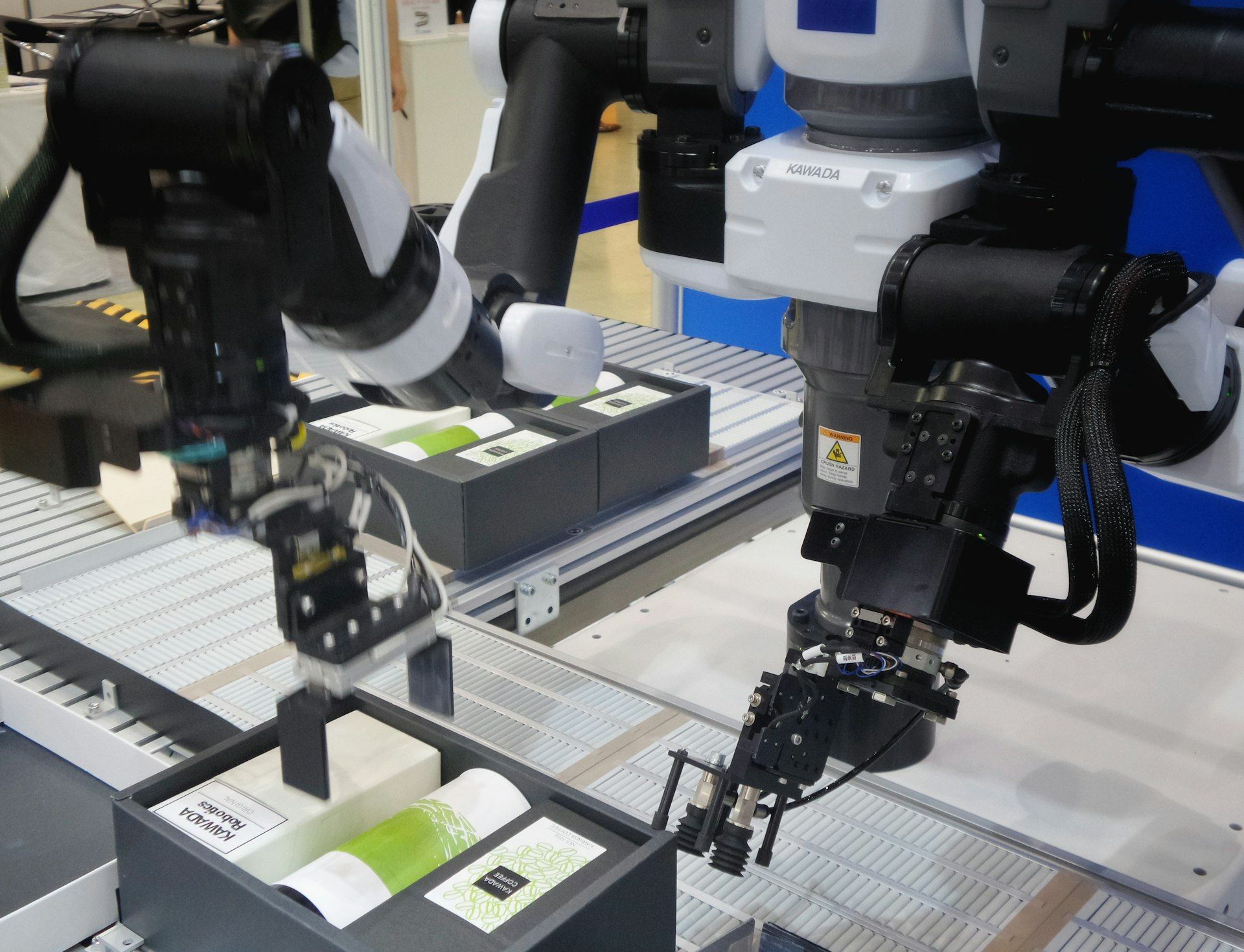
Machine vision inspection uses cameras and software to check parts for defects during production: the camera captures an image, the software analyzes it against a trained model or a set of rules, and the system flags, rejects or alerts on defects in real time. Undetected defects cost manufacturers between 15% and 20% of annual revenue, most of it after the defect leaves the line in returns, warranty claims and lost customers.
This guide covers how machine vision inspection works in practice, what types of systems exist in 2026 and how to choose the right one for your operation.
What does machine vision inspection do on a production line?
A machine vision inspection system uses cameras and software to check parts for defects during production. The camera captures an image, the software analyzes it against a trained model or a set of rules, and if it finds a defect the system flags it, rejects the part or triggers an alert.
The technology handles three types of checks: surface defects like scratches, dents and discoloration, dimensional checks like size, shape and alignment, and assembly checks like missing parts or wrong orientation. Modern systems process 30 to 60 images per second, which is fast enough for lines running hundreds of parts per minute.
Machine vision inspection does not replace human judgment. It excels at repetitive checks across thousands of identical parts, but it struggles with defect types it has never seen before. The best setups pair automated visual inspection with human oversight for edge cases. As we noted in our guide on closing the quality control gap for manual assembly, the goal is augmenting human inspectors, not replacing them.
What are the three types of machine vision inspection systems?
Not all systems work the same way. The three main approaches each fit different production environments.
Rule-based systems use fixed thresholds like pixel counts, edge detection and color matching. They work well for simple pass or fail checks, such as whether a label is present or whether a cap is on straight. They break down when defect types vary, and setup is manual and needs vision engineering skills.
AI-based systems use deep learning models trained on images of good and bad parts. They handle more variation because they learn patterns instead of following fixed rules. Setup needs training data (typically 50 to 200 labeled images) but less specialist knowledge. The tradeoff is that the model is only as good as the data you feed it.
Hybrid systems combine rules for straightforward checks with AI for complex ones. This is where most manufacturers land in practice. You use a rule to verify dimensions and an AI model to catch surface defects.
If you want to understand the technical difference between these AI approaches, our guide on anomaly detection versus defect detection in manufacturing breaks down when to use each.
What does a typical machine vision inspection setup cost?
The cost spread across machine vision inspection systems is enormous.
Traditional fixed-camera systems run $20,000 to $80,000 per station. That covers the camera, lighting, mounting hardware, an industrial PC and software licenses. Most vendors also charge for setup, so a systems integrator adds another $5,000 to $15,000 on top. You are looking at three to six months from purchase order to production use. These systems deliver high throughput, and the Association for Advancing Automation reports that machine vision system sales in North America have grown every year since 2020, driven largely by these proven platforms.
AI-first platforms have changed that math. At Enao, the hardware to get running costs under €1,000. You bring a refurbished iPhone, a lamp, cables and a mount, and the iPhone doubles as the camera. The phone's 12-megapixel sensor and onboard GPU handle both image capture and AI processing on-device, so you do not need an industrial PC or a systems integrator. Setup takes days, not weeks. You can run a pilot on a single line for less than one month's cost of scrap.
The question is not which costs less. It is which fits how you work. A high-speed stamping line running the same part for months benefits from a fixed system. A contract shop handling 15 product swaps per week needs something portable. For a detailed look at platforms, see our comparison of the best AI machine vision systems for manufacturing.
One area worth extra attention is machine vision inspection software. The software controls how fast you can train new models, add products and connect to your MES or ERP. Some platforms lock you into annual licenses with per-camera fees, others offer flat pricing. Ask for a trial before signing anything. The best way to judge software is to run it on your own parts, not to read a spec sheet.
Which machine vision inspection system fits your line?
Use this table to match your production environment to the right system type.
| Factor | Rule-based | AI-based | Hybrid |
|---|---|---|---|
| Best for | Simple pass or fail checks | Variable defect types | Mixed inspection needs |
| Setup time | 2 to 4 weeks | 1 to 2 weeks (with data) | 2 to 3 weeks |
| Cost per station | $25,000 to $80,000 | $2,000 to $30,000 | $15,000 to $50,000 |
| Defect adaptability | Low (reprogramming) | High (retrain model) | Medium to high |
| Changeover speed | Hours (new rules) | Minutes (switch model) | Depends on mix |
| Accuracy floor | 99%+ for binary checks | 95 to 99% for visual defects | Varies by check type |
Two questions determine your path. First, how much does your product appearance vary? If every defect looks the same (a missing screw, a torn label), rule-based works. If defects are unpredictable (surface scratches, texture anomalies, color shifts), you need AI.
Second, how often do you change products? If your line runs the same part for months, invest in a tuned rule-based system. If you switch products weekly, you need fast model retraining or a system built for changeovers. At Enao, we handle product changeovers with a container setup that fits in a backpack, precisely because our customers run mixed production.
What are the five mistakes that kill inspection accuracy?
Most machine vision quality inspection failures are not hardware problems. They are setup problems.
Poor lighting tops the list. Inconsistent shadows create false positives, and reflective surfaces fool cameras. Before spending $50,000 on a better camera, spend $200 on proper diffused lighting. Our guide on why most AI-based visual inspections fail at setup covers the most common lighting mistakes and their fixes.
Not enough training data comes second. AI models need variety. If you train on 20 images of the same defect under the same light, the model learns the light, not the defect. Aim for 50 to 200 images taken across shifts, light changes and normal line variation, and mix in good parts and bad parts in different states.
Ignoring edge cases is third. A system that catches 98% of defects sounds good until you calculate what 2% means at 10,000 parts per day. That is 200 defective parts shipping to your customer every day. Define your tolerance before deployment, not after.
Skipping the pilot is fourth. Run any new machine vision inspection system side by side with your current QC process for two to four weeks, and compare catch rates. The new system should clearly beat manual checks before you rely on it. If it does not, the problem is usually in the setup, not the tech.
Trying to do too much at once is fifth. Start with one check point on one line, prove the value, then expand. Shops that try to cover every station on day one tend to stall during setup. As we covered in our guide on lean production with AI and automation, incremental adoption beats big-bang deployments every time.
How do you get started with machine vision inspection?
Machine vision inspection has gotten simpler and cheaper in the past two years. You do not need a six-figure budget or a vision team to run your first pilot. Pick one line, pick one defect type that costs you real money, and set a target catch rate against a timeline you can defend.
You bring a refurbished iPhone, a lamp, cables and a mount (under €1,000 in hardware), and we bring three weeks of hands-on onboarding, with no long-term contracts. Run it on one line, measure the results and decide from there. Most teams see results within the first week.
Common questions
How fast can a machine vision inspection system process parts?
Modern machine vision inspection systems process 30 to 60 images per second on standard hardware, which keeps up with lines running hundreds of parts per minute. The bottleneck is rarely the camera or the model. It's the lighting consistency and the time the system needs to settle between shots. For lines under 200 parts per minute, a smartphone-class sensor with diffused lighting handles inspection without dropping frames.
How much training data does an AI machine vision system need?
AI machine vision systems typically need 50 to 200 labeled images per defect type to deploy a working first model, with anomaly detection working from as few as 30 to 100 good-part images alone. The variety matters more than the count: images across shifts, light conditions and normal line variation generalize better than 500 photos taken under identical setup. Most working sites already have these images sitting on a phone or in a QA folder.
Can machine vision inspection run without an industrial PC?
Yes, modern smartphone hardware runs both image capture and AI inference on the device itself. A current iPhone has enough processing power for the model and a 12-megapixel sensor that handles most surface, assembly and presence checks on parts above 5 mm. For higher-throughput lines or sub-millimeter measurement, dedicated industrial PCs and global-shutter cameras still win.
How long does it take to deploy machine vision inspection on a line?
Traditional fixed-camera systems take three to six months from purchase order to production, with a systems integrator running setup. AI-first platforms compress that to days for a single line, because the hardware is off the shelf, the model retrains in minutes and there's no PC to provision. Most working pilots run live within the first week and reach 95 percent accuracy by week four after a few rounds of retraining.
Key takeaways
- Machine vision inspection captures an image, runs it through a trained model or rule set, and decides pass, fail or manual review in real time.
- Three system types exist: rule-based for predictable checks, AI-based for variable defects, and hybrid for the most production lines.
- Costs range from under €1,000 in hardware on AI-first platforms to $20,000 to $80,000 per station for traditional fixed-camera setups.
- The five accuracy killers are poor lighting, thin training data, untreated edge cases, skipping the pilot and trying to cover too many stations on day one.
- Pilot one line, one defect type that costs real money, and prove the value before expanding.
If you want to connect with other teams putting machine vision inspection into practice, join the Enao community to share setups and ask questions.
