Ford runs smartphone-based inspection across 27 plants. Here is what that signals for everyone else.

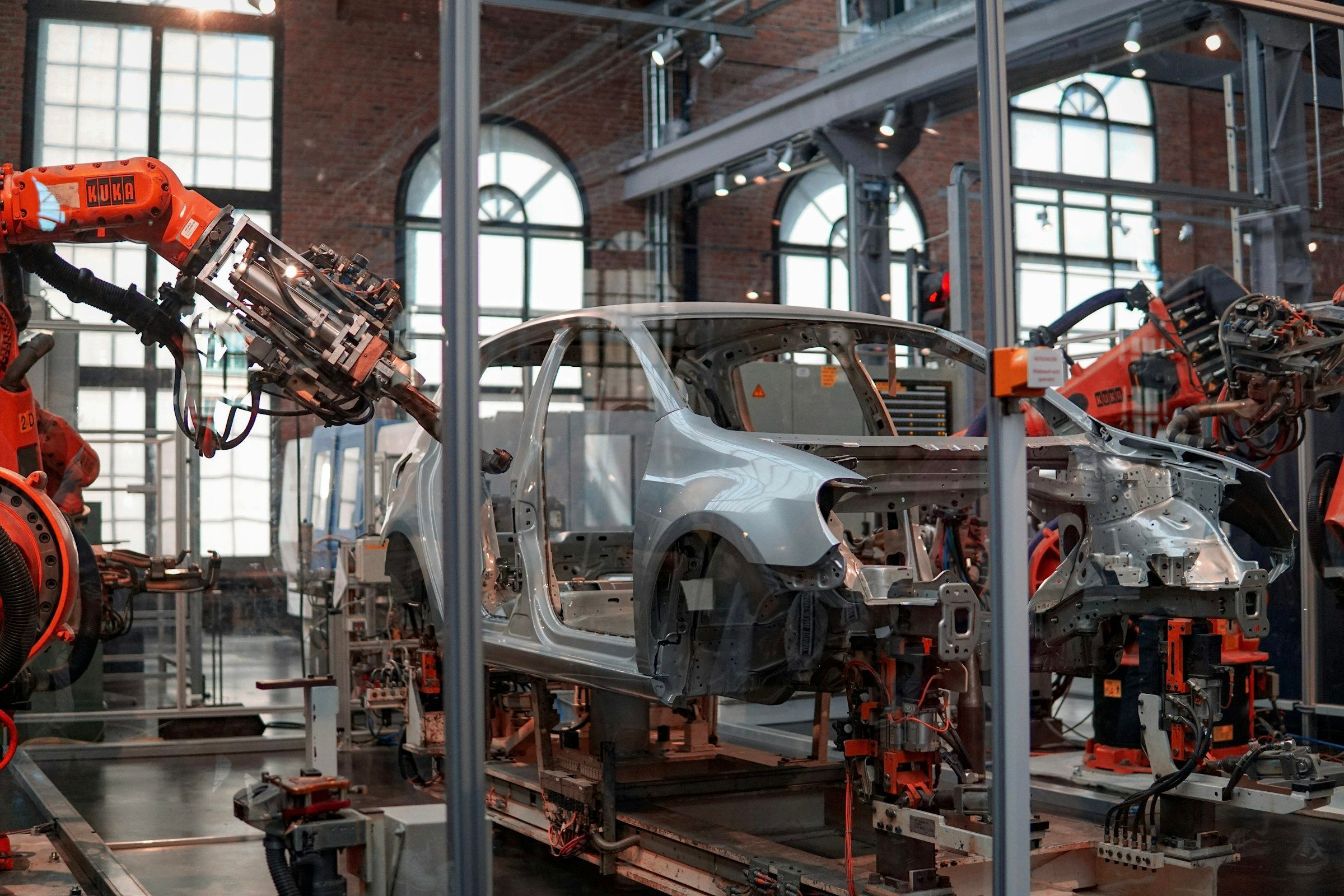
Ford's in-house Mobile AI Vision System (MAIVS) has quietly grown into one of the largest smartphone-based quality control deployments in the world. Industry reporting puts MAIVS at nearly 700 workstations across roughly 20 plants globally, with tens of millions of inspections already logged.
That is larger than most traditional machine vision installations. It is also the clearest signal yet that smartphone-based inspection has moved past the experiment phase.
What Ford actually built
MAIVS pairs consumer smartphones with on-device AI models to check parts on the line. The phones sit in fixed mounts. They take a photo every time a part passes. They run inference locally and flag misses before the part moves on.
Ford built this internally after a series of costly recalls. A Popular Science profile of Walter LaPlante, the engineer who led the program, describes how MAIVS scaled from a Chicago pilot to a global footprint. The system catches issues that would otherwise surface at customer delivery, or worse, at the dealer.
The training loop is the part of the story that most manufacturers find surprising. Workers flag good and bad parts in the app itself. The model learns from that feedback. It is not a specialist data science team running the models. It is the line.
Why this matters beyond Ford
Two things make the Ford case meaningful for the rest of the industry.
First, scale. A 700-workstation footprint across roughly 20 plants is bigger than most tier-1 suppliers will ever reach with fixed machine vision. That volume is only economic because the hardware is a commodity smartphone rather than a EUR 10,000 industrial camera plus lens plus PLC plus light. Design News has reported order-of-magnitude cost savings on comparable smartphone-based lines, which is consistent with what we see in our own deployments.
Second, method. The worker-in-the-loop training approach Ford uses is the same pattern that defines the broader smartphone-inspection category. It moves model training out of specialist teams and into the hands of line leaders who actually know what "good" looks like.
The gap the rest of the industry needs to close
Most manufacturers cannot build a MAIVS. Ford had the scale to justify an internal engineering team, a custom training pipeline, and a multi-year change management program. Tier-1 suppliers, mid-sized OEMs, and the mittelstand manufacturers we work with are not set up for that kind of internal build.
What the Ford story actually proves is that the underlying technology works at scale. The open question is how non-Ford-scale teams get the same benefits without the same engineering investment.
That is the problem we spend most of our time on at Enao. Our platform lets a line lead set up a smartphone-based inspection station in about four hours and onboard in five days. No internal ML team required. The hardware is an iPhone, a mount, and optional lighting. The model learns from workers flagging good and bad parts, the same pattern MAIVS uses.
The category has crossed the tipping point
When Ford publicly committed to smartphone inspection at this scale, the conversation changed. Quality heads who needed a reference case now have one. Finance teams who were skeptical of consumer hardware on a line now have a nearly 700-workstation counter-example.
If you are evaluating the category, the Ford case is the floor of what is possible, not the ceiling. Smaller teams do not need to replicate Ford's engineering investment. They need a platform that takes the same underlying approach and makes it buyable off the shelf.
For a broader view of how smartphone-based inspection compares to fixed machine vision and the other vendors in the space, see our AI visual inspection vendor comparison, our machine vision systems guide, and our use cases round-up across manufacturing.
Running iPhone-based inspection or evaluating the category? Compare notes with other teams in our community.
