Engine Seals & Gaskets
Catch bead deformation, coating gaps and imprint errors before parts enter the PPAP-controlled lot.
Automated quality inspection for engine seals and gaskets, running on a refurbished iPhone alongside your existing dimensional metrology stations.
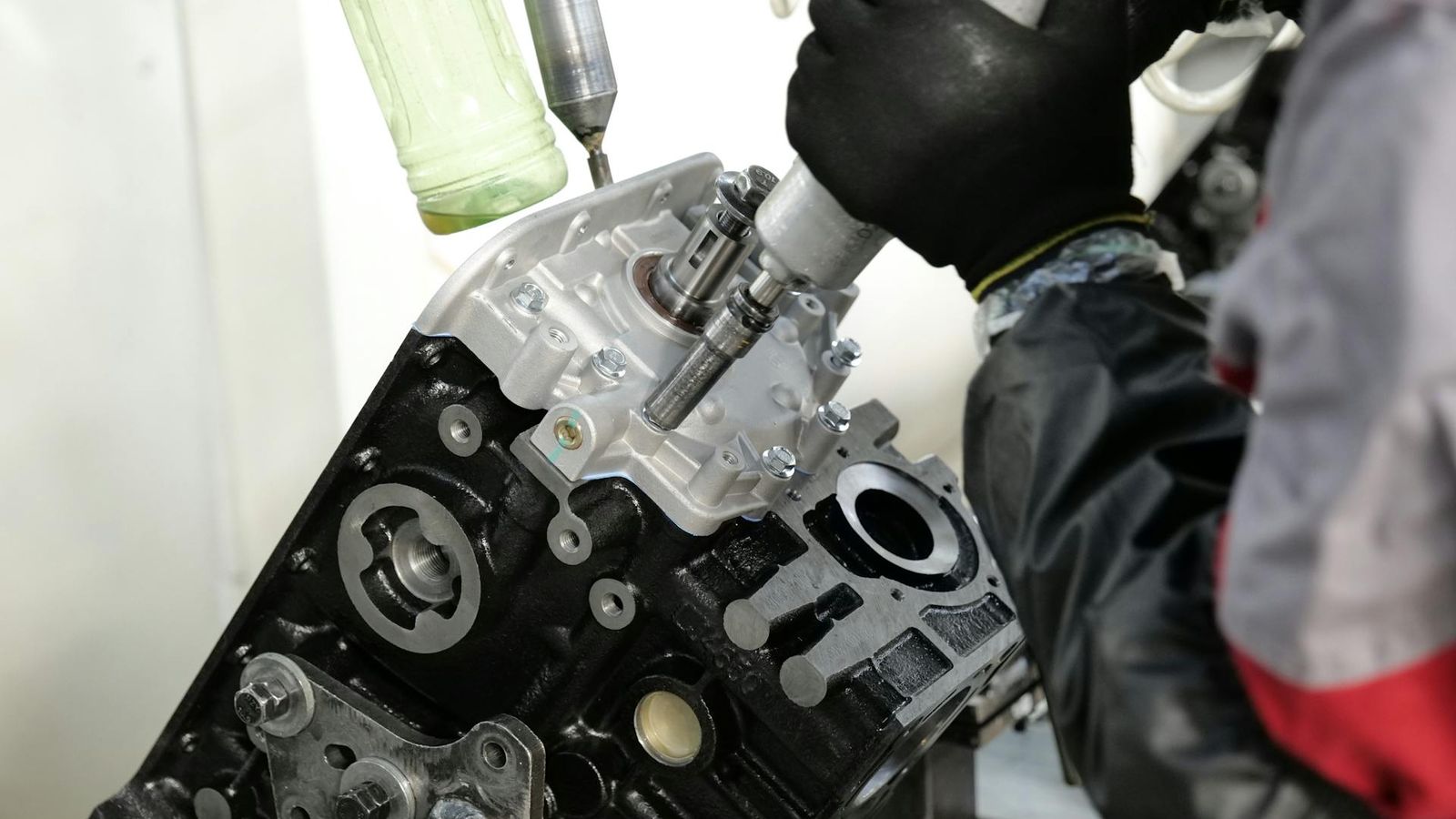
A bead profile that drifts a tenth of a millimetre after the stamping die wears, a coating gap on the corner of a multi-layer steel gasket, an OCR-readable lot mark that smudged when the imprint roller misaligned. On a gasket line feeding an automotive Tier-1 program, every defective part that reaches the OEM costs you twice. The part ships under PPAP. Then the engine plant logs a leak in cold-start qualification, the 8D request lands on your quality inbox, and the next allocation review goes to your competitor. Manual inspectors catch the obvious cases, but the bead-profile drift that a 4K macro lens picks up at the inspection station is the one a tired human eye misses after the third hour of a shift. Automated quality inspection for engine seals and gaskets closes that gap, and you do not need a six-figure vision system to do it.
What is automated quality inspection for engine seals and gaskets?
AI defect detection for engine seals and gaskets uses a camera and an AI model to watch every part as it leaves the press, the coating booth, or the imprint station, and to flag non-conforming parts before they reach the tray. Instead of relying on an operator at the panel or on rigid rule-based machine vision, the model learns from images of conforming and non-conforming parts on your line, and it adapts as your rubber compound, your tool wear, and your coating change.
Engine seals and gaskets are particularly challenging because they combine multiple materials and complex geometries on a single part. Multi-layer steel (MLS) gaskets carry stamped beads, coatings, imprint markings, and tightly toleranced holes, often on a black rubber-overmolded carrier that defeats simple silhouette or threshold-based algorithms. Elastomer seals are flexible, react differently to low-angle lighting than rigid stamped parts, and require lighting tuned to the rubber compound. AI-led inspection handles these variations by learning from real production images rather than from a fixed rule set.
The result is an automated visual checkpoint that complements CMM and leak-test stations in PPAP-grade inspection programmes, blocks non-conforming parts from entering controlled lots, and builds a continuous, image-based traceability record for IATF 16949 audits.
Defects we catch on engine seal and gasket lines
Bead profile deformation
The stamped or moulded bead is the functional geometry of every gasket and seal. Tool wear, die misalignment, or feed-rate issues can deform bead height or width along local sections of the part. These deviations often only show up at cold-pressure test or in the field if they are not caught early. The AI model learns the nominal bead profile from reference parts and detects local geometric drift along the bead path. It flags parts with out-of-profile sections before they enter the PPAP-controlled lot, reducing the risk of downstream leakage failures.
Coating coverage gaps
Metal gaskets typically receive a silicone or rubber coating that must be continuous along the bead and sealing surfaces. Spray gaps, dry-back areas, and thin spots can open under thermal cycling and allow coolant or oil to leak. By analysing local colour, texture, and gloss, the model identifies incomplete or inconsistent coating regions and routes affected parts to secondary inspection or rework instead of allowing them to ship.
Sealing edge nicks
Small nicks on the sealing edge can arise from handling damage, chipped trim dies, or misaligned conveyor transitions. These defects are difficult to see under diffuse light on polished or coated surfaces. With a low-angle ring light, edge discontinuities become visible. The AI detects these local breaks along the sealing edge and flags affected parts before they move to the next process step.
Imprint and marking errors
Lot codes, part numbers, and orientation marks are pressed or laser-marked onto each gasket to maintain IATF 16949 traceability. Smudged imprints, misaligned marks, and out-of-spec character sizes can break the traceability chain during an audit. The model performs OCR on each imprint, validates the format and position, and flags any marking that fails the check. This ensures that every part in a lot carries a compliant, readable identifier.
Hole position deviation
Bolt and locating holes on MLS gaskets must meet tight positional tolerances. Telecentric optics provide high-precision measurements, while the AI adds a visual plausibility layer. The system checks that hole positions are consistent with the learned pattern and flags parts with gross misplacements before they reach dedicated metrology stations, reducing wasted CMM time on obvious non-conformances.
Material flash on rubber overmold
Rubber overmolding can leave residual flash at the tool parting line. Flash that escapes deflashing appears as a thin film or fin along the part edge. The AI recognises the flash signature against the part outline, classifies the severity, and routes parts either to manual rework or scrap according to your flash criteria.
The lighting setup that makes this work on a seal and gasket line is a combination of low-angle ring light for sealing-edge defects and bead geometry, diffuse dome light for coating coverage and surface texture, and telecentric backlight where hole position is measured. An iPhone Pro with macro and wide-angle lenses handles the multi-defect taxonomy in a single inspection station. For automotive Tier-1 lines we synchronise the rig with the conveyor encoder. We specify the optics with you during onboarding.
How Enao runs on a seal and gasket line
The full hardware rig costs less than €1,000 and consists of a refurbished iPhone Pro, a low-angle ring light, a USB-C cable, and a mounting arm above the inspection point. PLC integration is not required for the first deployment, the rig fits in a flight case, and the line keeps running while you set it up.
Onboarding is self-serve. Your line team mounts the rig, opens the Enao app, and starts collecting reference frames at the next part change. Day one returns 80% accuracy without any prior labelling, and by day fourteen the model is operating above the manual inspector on the defect families it has seen, improving with every flagged part that the line confirms or rejects.
Each line teaches its own model what its bead profiles, coating systems, imprints, and hole patterns look like. When you add a second line in the same product family, the second model starts from the first one's experience and the marginal effort drops sharply. When you introduce a new gasket variant, you re-teach the model in a single shift rather than re-programming a rule set across two weeks.
Bad parts stop leaving the cell, scrap routing happens at the inspection point rather than at end-of-line audit, and your inspectors get back the hours of attention they need for the parts of the job that still require a human eye, including supplier audits and IATF documentation.
How Enao compares to manual inspection and traditional machine vision
For engine seal and gasket producers the comparison sharpens around five dimensions.
-
Setup time on a seal and gasket line. — Manual visual inspection misses subtle bead deformation. Traditional machine vision (Solomon-3D, Overview.ai, Cognex, Maddox.ai) requires three to nine months of integration and a six-figure budget. Enao is deployed in a week by your own team on a refurbished iPhone, day one at 80% accuracy, climbing as your operators label.
-
Hardware cost per line. — Manual visual inspection: none upfront, ongoing labour cost. Traditional machine vision: €50,000 to €300,000 per line for industrial cameras, telecentric optics, structured lighting, and integration. Enao: under €1,000 per line with a refurbished iPhone Pro, lamp, and mount.
-
Handling new gasket variants. — Manual visual inspection: re-train inspectors for every new variant. Traditional machine vision: rewrite the rule set per variant, often outsourced to the integrator. Enao: re-teach the model on new variants in a single shift, no code to touch.
-
Detection accuracy on bead and coating defects. — Manual visual inspection: high at shift start, drops measurably after three hours. Traditional machine vision: strong on geometric measurements, weak on subtle coating-coverage and bead-profile drift. Enao: learns coating and bead signatures from reference frames and holds accuracy across shifts.
-
Who runs it. — Manual visual inspection: trained inspector. Traditional machine vision: system integrator or a specialised vision engineer. Enao: your line team, no external specialist required.
Gasket portfolios change with every engine program, and the cost of a returned PPAP lot or a field nonconformance sits well above the cost of an iPhone-based inspection rig. Enao is built for that gap.