Industrial computer vision in 2026: how it works and what it costs

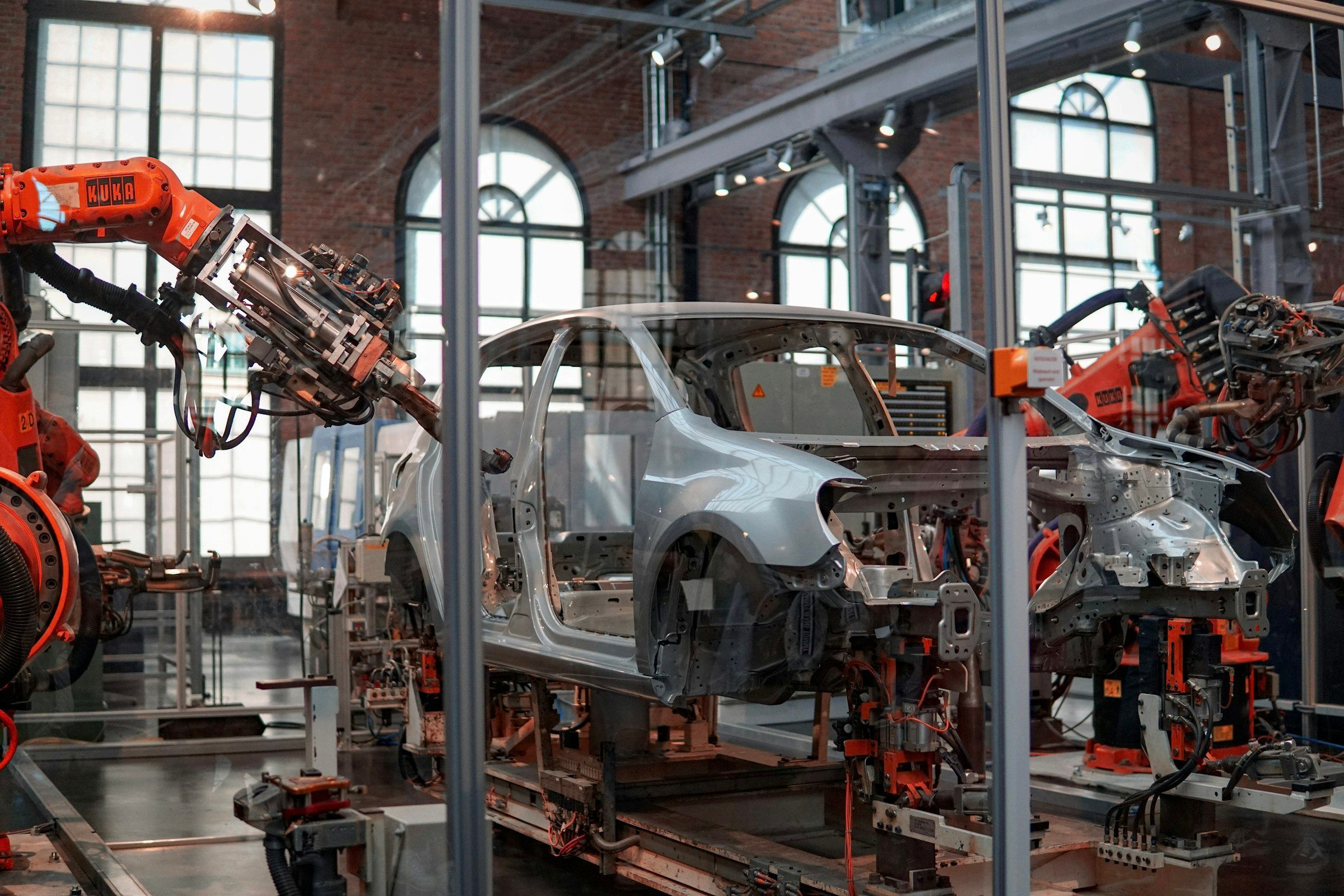
Industrial computer vision is the set of hardware and software that lets machines interpret images from a production line and make decisions on them in real time. In 2026 the field splits into two camps. Legacy platforms from Cognex, Keyence, Basler, and Omron dominate high-precision and high-speed installations, and typically cost 15,000 to 60,000 euros per inspection station. Software-first challengers like Enao Vision run on an iPhone and cost under 1,000 euros in hardware. Both use the same underlying computer vision techniques and both feed the same MES and ERP dashboards. The choice is about scale, budget, and speed of deployment, not about capability.
What is industrial computer vision?
Industrial computer vision applies image processing, deep learning, and object detection to problems that live on a production line. Typical problems are defect detection, dimensional inspection, presence and absence checks, assembly verification, OCR on labels, and barcode reading. Industrial computer vision has been around since the 1980s in the form of rule-based machine vision, but the last five years have brought AI-driven approaches that handle variability the old systems could not. Rule-based logic fails when the product changes; AI models trained on labelled examples adapt with a few new images and keep working.
The word industrial matters. Industrial computer vision has to survive vibration, dust, temperature swings, and shift changes. A camera setup that works in a lab is not the same as one that runs three shifts a day for two years. That is why the discussion always comes back to hardware quality, lighting consistency, and how the software handles drift.
How industrial computer vision works
Every industrial computer vision pipeline runs four steps for each part on the line. First is image acquisition: a camera captures a frame at a fixed distance under fixed lighting. Second is pre-processing: morphology, segmentation, and edge detection clean up the raw pixels so the model sees a normalised input. Third is inference: a deep learning model runs object detection, anomaly detection, or defect classification on the pre-processed image. Fourth is decision logging: the result plus the image plus a timestamp gets pushed to the MES, PLC, or QMS the plant already runs on.
The difference between a good and a bad industrial computer vision setup is how tightly the four steps are wired together. Vendors quote frame rates in isolation, but what matters is the end-to-end latency: how long from the moment the part enters the camera field to the moment the reject arm fires. On lines running 100 units per minute that has to be under 100 milliseconds, and it is where edge computing earns its keep.
Common industrial computer vision applications
Surface defect detection is the most common use. AI vision reads scratches, dents, colour drift, print defects, weld seam problems, and paint chips on parts that move too fast for a human eye. Dimensional inspection covers deviation from spec, warping, and misalignment, taking on tasks that used to require a coordinate measuring machine. Assembly verification confirms presence, absence, orientation, and correct part selection. Barcode and 2D matrix code reading, plus OCR for batch codes and expiration dates, round out the everyday toolkit.
More advanced applications include high-speed food and beverage inspection (labels, seal integrity, foreign object contamination), pharmaceutical inspection (tablet defects, blister packs, syringe barrels under FDA and EMA scrutiny), and PCB assembly verification (solder joint checks, missing components, misalignment). Automotive Tier 1 and Tier 2 suppliers use industrial computer vision for weld seam checks and stamped panel dimensional analysis. Each vertical has its own defect taxonomy and its own line speed constraints, and industrial computer vision has to hit both to be useful.
Industrial cameras vs iPhone: what actually matters
The Cognex In-Sight D900, Keyence VS Series, and Basler ace cameras deliver high resolution up to 25 megapixels, global shutter, IP67 ratings, and dedicated deep learning software. They are the right choice for high-speed inspection above 500 units per minute or for micron-level semiconductor work. Cost per station lands between 15,000 and 60,000 euros including light, mount, controller, and integrator time.
An iPhone running Enao Vision covers the same defect taxonomy on slow-to-medium lines (under 100 units per minute) at a fraction of the cost. A refurbished iPhone 12, a lamp, a mount, and a cable come in under 1,000 euros. The Apple Neural Engine handles inference on-device, so latency stays under 50 milliseconds and there is no cloud round-trip. Deployment takes minutes rather than the weeks a legacy install runs on. The trade-off is line speed and extreme environments, and honest vendors will tell you where the iPhone stops being the right answer.
Where industrial computer vision fits with existing systems
Industrial computer vision does not replace your MES, ERP, or QMS. It plugs into them. Pass or fail decisions push into the same SPC feed that quality management uses, defect images live in the same document trail an ISO 9001 audit expects, and downtime signals feed the OEE dashboard the plant already watches. Vendors differ mostly on how easy those integrations are. Legacy platforms have deep native integrations with Rockwell, Siemens, and Omron PLCs. Newer platforms lean on OPC UA and HTTP webhooks, which are lighter to set up and easier to move between plants.
For most SMEs the practical starting point is a webhook integration that pushes counts and defect images to the existing MES. Predictive maintenance on the imaging rig itself, catching light source drift and lens contamination before defect miss rates climb, is a quieter benefit that experienced buyers ask for and beginners forget.
Frequently asked questions about industrial computer vision
What is the difference between industrial computer vision and machine vision?
Machine vision is the older term for rule-based image processing applied to factory automation. Industrial computer vision includes machine vision but also covers the modern AI approaches (deep learning, object detection, anomaly detection) that handle variability the older systems could not. In practice the terms are often used interchangeably in vendor marketing, but the technical difference is that machine vision typically means rule-based logic and industrial computer vision covers both rule-based and AI-driven pipelines.
How much does industrial computer vision cost?
Legacy industrial computer vision from Cognex, Keyence, or Omron lands between 15,000 and 60,000 euros per inspection station including hardware, software licences, lighting, and integrator time. iPhone-based industrial computer vision from Enao Vision costs under 1,000 euros in hardware plus a subscription for the software. Over three years the gap widens further once you factor in maintenance, retraining, and hardware refresh cycles.
Can iPhone-based computer vision handle real production lines?
Yes for slow-to-medium lines running under 100 units per minute, and for most surface defect, presence and absence, OCR, barcode reading, and assembly verification tasks. No for high-speed lines above 500 units per minute, micron-level semiconductor inspection, or environments hotter than 50 degrees Celsius. Most plants that adopt iPhone-based computer vision keep one or two industrial cameras at the stations where physics demands it and use iPhones across the rest of the line.
Get started
Ready to see how iPhone-based AI inspection compares on your line? You can get started for free using an iPhone you already have, or try the demo to compare notes with other quality and operations teams putting AI on the shopfloor.
Explore with AI
Discuss this article with your favorite AI assistant
