AI weld inspection: catching the AWS D1.1 defects human eyes miss

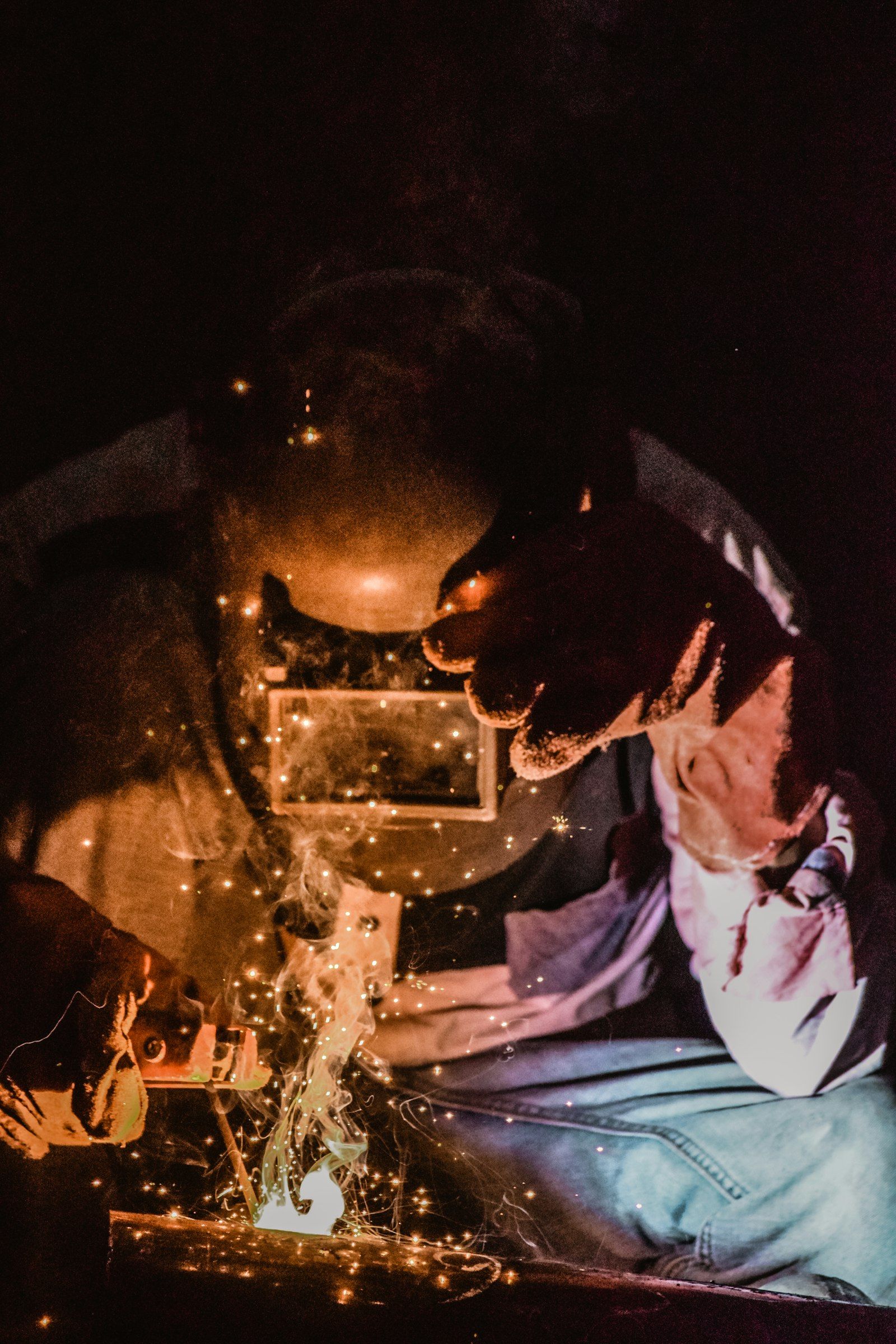
AWS D1.1 rework on MIG welds commonly runs in the low single digits of percent on disciplined lines and climbs into the high single digits on undisciplined ones. Visual inspection alone misses a meaningful share of that defect tail. AI closes the gap without replacing the human inspector.
Weld inspection is an old problem that moved slowly for two decades because the tools were either too expensive (radiography) or too slow (penetrant testing) for most production lines. Modern AI visual inspection finally makes continuous weld QC economic on the line, not just at the spot-check station.
The six defect classes AWS D1.1 flags for visual
Porosity is gas trapped in the weld bead, visible as surface pits. Undercut is a groove at the weld edge where the base metal got eaten without refill. Overlap is weld metal that did not fuse, sitting on top of the base. Cold lap is a weld that cooled before fusing, visible as a crisp edge. Burn-through is a weld pool that ate through the panel. Crater cracks are surface cracks at the stopping point of the weld.
All six are visually detectable given the right lighting and angle. All six are hard for a human inspector to catch consistently over an 8-hour shift. That is the gap AI closes.
Why human visual and penetrant testing hit a ceiling
Human inspection misses about 15 percent of detectable defects on average, per AWS studies on hand-weld quality. The number goes up as the shift goes on. Penetrant testing is more sensitive but it takes 15 minutes per weld and cannot run continuously on a production line.
AI visual inspection runs continuously, does not fatigue, and maintains the same recall in hour 8 that it had in hour 1. The tradeoff is that it needs 2,000 to 5,000 labeled examples per defect class to get to production-grade accuracy.
What AI sees that the human eye does not
Micro-undercut below 0.1 millimetres deep. Spatter patterns that correlate with upstream torch wear. Subtle surface color changes that predict cold-lap before it gets to its final crisp-edge state. None of these are impossible for a human to see, but none are reliable to see at line speed over a full shift.
More interestingly, AI models trained across a line catch drift before it shows up as a rejected weld. A rising spatter-pattern score is an early warning that the consumable is wearing. That moves the inspection from reactive QC to predictive maintenance.
Setup: lighting, camera angle, and training data
Two-angle lighting at 30 degrees from each side is the default starting point for MIG welds. The camera sits 40 to 60 centimetres from the weld on a rigid mount. Capture happens 2 to 5 seconds after the weld is complete, once the weld has cooled enough to stop emitting visible-spectrum heat.
Training data is the bottleneck. Most weld cells have years of weld logs with pass-fail annotations from the inspector. That history, combined with 500 to 1,000 new images captured during commissioning, is usually enough for production-grade accuracy on the first four defect classes.
See our full lighting setup guide for the angle, distance, and exposure numbers.
Integration with the MIG or TIG cell
The camera trigger comes from the torch controller. The inference result goes into the MES and the SPC chart. For robot cells, the weld-complete signal fires the camera on a 3-second delay. For hand welding, an operator-triggered button works.
The pass-fail call needs to land within 8 seconds to not disrupt line flow. Modern edge compute handles that comfortably.
For the upstream automotive context, see the automotive body-in-white use case. For the full category of defects AI catches, our round-up is the reference list.
Enao Vision runs iPhone-based weld inspection cells at multiple customer sites. It is among the lowest-cost deployments in the category, typically around 3,500 euro per cell plus an OpEx license, and weld cells commonly pay back the license inside a quarter on rework reduction alone. Weld-model tuning is a frequent topic in our try the demo because every plant's consumables, wire feeders and shielding gas setups are different.
The 4 percent gap between disciplined and undisciplined MIG lines is where AI inspection pays. The tools finally exist to close it without a capital project. Most plants just have not looked at weld QC in five years, and the category has moved.
Get started
Want to see how Enao Vision works on your line? You can get started for free using an iPhone you already have, or try the demo to compare notes with other quality and operations teams putting AI on the shopfloor.
Explore with AI
Discuss this article with your favorite AI assistant
