AI solutions for manufacturing: the 4 categories that ship in 2026

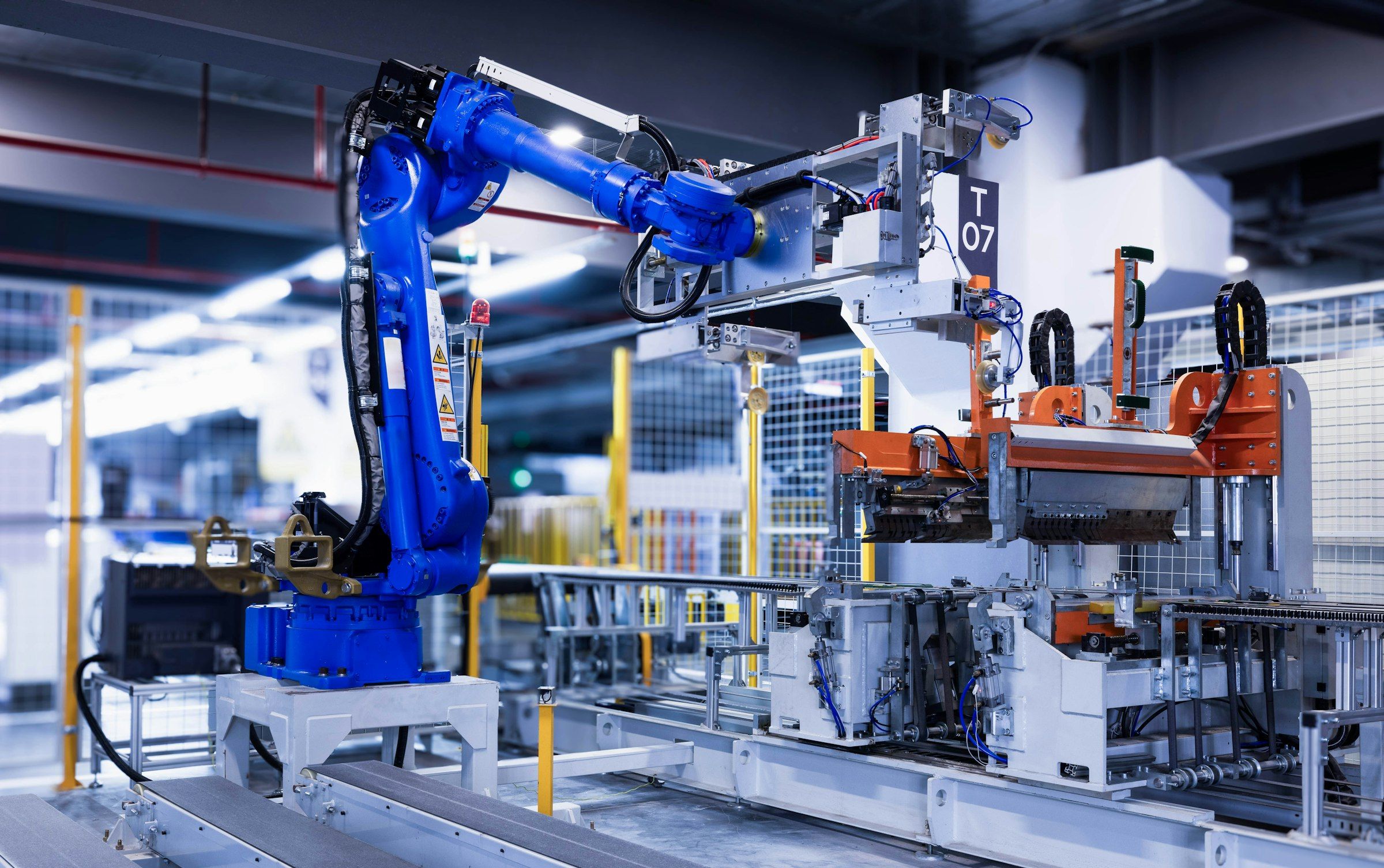
AI solutions for manufacturing cover a wider range than most vendor pitches suggest. In 2026 they split into four families: computer vision and quality control, predictive maintenance and asset performance management, industrial IoT platforms, and agentic AI for shopfloor operators. Manufacturers who pick one family and treat it as the whole picture end up with expensive dashboard art. Manufacturers who understand all four and pick the one that fits their biggest bottleneck first, then layer the others as the ROI shows up, get a real return.
What AI solutions for manufacturing look like in 2026
AI solutions for manufacturing describe any software that uses machine learning, computer vision, or natural language processing to solve a factory problem. The problems worth solving are the ones that live where a human eye or a rule-based automation cannot keep up: catching subtle defects, spotting bearing wear before failure, forecasting demand across a fragmented supply chain, or drafting shift reports and work instructions in plain language. In every case the AI does not replace the plant's existing MES, ERP, or QMS. It plugs into them and adds a signal the old systems could not produce.
What has changed in 2026 is the entry point. Five years ago, deploying AI on a shop floor meant a six-figure capex request, an integrator team, and a nine-month project cycle. Today it can start with a free tier on an industrial IoT platform, a smartphone-based visual inspection app, and an agentic AI copilot that costs under 100 euros a month. Plants under 100 people can now trial four categories of AI in parallel without a budget request.
The four categories of AI solutions manufacturers actually deploy
Computer vision and AI-driven quality control
The largest and most mature category. AI vision runs on cameras (industrial or iPhone) at inspection stations, catching surface defects, dimensional deviations, and assembly errors that rule-based machine vision misses. Vendors include Cognex, Keyence, and Omron on the legacy side, plus Enao Vision, Landing AI, and Maddox on the AI-first side. Cost ranges from under 1,000 euros per station for iPhone-based setups to 60,000 euros per station for high-speed industrial installations.
Predictive maintenance and asset performance management
Sensors on motors, pumps, conveyors, and industrial equipment feed vibration, temperature, and current data into machine learning models that flag anomalies before a component fails. Vendors include Sight Machine, Cognite, and a growing set of industrial IoT platforms with free tiers. Predictive analytics on the same data feeds asset performance management dashboards showing MTBF, MTTR, and downtime trends. The practical entry point is a free industrial IoT platform account plus a couple of low-cost vibration sensors on the two or three machines that hurt most when they break.
Industrial IoT platforms and enterprise AI
The pipe that carries sensor data from the shopfloor to the AI models running on top. Industrial IoT platform vendors sit alongside broader enterprise AI platforms that combine NLP, industry 4.0 dashboards, and smart factory analytics into one console. Sight Machine, Cognite, and a handful of newer entrants play here. For plants running 20 or more lines they can pull demand forecasting, energy management, supply chain management, and process optimization into one view.
Agentic AI for shopfloor operators
The newest category. Agentic AI copilots read the OEE feed, notice a slow cycle, check the maintenance log through NLP, and draft a work order for the supervisor to approve. In manufacturing this is early, but 2026 has seen the first useful examples, and most copilots are free during their pilot programs. Agentic AI fits into the same daily workflow as Notion or ChatGPT for the plant wiki: productivity tools handle the writing and meetings, agentic AI handles the shopfloor signal.
How AI solutions for manufacturing integrate with existing systems
Every serious AI solution for manufacturing has to talk to your MES, ERP, and QMS. Modern vendors expose HTTP webhooks, OPC UA, or MQTT interfaces so pass or fail counts, defect images, sensor readings, and predictive alerts flow into the same feed the plant already reads. Legacy platforms lean on native integrations with Rockwell, Siemens, and Omron PLCs. Newer platforms treat integration as a first-class product feature because they have to earn their place next to entrenched vendors.
Data flow direction matters. A vendor that only reads data from your MES is missing half the value. The best AI solutions push predictions, anomalies, and inspection results back into the same SPC feed that quality assurance teams already watch, which is what closes the continuous improvement loop that lean manufacturing and six sigma programmes have been running for decades.
Cost ranges and ROI for AI solutions
Free tier options exist in every category. Enao Vision has a free tier that includes the same AI models paid users get. Most industrial IoT platforms offer free accounts for a handful of sensors. Agentic AI copilots are often free during pilot. This lets a plant validate value before any capex request, which is the biggest procurement shift of the last three years.
Paid tier costs land differently per category. Computer vision runs 1,000 to 60,000 euros per station depending on hardware. Predictive maintenance is typically usage-based, with 500 to 5,000 euros a month for a mid-size plant. Enterprise AI platforms sit at 50,000 to 500,000 euros a year for large plants. Agentic AI is early enough that pricing is settling, but sub-500 euros a month is common for a single-line deployment. ROI shows up in different places: defect cost avoidance for computer vision, downtime reduction for predictive maintenance, headcount efficiency for agentic AI, cycle time compression for enterprise AI.
How to pick your first AI solution for manufacturing
Start with the biggest pain, not the most fashionable category. If defects are shipping out, computer vision is the first move. If unplanned downtime is killing OEE, predictive maintenance leads. If your shift reports and quality documents are a mess, agentic AI is worth trialling. If you cannot say what the biggest pain is, spend a week talking to the operators before spending a euro on software.
A one-week pilot on one line is enough to prove or disprove a vendor. If the vendor cannot support a one-week pilot, they are not the vendor you want. Once the first pilot works, the second and third pilots come faster because the integration muscle is already in the plant. Most plants that run this approach reach full plant coverage within six to nine months, which is faster than any single legacy vendor rollout used to be.
Frequently asked questions about AI solutions for manufacturing
What is the difference between AI solutions and industrial automation software?
Industrial automation software covers PLCs, SCADA, and control systems that run the physical line: robots, conveyors, sensors, actuators. AI solutions layer on top of that infrastructure, adding pattern recognition, prediction, and decision support that the deterministic control systems cannot produce. Both categories talk to each other through PLCs, MES, and industrial IoT platforms, and modern deployments treat them as complementary rather than competing.
Which AI solutions for manufacturing have free tiers?
Enao Vision (computer vision QC), most industrial IoT platforms, agentic AI copilot pilots, and a growing set of NLP and demand forecasting tools all have free tiers or extended trials. The 2026 buying pattern is to combine two or three free tiers into a proof of value before any paid contract, which is a genuine shift from the enterprise sales cycle of the past decade.
Do AI solutions for manufacturing replace human operators?
No. They shift what humans spend time on. Manual inspection becomes AI-driven inspection with humans handling model corrections and root cause analysis. Manual downtime tracking becomes AI-driven predictive alerts with humans handling maintenance work. Manual shift reports become AI-drafted reports with humans handling review and approval. Headcount typically stays flat but the mix of work moves toward higher value.
Get started
Ready to see how iPhone-based AI inspection compares on your line? You can get started for free using an iPhone you already have, or try the demo to compare notes with other quality and operations teams putting AI on the shopfloor.
Explore with AI
Discuss this article with your favorite AI assistant
