How Small a Defect Can an iPhone Detect? Sub-Millimetre Sugar Test
Two piles of sugar, one contaminated with sub-millimetre foreign material. We tested whether an iPhone Ultra Wide macro lens catches what the eye misses.
Someone asked how far an iPhone can really push defect detection, so instead of arguing about it in theory we ran the test on camera.
The setup is two piles of sugar, one clean and one contaminated with sub-millimetre foreign material, filmed through the iPhone Ultra Wide lens in macro mode. The question is whether the model reliably separates the two when the difference is at the edge of what a human inspector would catch.
The short answer is yes. The longer answer, including what working distance and lens choice do to the smallest detectable defect, is covered in our field of view breakdown on the blog.
继续观看
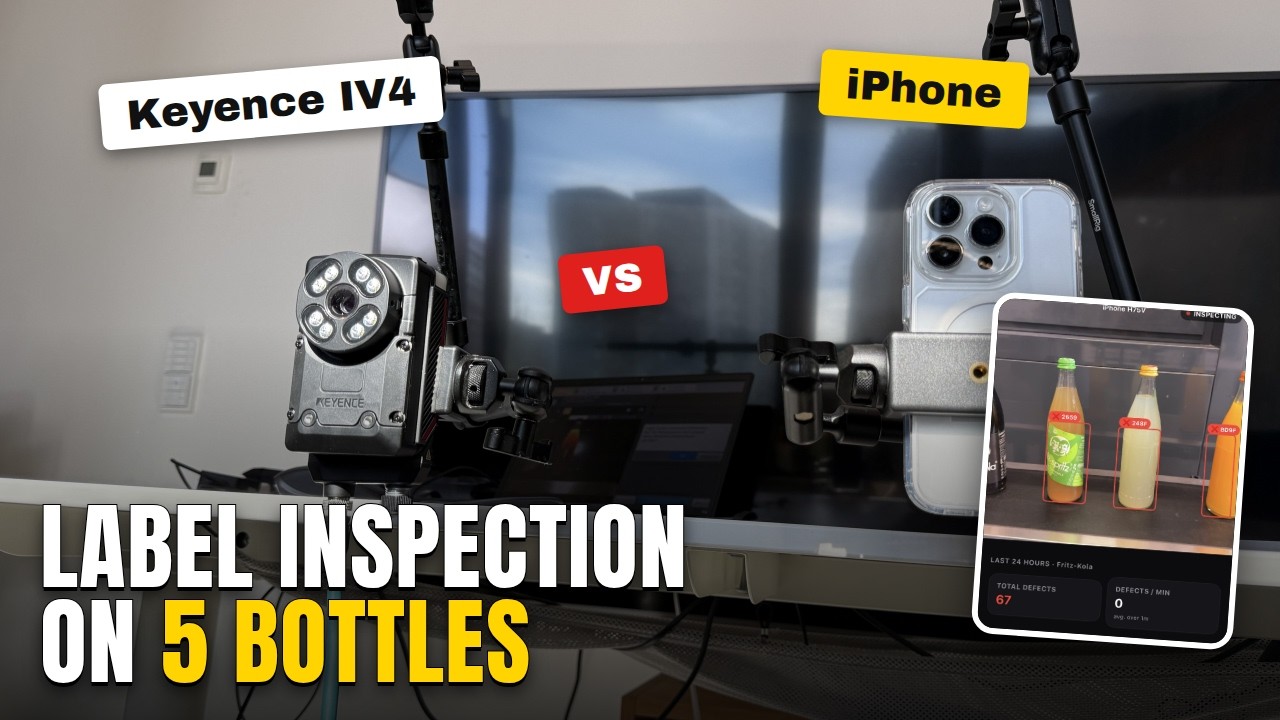
Automated Visual Inspection: Keyence IV4 vs iPhone, 5 Bottle Types
Label presence and alignment, straight from Keyence's own IV4 page. Five Fritz-Limos, trained on three, tested on two neither device had seen before.
发布于 2026年9月30日
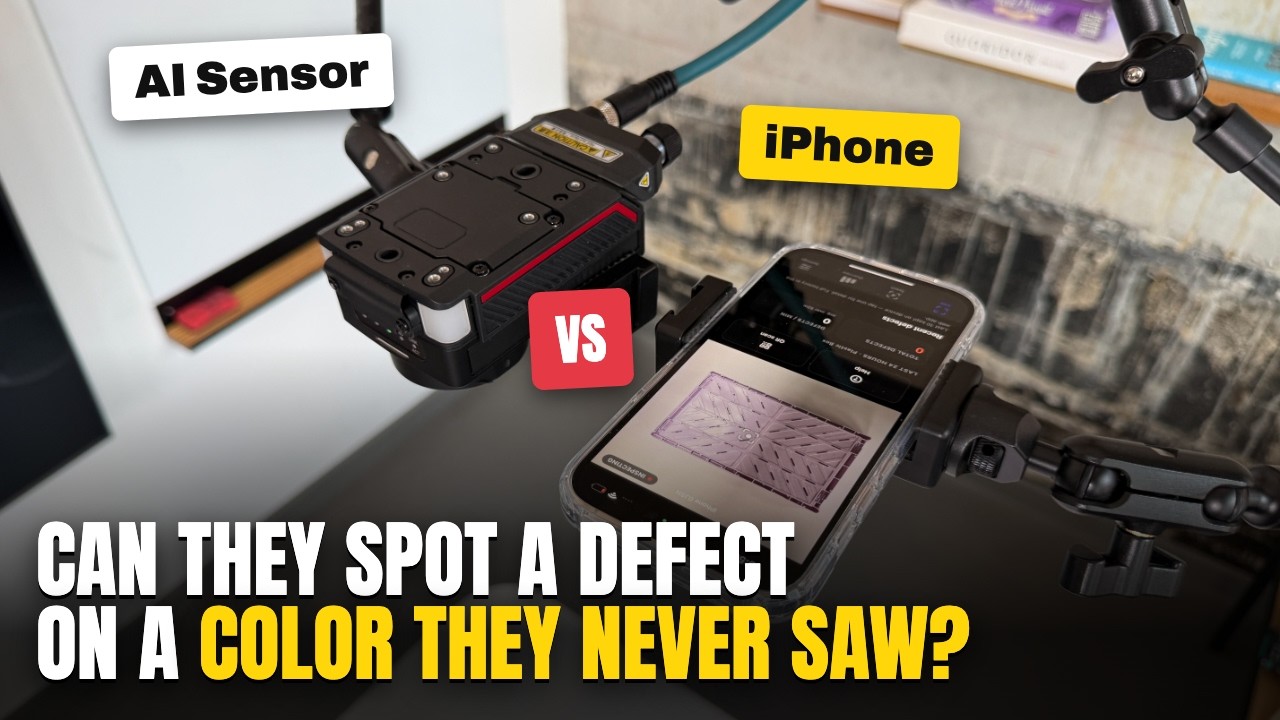
Surface Defect Detection: Keyence IV4 vs iPhone
A Keyence IV4 and an iPhone trained on the same injection molding defect, then tested on a color neither had seen. Teaching speed vs detection performance.
发布于 2026年9月11日
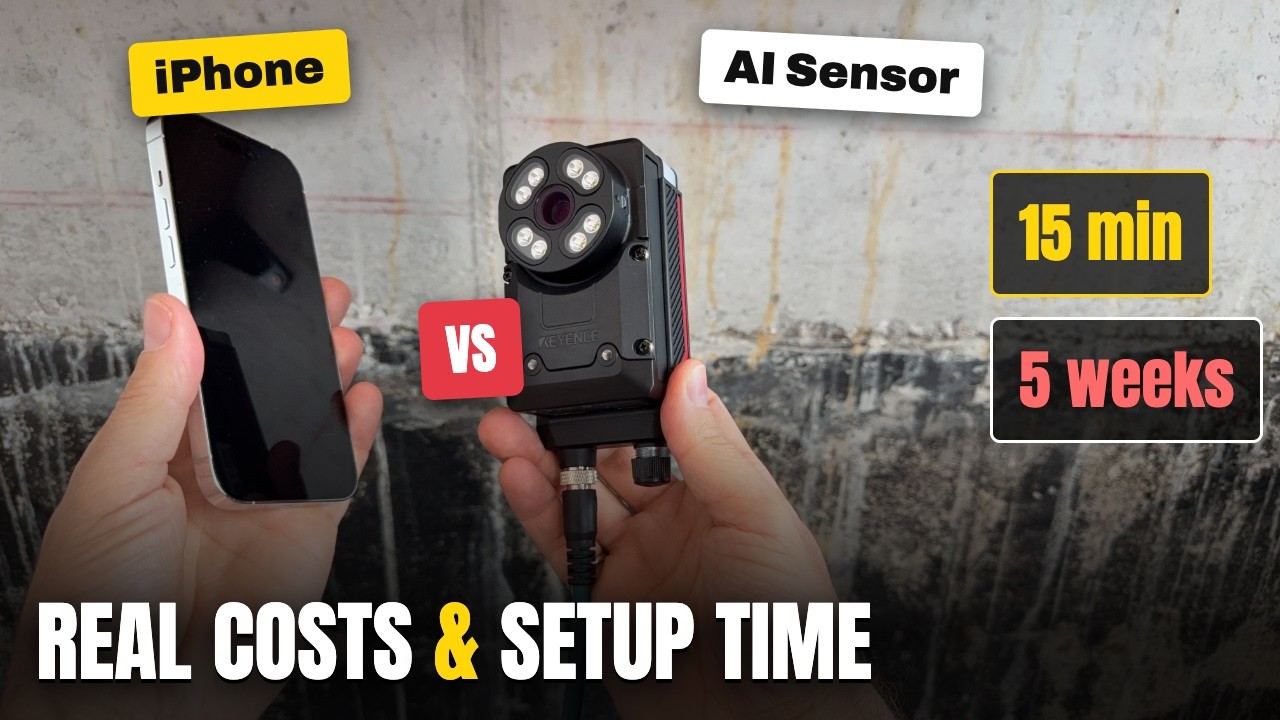
AI Vision Systems: Real Costs and Time to First Result
We bought a Keyence IV4 and tracked every euro and every day to a first image, then ran the same test on an iPhone. Here is what each one really costs.
发布于 2026年9月1日
订阅,获取最新检测实操视频
我们每隔几周就会发布新视频,内容包括搭建 iPhone 检测工位、用真实零件训练模型,以及在车间里读取检测结果。在 YouTube 上订阅,就能第一时间看到。