AI Vision Systems: Real Costs and Time to First Result
We bought a Keyence IV4 and tracked every euro and every day to a first image, then ran the same test on an iPhone. Here is what each one really costs.
Nobody in machine vision publishes prices. Everything is gated behind a direct sales process, so the two questions a process engineer actually needs answered, what it costs and how fast you can test it, are the two you cannot look up.
So we bought one. We went through the entire process with a Keyence IV4, which sits at the low end of the market and stands in fairly for the industry, and we tracked every euro and every day. The sensor was 3,800 euros net. Cables and a power over ethernet plug added 70. The configuration software is free but only runs on Windows, so a Windows PC added another 500. That is 4,370 euros before tax, and five weeks from the first enquiry to a live image, because the sensor ships from Japan.
Then we ran the same test on an iPhone. A new iPhone 16 is 849 euros at Apple list price, or nothing at all if you use a phone that is already in the building, and the software runs in a browser rather than needing a machine of its own. Fifteen minutes from signing up to a live image.
This video is only about cost and time to first result. It says nothing about which one detects better, which is the comparison most people actually want. That is coming next, where we put both on the same parts to count objects, read barcodes and run OCR.
继续观看
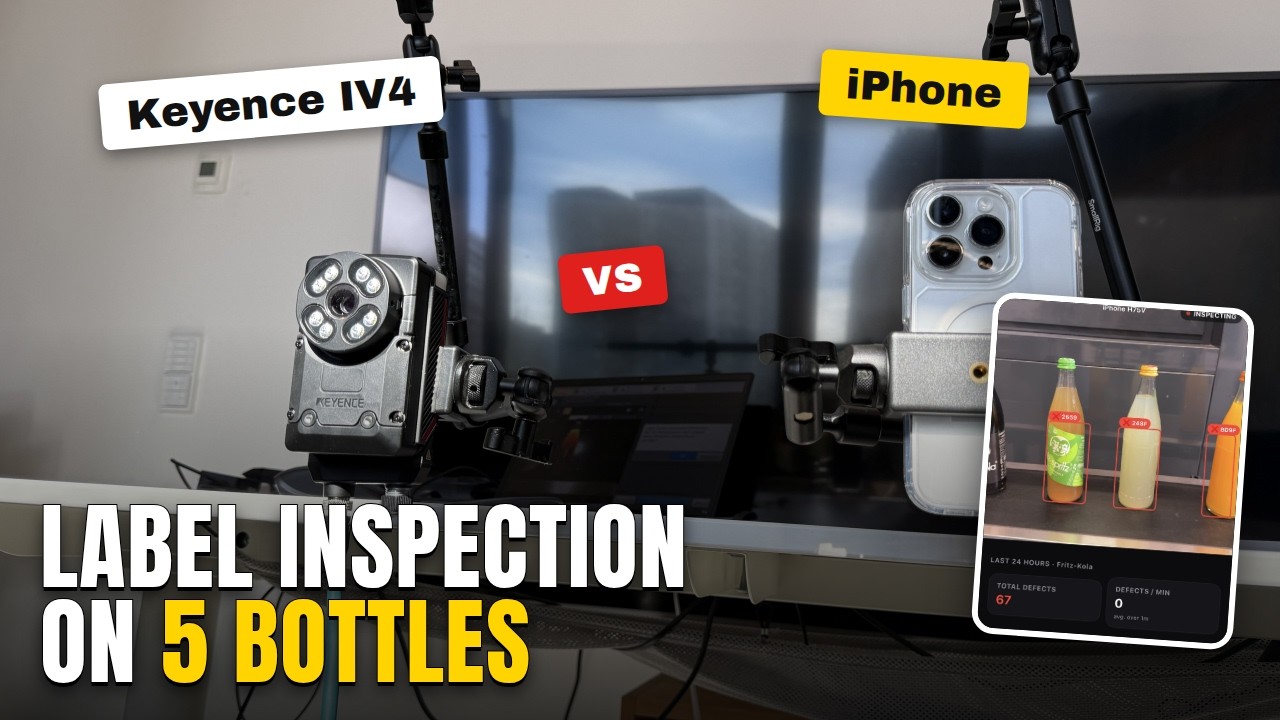
Automated Visual Inspection: Keyence IV4 vs iPhone, 5 Bottle Types
Label presence and alignment, straight from Keyence's own IV4 page. Five Fritz-Limos, trained on three, tested on two neither device had seen before.
发布于 2026年9月30日
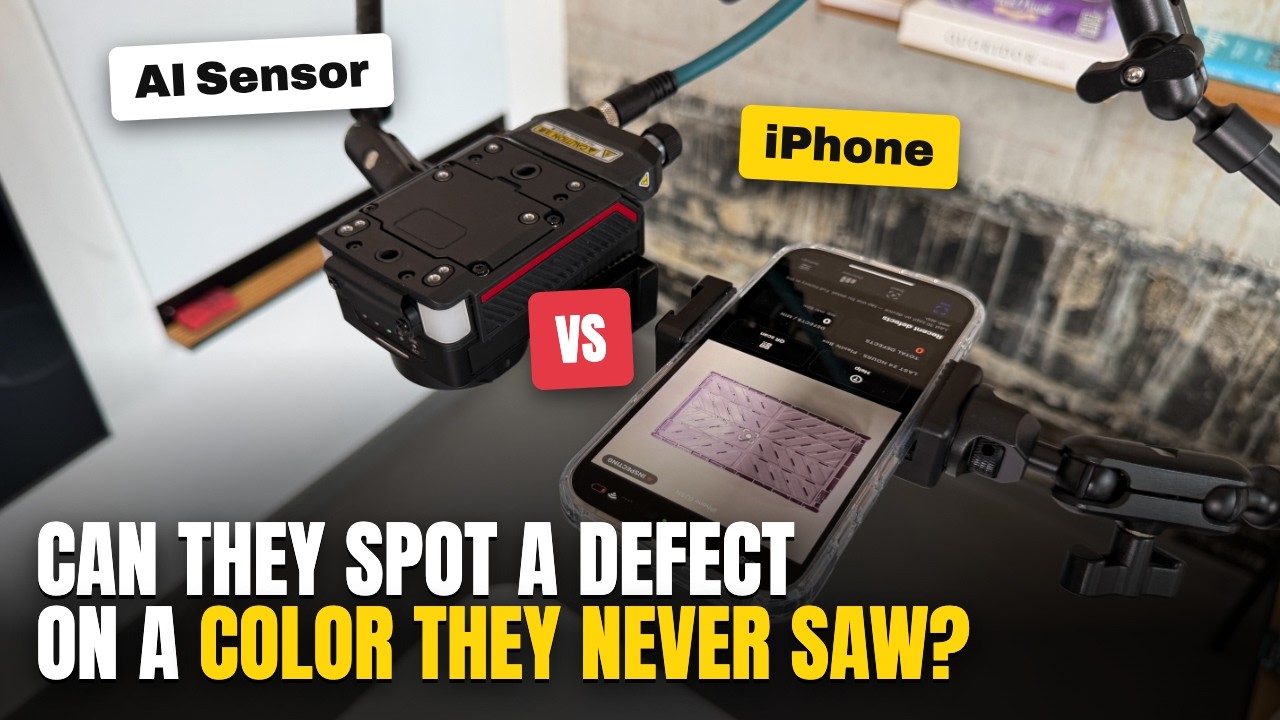
Surface Defect Detection: Keyence IV4 vs iPhone
A Keyence IV4 and an iPhone trained on the same injection molding defect, then tested on a color neither had seen. Teaching speed vs detection performance.
发布于 2026年9月11日
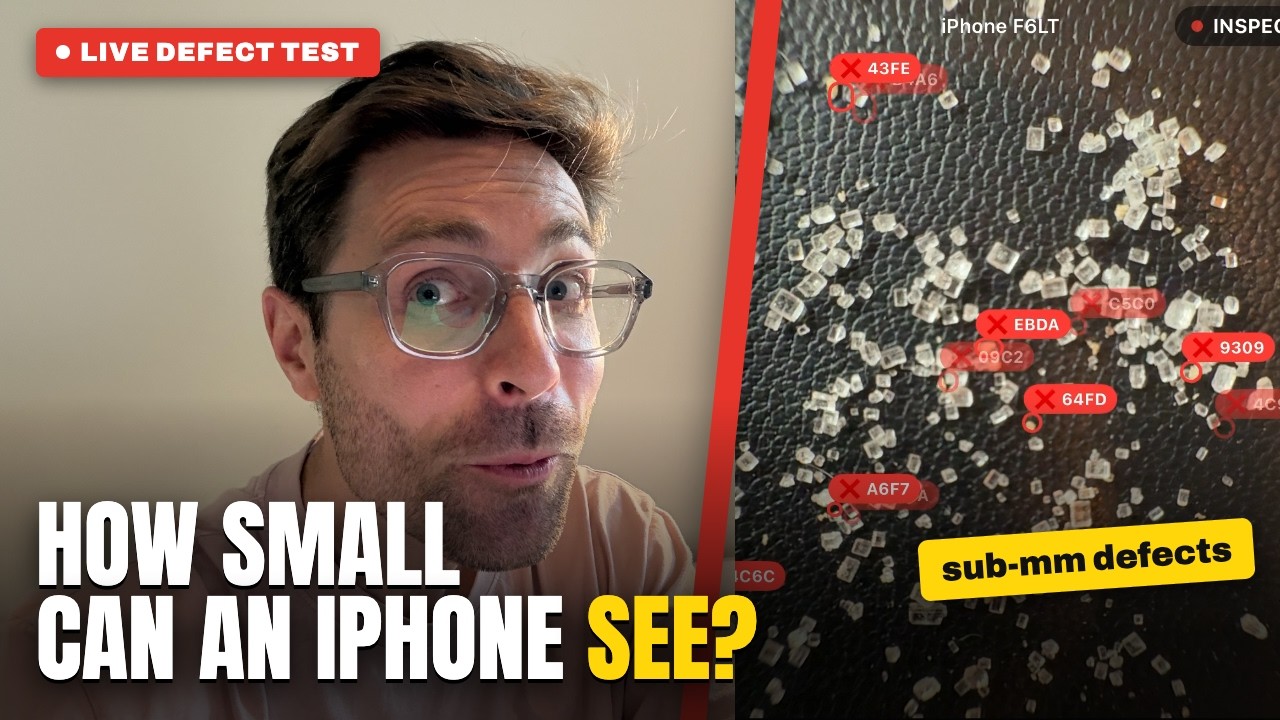
How Small a Defect Can an iPhone Detect? Sub-Millimetre Sugar Test
Two piles of sugar, one contaminated with sub-millimetre foreign material. We tested whether an iPhone Ultra Wide macro lens catches what the eye misses.
发布于 2026年7月31日
订阅,获取最新检测实操视频
我们每隔几周就会发布新视频,内容包括搭建 iPhone 检测工位、用真实零件训练模型,以及在车间里读取检测结果。在 YouTube 上订阅,就能第一时间看到。