The best AI machine vision systems for manufacturing quality control in 2026

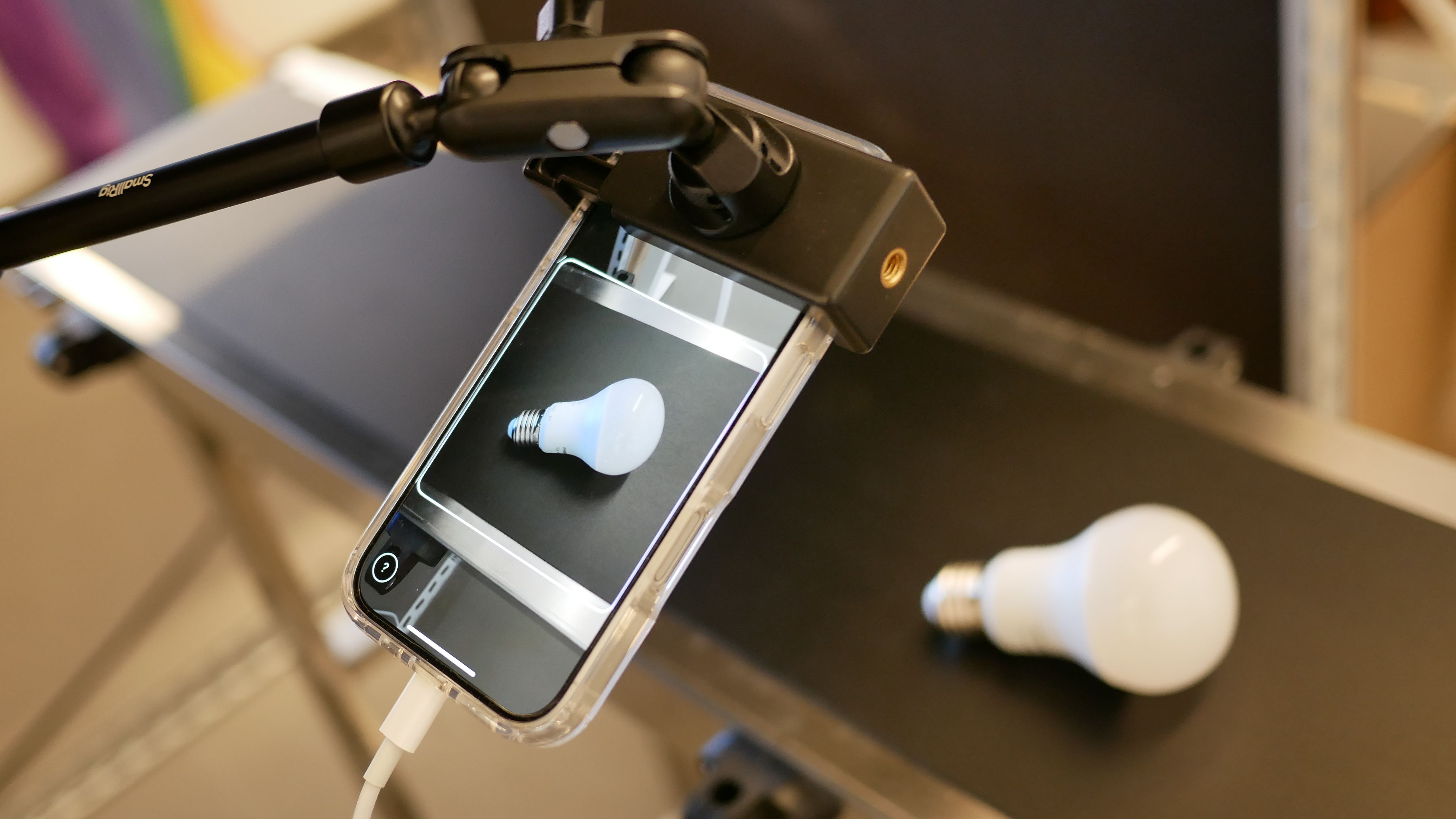
An AI machine vision system uses cameras and computer vision models to inspect parts on a production line and decide whether each one passes or fails. The 2026 market splits into two camps: legacy enterprise platforms (Cognex, Keyence, Omron) priced at 20,000 to 80,000 euros per inspection task, and software-first challengers like Enao Vision running on a refurbished iPhone with hardware under 1,000 euros. This post compares the four side by side.
Each vendor below is profiled on what it does well, where it falls short, and the manufacturing team it actually fits.
1. Cognex In-Sight D900: the industry standard
Cognex is the most recognized brand for machine vision systems. Their flagship AI camera, the In-Sight D900, runs deep learning software directly on the device, with no separate PC needed.
Specs at a glance:
- Resolution up to 12MP
- Runs up to 50 frames per second
- IP67 rated (dust and waterproof)
- Uses Cognex ViDi deep learning software
What it does well: Cognex handles tough jobs beautifully, reading worn-out text, detecting defects on shiny surfaces, and verifying complex assemblies. Their EasyBuilder interface walks you through setup step by step, with no coding required.
Challenges for buyers: It's expensive for small and mid-size manufacturers. The upfront cost of a specialised camera locked to one provider is hard to justify, and you'll need training data to get the AI working well. Cognex often recommends their paid training programs so teams can use all the features. Budget separately for integrating the hardware into the production line.
Best for: Large manufacturers with dedicated vision teams and the budget to match.
2. Keyence VS Series: easiest to deploy
Keyence's VS Series is built for speed. It has a 25-megapixel camera and a built-in optical zoom system, with 19 lenses packed into one IP67 housing. You don't need to pick or switch lenses; the camera chooses for you.
Specs at a glance:
- Up to 25MP resolution
- Integrated optical zoom (ZoomTrax)
- IP67 rated
- Minimal training images needed
What it does well: Keyence is the fastest to set up of the three. The software also auto-configures lighting, focus, and detection parameters. The common quality control parameters include options like scratches, positioning, colour inspection.
Challenges for buyers: Keyence systems are powerful, but still proprietary. You're locked into their device and software ecosystem. Their feature-rich dashboard can also be difficult to navigate, with a lot of information packed in. For very high-precision work like semiconductor or medical device inspection, it may not hit the micron-level accuracy required.
Best for: Mid-to-large manufacturers who need fast deployment and deal with frequent product changes.
3. Omron FH Series: best for Omron shops
Omron's FH Series takes a hybrid approach. It combines traditional rule-based inspection with AI defect detection. The system supports up to 20.4MP cameras and can run up to 8 cameras from one controller.
Specs at a glance:
- Up to 20.4MP resolution
- Up to 8 cameras per controller
- Self-learning AI defect detection
- Deep integration with Omron automation (EtherCAT, Sysmac Studio)
What it does well: Omron shines if you're already using their PLCs and automation hardware. The system fits right into their ecosystem. Their AI self-learning tool automatically picks the best training images, reducing human error in model setup.
Challengers for buyers: If you are not already in the Omron ecosystem, integrating the machine vision system requires high effort. Because it is a legacy solution, the defect detection is a rules-based system with AI added on. This means that the detection setup is not designed for deep learning-first workflows and efficiency gains over time.
Best for: Manufacturers already using Omron automation who want to add vision without switching platforms.
What problems do legacy AI machine vision systems share?
All three systems are excellent at what they do. But they share the same core constraints:
- High upfront cost: Hardware-heavy systems mean big capital investment before you see any results on the production floor
- Expert-dependent: You need specialists to install, configure, and maintain them, all with a price tag.
- Slow rollout: Expect weeks or months of training and setup before the system is live and adding value.
- Rigid models: When your product changes, your model often needs to be retrained from scratch.
For large factories with dedicated engineering teams, these conditions are fine. But for manufacturers who are scaling fast, running multiple lines, or trying to prove AI-based quality control to leadership, these costs and setups are difficult to justify.
An AI-first quality control solution that solves those problems: Enao Vision
We'd be remiss not to mention Enao Vision, a very different kind of AI-based machine vision system that takes an open-tech and user-centric approach to quality control. This starts with using hardware everyone is familiar with: iPhones.
Instead of proprietary cameras and controllers, Enao has built a software-first solution. Everyone knows how to download an iPhone app and follow the setup in minutes. Workers set it up themselves, with no supplier visit, no IT project, and no specialist required.
Unique features that Enao Vision offers include:
- Zero entry cost: There's a freemium model, so you can test it on a live line before spending anything.
- No prior defect data needed: Their AI delivers around 80% accuracy from day one, and improves automatically over time.
- AI models transfer across products: When your product changes, the model adapts instead of retraining from zero.
- Workers run it themselves: If something breaks, they fix it on the spot, with no waiting for a vendor (although we also offer dedicated customer support).
Which machine vision system is right for you?
Here's a simple way to think about it:
- Choose Cognex if you have a large engineering team, a complex inspection problem, and the budget to invest.
- Choose Keyence if deployment speed matters most and you don't have machine vision experts in-house.
- Choose Omron if you're already deep in the Omron ecosystem and want seamless integration.
- Check out Enao Vision if you want to start fast, start free, and prove value before committing to expensive hardware.
The best QA system is the one your team will actually use. That's worth keeping in mind.
Want to see how Enao Vision compares to your current setup? Go to Enao Vision and download our iPhone app for free.
Frequently asked questions about AI machine vision systems
What's the cost difference between AI machine vision providers in 2026?
Cognex, Keyence, and Omron systems land in the 20,000 to 80,000 euros range per inspection task, with cameras alone running 7,000 to 15,000 euros before integration, lighting, and software licenses. Enao Vision skips that capex entirely. The hardware to get a line running (refurbished iPhone, lamp, cables, mount) stays under 1,000 euros, and the software has a free tier.
How fast can each system be deployed on a production line?
Keyence is the fastest of the legacy three thanks to integrated zoom and auto-configured lighting, but you still wait days for an integrator to commission the line. Cognex and Omron typically need weeks of vendor work and training images. Enao Vision deploys in minutes: workers download an iPhone app, set up the camera angle, and start collecting first inspections themselves.
Which AI machine vision system needs the least training data?
Keyence advertises minimal training images for common defect classes. Omron's self-learning tool also reduces image curation effort. Cognex ViDi typically wants the most labeled data of the three. Enao Vision needs none upfront: the model delivers around 80% accuracy from day one and improves automatically as workers confirm or correct results.
Can an iPhone really replace a Cognex, Keyence, or Omron camera?
For high-precision micron-level work like semiconductor or medical device inspection, no. For the bulk of factory quality control (surface defects, label and print checks, presence and absence, assembly verification, packaging integrity), yes. A modern iPhone sensor and Enao's models cover the same defect classes legacy systems handle, at a fraction of the cost and without expert setup.
Key takeaways
- Cognex In-Sight D900 fits large manufacturers with vision teams and capex budgets, especially for tough OCR, shiny surfaces, and complex assemblies.
- Keyence VS Series is the fastest legacy option to deploy thanks to integrated optical zoom and auto-configured lighting, focus, and detection.
- Omron FH Series is the strongest fit when your factory already runs on Omron PLCs and Sysmac Studio.
- All three legacy systems share the same trade-offs: high upfront cost, expert dependence, slow rollout, and rigid models that need full retraining when products change.
- Enao Vision runs on iPhone, starts free, hits roughly 80% accuracy on day one, and lets workers operate it themselves, built for teams that want to prove value before spending on enterprise hardware.
