Textiles
Catch holes, slubs, weave faults, and stains before fabric leaves the roll.
Automated quality inspection for woven and knitted fabric production, dyeing, and finishing, running on a refurbished iPhone next to your loom or finishing line.
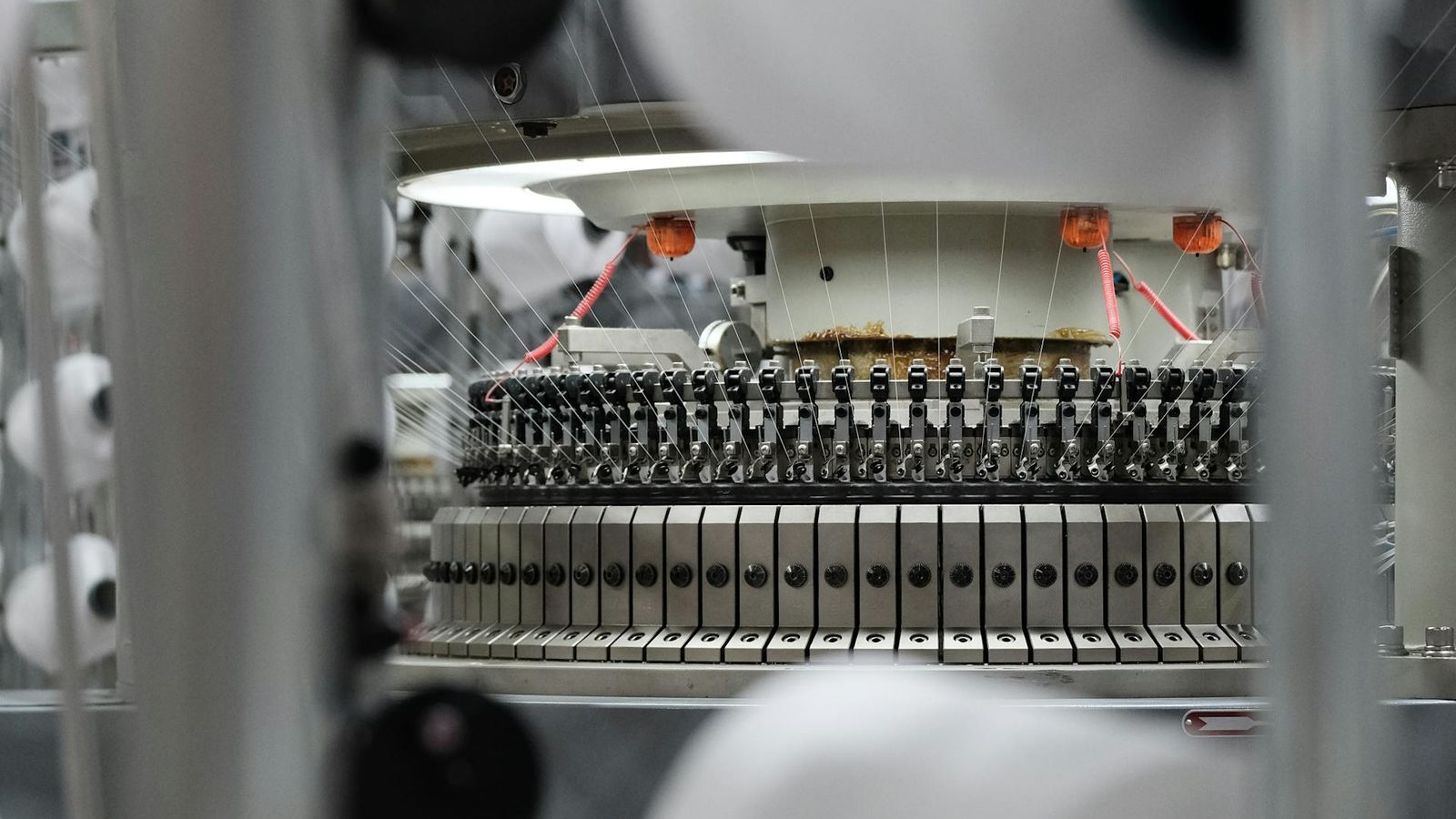
What is automated quality inspection for textiles?
AI defect detection for textiles uses a camera and an AI model to watch fabric as it leaves the loom, the knitting machine, or the finishing range, and to flag non-conforming metres before the roll reaches the warehouse. Instead of relying on an inspector at the four-point frame or on rigid rule-based machine vision, the model learns from images of conforming and non-conforming fabric on your line, and it adapts as your yarn, your beam, and your finish change.
The mill floor calls this in-line fabric inspection, AI-based defect detection, or AI vision for textiles. The technology family is the same: a fixed camera, a controlled lighting setup, an AI model trained on examples from your line, and a traceability record that every metre was inspected and either accepted, flagged with a defect class, or rejected against the four-point grade.
What it does not do: replace your loom mechanic, your finishing chemist, or your customer audit. What it does do: make sure the metres you ship match the metres that pass spec, every shift, on every article, with a record you can show the converter when a chargeback comes back.
Defects we catch on textile lines
Holes, broken ends, and missing yarns
A small puncture, a snapped warp end, or a stretch of fabric where one or more yarns are missing. Caused by a broken needle, a snagged warp end the loom did not stop on, or a yarn break the weaver did not catch. A camera with even backlighting picks up a single missing end the moment it appears, instead of waiting for the cut-and-sew line to find the hole on the spreader.
Slubs, knots, and yarn faults
Thick spots, knots, neps, and contamination spun into the yarn that show up as visible bumps in the weave or knit. Caused by spinning faults upstream, a poorly tied splice, or foreign fibre in the bale. A camera trained on your specific yarn count and lustre flags slubs above your tolerance and ignores the texture that belongs to the fabric, where a rule-based system would either over-flag or miss them.
Weft bars and barre lines
Horizontal bands across the fabric where weft tension, weft yarn count, or weft dye affinity drifted between picks. Caused by a beam change, a yarn package change, or a weft tension drift. A camera looking at the same article on every metre catches a faint barre under raking light before a human sees it under high-bay lighting, and warns the floor before the next beam doubles the run length.
Needle lines and drop stitches
Vertical lines on a knit fabric where one needle has been bent, missed a stitch, or dropped a loop. Caused by a worn needle, an oil-starved cylinder, or a yarn break the latch did not recover. A camera at the take-down on a circular knit catches the line within metres, instead of running it for hours and converting twenty kilograms of yarn into seconds.
Stains, oil spots, and contamination
Marks from machine oil, hand contact, or foreign material that did not wash out at finishing. Caused by a leaking bearing, a dirty guide, or a maintenance step that left residue on the path. A camera with the right colour calibration picks up a fine oil mark on a light fabric where a human eye would walk past it, and ties the metre to the roll for downstream sorting.
Dye unevenness and shade variation
Streaks, patches, or a slow shade drift along the length of a piece-dyed or jet-dyed roll. Tells you the bath chemistry has drifted, the temperature profile has changed, or a circulation jet is partially blocked. A camera at the exit of the finishing range catches shade drift the metre it starts, hours before the lab gets a representative cutting.
That is the starting list. During onboarding we calibrate which of these classes matter most on your specific line and tune the model accordingly.
How automated visual inspection runs on a textile line
A textile cell that runs visual inspection on Enao looks like the cell next door, with one extra component. A refurbished iPhone is mounted on a stand with a downward or angled view of the fabric as it leaves the loom take-up, the knitting take-down, or the finishing range, or sits over a dedicated inspection frame between the line and the warehouse. A simple LED bar gives the camera the same light at every metre.
When the fabric runs under the camera, the iPhone takes pictures at the line speed and the model classifies each frame as OK or as one of the seven defect families above, then writes the result to your roll record. If a section gives you twenty flagged metres in a row, the operator gets an alert; if a finishing range shows a slow shade drift across the day, the dashboard flags it before the lab does.
The model retrains overnight on the previous day's labels, so a yarn change, a beam change, or a finish change is absorbed in one shift instead of one quarter. New articles go through the same flow: the operator labels the first hundred metres, the model takes over from metre one hundred and one, and the textile engineer reviews the labels at the end of the shift.
AI vision vs manual checks on textile lines
Lines that move from manual four-point grading or rule-based machine vision to AI-led inspection see the same step changes regardless of fibre type or article construction.
-
Detection rate on subtle defects — Traditional machine vision (testextextile, brightpoint.ai, robrosystems, ai-innovate, Cognex, xis.ai) needs labelled image libraries before it ships, and a six-figure integration. Enao reaches 80% accuracy on day one with no labelled data, then climbs past 95% as your operators tag a few hundred examples on the iPhone.
-
Time to handle a new article or fabric — Manual: Inspector briefing, golden swatch, paper QC sheet. Two to four weeks until the floor reads the new article fluently. Enao: Hundred labelled metres and the model is running. Same shift, no paper sheet to update on every line.
-
Traceability when a customer comes back — Manual: Hand-written four-point sheet, partial coverage, missing shifts. Reconstruction takes a week. Enao: Every metre logged with image, classification, and confidence. Reconstruction takes ten minutes.
-
Cost to get running — Manual: Adds an inspector per shift per line, recurring monthly cost on top of training. Enao: Hardware under €1,000 per cell. The cost stays flat while the mill scales.
-
Behaviour when the beam or finish drifts — Manual: Gradual rejects climb until the customer flags it. Days of root-cause work to find the moment. Enao: Dashboard shows the barre or shade drift the metre it starts. Textile engineer has the time stamp and the image.