Food packaging
Catch seal defects, label misprints, fill-level errors, and contamination before packs leave the line.
Automated quality inspection for food packaging, running on a refurbished iPhone alongside the form-fill-seal line, the labeller, and the case packer.
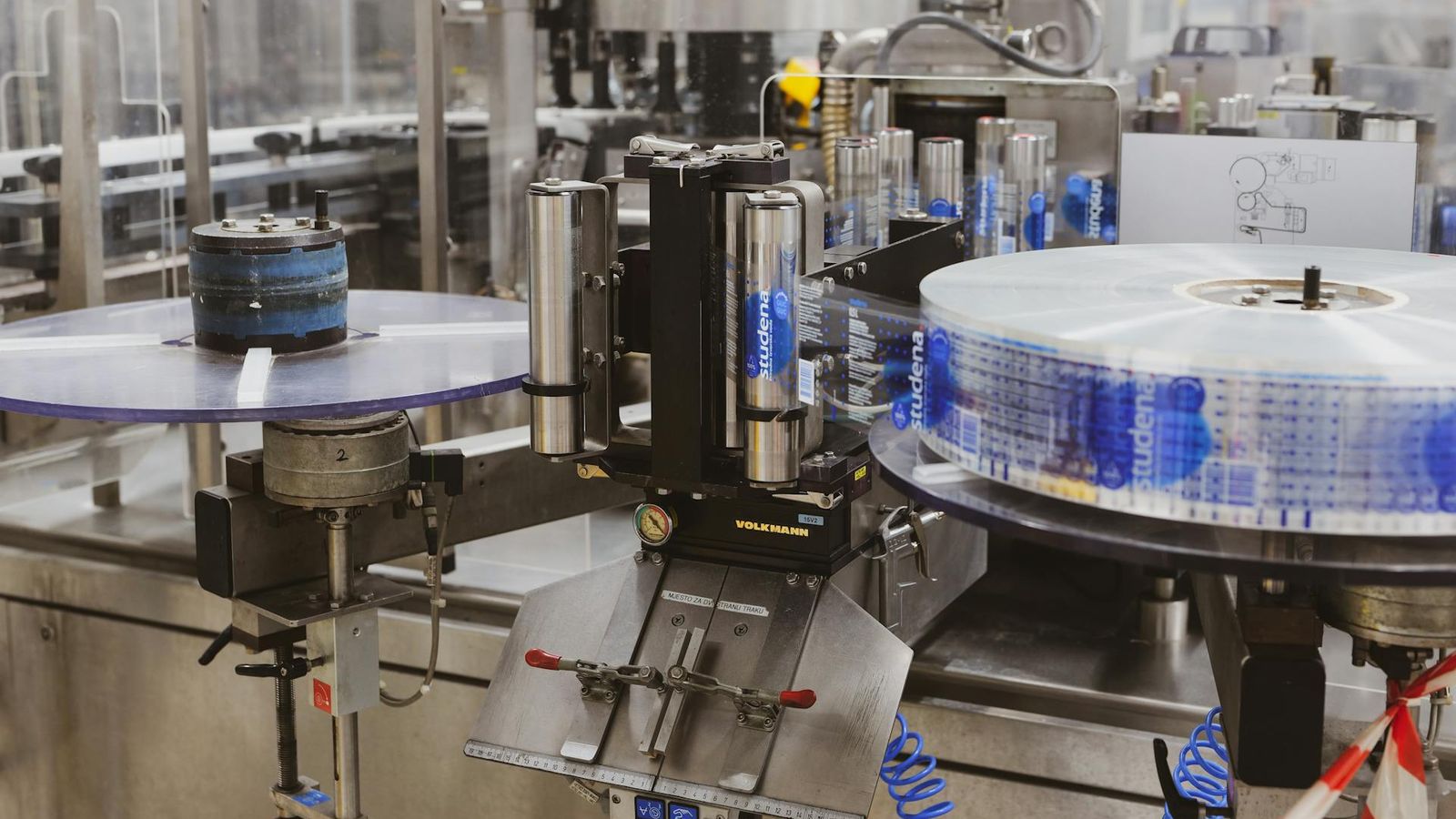
What is automated quality inspection for food packaging?
AI defect detection for food packaging uses a camera and an AI model to watch every pack as it leaves the filler, the sealer, the labeller, and the date-coder, and to flag non-conforming units before they reach the case-packer. Instead of relying on a line operator or on rigid rule-based vision, the AI learns the specific tray geometry, film artwork, label layout, and date-code format of your SKU portfolio, and applies a consistent visual checkpoint across shifts, speeds, and SKU changeovers.
Food packaging is particularly hard to inspect at line speed because the pack itself is variable by design: a chip bag flexes differently from a yoghurt cup, a clamshell tray sits at a different angle from a vacuum pack, and a printed laminate looks different against the conveyor belt than against the case-pack plastic. Rule-based vision built around a single SKU breaks the moment you swap to a different film, a different label, or a different format. AI-led inspection handles those variations because the model learns from real production frames rather than from a fixed threshold.
The result is an automated visual checkpoint that complements your end-of-line checkweigher and metal detector and gives you a pack-by-pack image record. When a retailer query comes back six weeks later, you can pull the frames from the exact production window and either confirm the defect or push back with evidence.
Defects we catch on food-packaging lines
Seal failures and creased seals
Seal failures are leaks or weak seals on form-fill-seal bags, vacuum packs, clamshells, or sealed trays, caused by jaw temperature drift, film tension issues, contamination on the seal area, or worn seal jaws. Creased seals are the leading cause: a fold or wrinkle in the seal area that lets air pass through, accelerating staling and shortening shelf life. Manual operators catch the obvious gaps but miss the borderline crease that survives leak testing on a sample. The AI model learns the in-spec seal signature for each pack format and flags creases, contamination patches, and jaw-temperature drift as soon as the local pattern deviates.
Label misprints and misalignment
Label defects include print smears, missing colours, off-centre placement, lifted edges, double labels, and missing labels altogether, caused by labeller misadjustment, label-stock variation, or applicator wear. Retail buyers reject pallets for off-centre logos. Manual operators catch the worst cases but miss the gradual placement drift that develops after a labeller head warms up. The AI model holds the in-spec label position and artwork for each SKU and flags misprints and misalignment as soon as the local pattern deviates.
Fill-level and underweight errors
Fill-level errors are visual deviations from the standard product height in transparent or window packs, often correlated with underweight or overfill, caused by feeder drift, augur wear, or upstream product variation. Checkweighers catch the gross deviations but miss the borderline cases that pass the weight check yet visibly disappoint the consumer. The AI model holds the in-spec fill profile for each SKU and flags low-fill packs at the inspection lane, so the operator can pull them before they reach the case packer.
Foreign-object contamination
Foreign-object contamination includes bits of plastic film, metal shavings, glove fragments, or upstream product debris that find their way into the pack at the form-fill-seal stage. Metal detectors and X-ray catch the dense contaminants but miss the plastic and rubber pieces that look like product under packaging-line lighting. The AI model learns the in-spec product appearance for each SKU and flags visual anomalies that warrant a hold-and-check decision.
Date-code legibility and accuracy
Date-code defects include faded prints from a worn inkjet head, mis-positioned codes that fall off the code area, illegible codes from substrate variations, and the wrong date entirely from an inkjet that drifted from the master schedule. Retail buyers reject pallets for illegible date codes, and consumers post photos when the code is missing. The AI model OCR-checks every code at the inspection lane and flags both legibility and content errors before the case packer.
Tray and pack damage
Pack damage includes punctured films, dented trays, crushed corners on stand-up pouches, and tear-strip damage on resealable packs, caused by upstream conveyor jams, mis-handling at the case packer, or shipper-roll wear. Manual operators catch the worst cases but miss the borderline damage that passes the line and fails at the customer's distribution centre. The AI model holds the in-spec pack profile for each SKU and flags damage as soon as the silhouette deviates from spec.
The lighting setup that makes this work on a food-packaging line is a diffuse overhead light over the form-fill-seal exit to read seals and labels, plus a low-angle ring light at the labeller to read print quality and a side-mount camera at the case-packer infeed for orientation and format. An iPhone Pro with macro and wide-angle lenses handles the seven defect families from a single inspection station per critical control point. We synchronise the rig with the conveyor encoder so that flagged packs drive a downstream divert decision before the case packer. We spec the optics with you during onboarding.
How Enao runs on a food-packaging line
The full hardware rig costs less than €1,000 and consists of a refurbished iPhone Pro, a diffuse overhead light with an optional low-angle ring light for seal and label inspection, a USB-C cable, and a mount that clamps over the bagger exit, the labeller outfeed, or the case-packer infeed. PLC integration is not required for the first deployment, the rig fits in a flight case, and the line keeps running while you set it up.
Onboarding is self-serve. Your line team mounts the rig, opens the Enao app, and starts collecting reference frames at the next changeover. Day one returns 80% accuracy without any prior labelling, and by day fourteen the model is operating above the manual inspector on the defect families it has seen, improving with every flagged pack that the line confirms or rejects.
Each line teaches its own model what its film, label artwork, and pack format look like. When you swap to a new SKU on the same line, the model adapts in a single shift. When you bring a sister line online with a similar product family, the second model starts from the first model's experience and the marginal effort drops sharply.
Out-of-spec packs stop reaching the case packer, scrap is logged at the inspection point rather than at the QC office, and your operators get back the hours of attention they need for the parts of the job that still need a human, including line setup, allergen-changeover validation, and customer complaints.
How Enao compares to manual inspection and traditional machine vision
For food-packaging operations the comparison sharpens around five dimensions.
-
Setup time on a food-packaging line. — Manual end-of-line checks miss intermittent seal and code defects. Traditional machine vision (foodready, oalgroup, toptier, flovision, xis.ai) requires three to nine months of integration and a six-figure budget. Enao is deployed in a week by your own team on a refurbished iPhone, day one at 80% accuracy.
-
Hardware cost per line. — Manual visual inspection: none upfront, ongoing labour cost. Traditional packaging vision: €50,000 to €250,000 per line for industrial cameras, multiple inspection heads, and integration. Enao: under €1,000 per line with a refurbished iPhone Pro, lamp, and mount.
-
Handling new SKUs, films, and labels. — Manual visual inspection: re-train operators for every new SKU. Traditional packaging vision: rewrite the recipe per SKU, often outsourced to the integrator. Enao: re-teach the model on new SKUs in a single shift, no code to touch.
-
Detection accuracy on subtle seal and fill drift. — Manual visual inspection: high at shift start, drops measurably after three hours. Traditional packaging vision: strong on label position checks, weak on subtle seal-temperature drift and fill-level progression. Enao: learns seal and fill signatures from reference frames and holds accuracy across shifts and runs.
-
Who runs it. — Manual visual inspection: trained line operator. Traditional packaging vision: system integrator or a specialised vision engineer. Enao: your line team, no external specialist required.
Retail buyers change vendors over the cost of a chargeback, and the cost of a recall sits well above the cost of an iPhone-based inspection rig. Enao is built for that gap.
Food-packaging inspection FAQ
Related industries
Plastic Extrusion
Catch die lines, plate-out, sink marks, and dimensional drift before pipes, profiles, sheet, and cable leave the calibrator.
Cookies and Biscuits
Catch under-baked centres, broken pieces, decoration defects and bake-colour drift before trays leave the cooling tunnel.
Pharmaceutical packaging
Catch missing tablets, blister-foil defects, label errors, and serialisation faults before packs leave the line.