Preparing your shopfloor staff for Industry 4.0

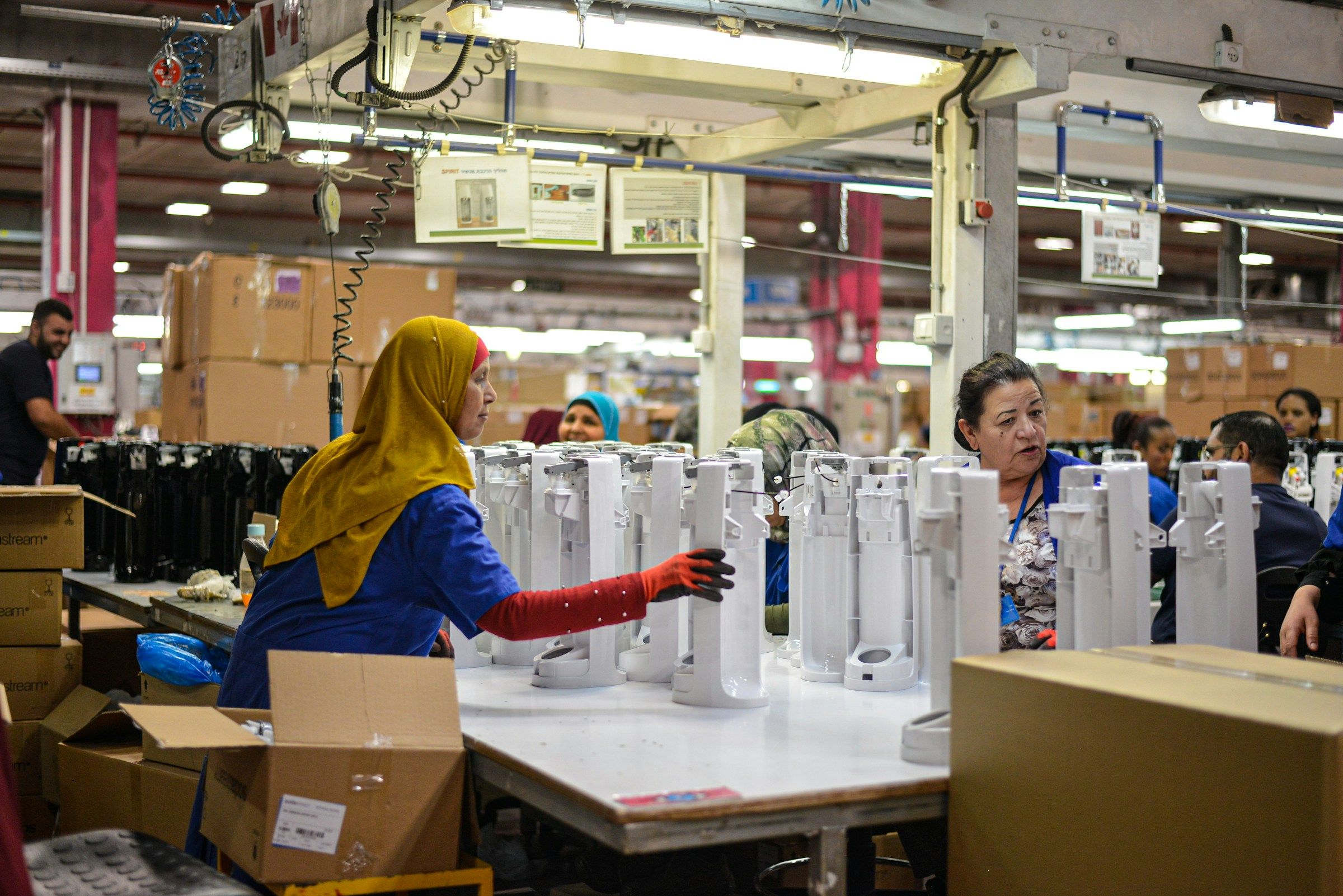
The World Economic Forum’s Centre for Advanced Manufacturing and Supply Chains found that 74% of companies surveyed reported an acute shortage of skilled workers, and 94% expect to hire or repurpose workers through increased adoption of smart manufacturing technology. Hiring and training new staff is not only time consuming, it is one of the big challenges for companies following lean production principles.
Knowing how to keep staff, as well as retain and transfer expertise is key for shopfloor managers to lead successful teams and deliver value for the company. The main question for shopfloor managers is how to manage changes to their teams due to growing climate risks, automation, retirement of staff, and other considerations. This post will outline ways production managers in global companies as well as SMEs can maintain efficient teams that continue to deliver excellence.
Building pride through lean production principles
Talented people will stay where they feel they are valued, learning, and contributing to excellence. Following lean production approaches for your operations not only ensures product quality, but reduces worker frustration at inefficiencies. In particular, the Single-Minute Exchange of Die (SMED) technique is a good benchmark to aim for if you have not done so already.
The SMED refers to reducing setup (changeover) time to less than 10 minutes. This general standard aims to reduced wasted time, while remaining reasonable for staff. SMED techniques include:
- Externalising setup steps (set up that can be performed while the process is running)
- Simplify internal setup (for example, knobs and levers with locks are faster to switch than bolts to unscrew)
- Eliminate non-essential operations
- Create Standardized Work instructions
Creating a shopfloor culture of knowledge sharing and improvement
Technologies like AI, collaborative robots (cobots), and smart systems are rapidly changing manufacturing, even as new environmental and geopolitical situations are affecting supply chains. As a shopfloor or production manager, you need to ensure that your staff are upskilling to manage new scenarios and tasks.
If you have the budget, invest in employee training for machinery, new technologies like AI-assisted software. Also foster a culture of improvement, known as kaizen in lean production. Ensure that there are ways that employees have agency to make improvements to processes, whether in weekly standups or feedback systems.
Investing in upskilling and knowledge retention with 0 budget
Advocating for budget to train staff can be quite a bit of work and difficult to justify to senior management. Instead of waiting, you can set up routines that can facilitate knowledge sharing within and outside your team. Below are quick processes changes you can make:
Conduct a skills audit
Assess your team's available skills and existing needs to improve operational efficiency. For example, if there is only one operator for a specific machine, invest in training others to reduce downtime if they are unavailable. Also pay attention to skills that may not be immediately obvious for the shopfloor, but can have an impact on production efficiency and quality. For example, if there are colleagues who are particularly good at setting SMART goals or or proactively implement PDCA (Plan, Do, Check, Act) for improvements, they can pass these lean production skills to others.
Leverage internal expertise
While lean production methodology aims to leverage worker expertise through continuously identifying areas of improvement (kaizen), some may be more proactive than others. Identify and nurture "skills champions" for each shift and team, individuals who can mentor others and share knowledge. Also set aside time for them to be able to teach. Set up sharing sessions at regular intervals: monthly learning lunches, weekly reflections, 30-minute coffee sharing sessions, or anything else that works for your team. Some teams also record how-to sessions on video for easier distribution and access.
Use free and low-cost online training resources
Instead of paying thousands for a workshop, you can find training videos on YouTube, LinkedIn learning, and Coursera. Vendors also typically provide free training for their equipment. Offer your staff an hour a week, or a day per quarter for their own professional development, with a requirement that they share a summary with the team upon completion. This incentivises your staff to continue learning and helps your team collectively learn about best practices for manufacturing, but also new technologies for Industry 4.0.
Implement bite-sized learning
Incorporate short, focused learning sessions into daily routines to minimize disruption and enhance retention. This can be built into your weekly or daily standups or as a regular agenda item in meetings. Rotating the presenter or facilitator can also spread the effort in the team.
Lack of investment in upskilling will also cost you
A lot of focus has recently been on Industry 4.0 solutions, AI, cobots, and direct-to-consumer (D2C) ecommerce, to name a few. However, ensuring that your workers also see that new technologies can also help their work is key. Whether it is a cobot that can support warehouse packing, an iPhone-based vision sensor that automates quality inspection like Enao Vision, or AI-systems to support worker safety, having staff who will adopt these solutions is key. For every $2 spent on tech innovation, companies still need to invest up to $5 on training employees to adopt the technologies and scaling them. This means that not investing in a culture of innovation and learning in your team early on will lead to costly (re)training to have staff successfully use new technologies.
Shopfloor managers need to also advocate to leadership that it’s not a question of whether they can afford to train staff, but how long they can afford not to and suffer the accumulating skills gap and productivity loss.
Disruptive technologies to complex manufacturing processes are forcing production lines to adapt, but the cultural change is not insurmountable. By taking proactive steps to support your team to upskill and keep a learning culture, you can navigate the challenges ahead and position your shopfloor for success. Start small, build momentum, and invest in your most valuable asset, your people.
Get started
Want to see how Enao Vision works on your line? You can get started for free using an iPhone you already have, or try the demo to compare notes with other quality and operations teams putting AI on the shopfloor.
Explore with AI
Discuss this article with your favorite AI assistant
