Collaborative robots (cobots): SME production line guide 2026

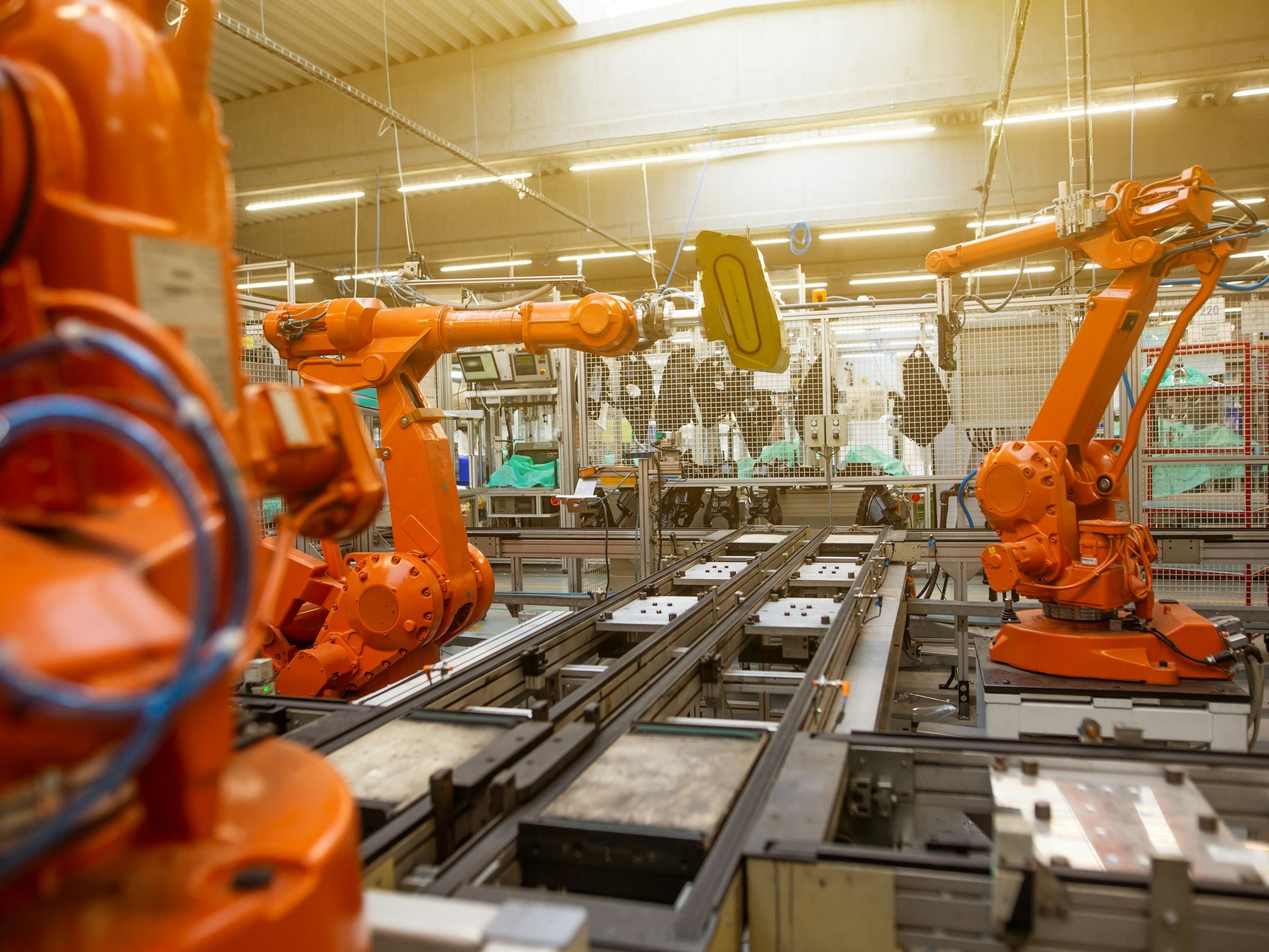
Automation isn't just for big factories anymore. Collaborative robots (cobots) that work alongside teams are making automation accessible to small and medium-sized enterprises (SMEs). These collaborative robots enhance your workforce's capabilities by handling repetitive, physically demanding, or precision-critical tasks while freeing up staff to focus on tasks that require experience and expertise. For instance, a plastic injection moulding company, AIM Processing, reported a ~400% increase in productivity after integrating cobots for tasks like machine tending and quality inspection, according to Konica Minolta Smart Factory Robotics. Factories that have made successful integrations typically start small, choosing one high-value, repetitive task, purchasing a single cobot, and closely monitoring its performance before scaling further. This focused approach allows teams to gather measurable results and refine their setup before committing to larger investments. In this post, we will cover four steps you can take to get the most value for your initial cobot investment.
Leveraging affordable and flexible automation
Cobot prices in 2025 range from 25,000 to 60,000 EUR from companies like Standard Bots, Universal Robots, ABB, Omron, and FANUC, with premium models at higher price points. A complete cobot solution that includes installation and training is estimated at between 40,000 and 150,000 EUR. Unlike full manufacturing setups, many cobots are plug-and-play for common uses such as welding, machine tending, spray painting or packaging and can be reprogrammed in hours, not weeks. That ease of use is the single biggest reason cobots have moved from niche pilot projects into everyday industrial automation across SMEs.
Cobots aren't the future, they're the present. They support key operations for small workshops and high-volume manufacturing. Whether it's palletizing operations or pick-and-place automation, these collaborative robots can increase productivity, repeatability and consistency with repetitive and precision-driven tasks. They are particularly valuable on high-mix, low-volume production lines where frequent changeovers would make a traditional industrial robot uneconomical.
How do cobots compare to traditional industrial robots?
Cobots and traditional industrial robots solve different problems. Traditional industrial robots are built for speed and heavy payload duty inside fenced cells: think automotive welding lines or palletizing pallets at high-speed throughput. They deliver hard repeatability and low cycle time, but they also require dedicated floor space, isolated workspace zones, and a skilled system integrator to commission. Floor space and integration time make them a poor fit for SMEs running fewer than a few thousand parts per shift.
Cobots are designed for human-robot collaboration. They share a workspace with human workers, slow down or stop when they detect contact, and ship with built-in safety features that reduce the need for cages. That changes the economics of automation: a cobot can be unbolted from one assembly line on Friday and deployed to a different cell on Monday, which is what makes them ideal for high-mix production where changeovers happen weekly.
Modern collaborative robots from Universal Robots, FANUC, Omron and ABB now deliver payloads of up to 30 kilograms and reach radii over 1.7 metres, so the gap to traditional industrial robotics has narrowed for many tasks. The trade-off is still real though. If you need maximum throughput on a single repetitive task, an industrial robot wins. If you need flexibility, fast deployment and a robotic system that operators can re-teach without a system integrator, a cobot wins.
Choosing where your first cobot can have high impact
Starting with focus is key to success. Aim for one area where you can make the initial investment in a cobot. This lowers the initial investment and gives you time to learn the finer details of how integration into your shopfloor teams can work. Start by automating tasks that are:
- Repetitive: Assembly, screwing, or part placement
- Physically demanding: Lifting heavy parts or material handling
- Precision critical: Welding, dispensing, or inspection
Cobots add the most value when machine precision can directly contribute to improved quality, speed and strength can improve cycle time, and robustness can reduce human injuries. Every shopfloor will immediately have multiple areas where immediate improvements can be made, so calculating ROI in the next step will be key for prioritization.
What jobs do cobots typically do well?
Across our customer base and the wider industry, the same six task types come up again and again:
- Machine tending: loading and unloading CNC machines, presses, and injection moulding cells. Cobots with grippers sized for the part handle changeovers between part numbers in minutes.
- Pick-and-place: moving components between conveyors, trays, or assembly lines. A vision system mounted on the robot arm helps with variable part positions.
- Palletizing: stacking finished cases onto pallets at the end of a packaging line. Even a 10 kg cobot covers most consumer-goods cases; heavy payload cobots up to 30 kg handle automotive parts and beverage cases.
- Quality inspection: presenting parts to a fixed camera, or carrying a smartphone-based inspection system across a finished assembly. This is where Enao Vision plugs in and turns an iPhone into a vision system on the cobot's wrist.
- Assembly: screwdriving, glue dispensing, and small-part insertion on assembly lines that mix several variants.
- Material handling: moving parts, bins, or fixtures between stations to free human workers from repetitive carrying.
The best first use case is the one that already costs you the most in overtime, scrap, or quality issues. Pick that, then size the cobot's payload and reach to fit.
Calculating ROI
The next step is to assess the impact on your operations and team, return on investment (ROI). Keep in mind that ROI is not just the budget spent on the machine or service, but also staff hours in training, buffer for learning and fine tuning processes, as well as ongoing maintenance.
You can think of them in the following buckets:
- Current costs: Have a robust baseline cost to know what your gains are. Include direct labor, overtime, injury-related costs, quality issues, and training. Also include the ongoing costs of any machinery in this current setup to compare to the cobot implementation. Based on these factors, you can also use an overview metric, such as cost per item produced or delivered.
- Implementation costs: This is the initial investment for your process innovation. Include the cobot purchase, installation, training, and any necessary tooling. Also factor in the cost of staff time spent: human hours for initial discussions with the provider, internal meeting costs, and also planning costs. Even if you are using an estimate, multiply the per-hour cost of meetings by the number of people attending, so that the true cost is understood and factored into your calculation for payback.
- Ongoing costs: This is the cost of maintenance and parts, electricity or energy consumption, software licensing and updates, and operator time for reprogramming. After the payback of the initial investment, this new ongoing cost will show the accumulated gains compared to the costs of maintaining machinery or tools from the previous process.
Estimates claim that cobot deployments achieve payback as early as 12 months, but you can already begin to set milestones every quarter, such as increased output, reduced defects, fewer hours of unplanned downtime, or lower energy consumption. Suppliers may give an estimate for a cobot's life span (for example, 30,000 hours), so begin tracking the actual life cycle for your operations from your first cobot purchase to make future investment forecasts more accurate.
Implement and invest in phases
Lowering the cost and impact of a new process automatically reduces the risk. You do not need to plan all your whole implementation phases in one go before starting. Instead, you can probably use your learnings from the earlier steps of choosing where the impact can be and calculating the ROI. Rank the areas of impact as a general roadmap for how to proceed, while giving yourself the flexibility to adapt from learnings after your first phase.
Phase 1: Automate a single task on one shift
Start small, for example, introduce a cobot to handle repetitive machine tending during the day shift. This helps teams build confidence and measure real productivity gains without major disruption.
Phase 2: Invest in a cobot for a second shift or roll out to the whole team
Once the first setup proves successful, replicate it across shifts or use the same cobot for similar tasks, such as loading and unloading parts on adjacent machines.
Phase 3: Add a complementary automation to the existing task
You can add sensors or additional cobots for later-stage tasks. A more cost-effective additional investment is a vision sensor like the iPhone-based system Enao Vision offers, for automatic quality checks. If you have the budget, you can introduce a second cobot to handle packaging or palletizing downstream.
Phase 4: Integrate systems for full automation
At this stage, link all automated stations into a connected workflow, for example, integrating cobots with ERP or MES systems so production data flows automatically and adjustments can be made in real-time.
This gradual approach minimizes risk, allows time for knowledge transfer between staff and teams, and spreads costs over time. Each phase should also include a review of the cobot's performance metrics, throughput, cycle time, and uptime, so you can optimize the deployment before moving to the next investment.
How do safety standards and ISO compliance work for cobots?
Cobots are designed for human-robot collaboration, so they ship with safety features that traditional industrial robots usually need extra hardware to provide. The relevant standards are ISO 10218 (industrial robot safety) and the technical specification ISO/TS 15066, which sets force and pressure limits for collaborative operation. Reputable cobot suppliers ship with documentation that maps their safety features onto these ISO standards, which simplifies the risk assessment your safety officer needs to sign off.
In practice, this means power-and-force-limited joints that stop on contact, safety-rated speed monitoring, and configurable workspace zones around human workers. You still need a risk assessment for each cobot integration, the standards do not exempt you from that, but the assessment is shorter and the workspace can usually stay open instead of caged.
Choosing the right cobot to start
Although cobots are more affordable than industrial production lines, choosing a cost-effective one that your staff can also use quickly is key. The best way to compare solutions is to talk to the providers. Make sure you have done your homework by visiting their websites, getting a comparison overview, and (most importantly) being clear on exactly what your needs are. After you have seen the product demos and received quotes, below are factors you can assess future suppliers by:
- Ease of integration: How compatible is it with your existing systems and existing production lines?
- User-friendliness: Models with intuitive interfaces may be more costly initially, but can pay off if they are quick to learn and easy for staff to program for different use cases.
- Flexibility and versatility: Opt for cobots that can adapt to different tasks across high-mix and low-volume runs.
- Vendor support: Select suppliers that can accommodate smaller orders, have lower-commitment pricing structures, and experience serving SMEs instead of ones that just have multinational brand clients.
- Pricing structure: Make sure you have quotes for the machinery, training, commonly replaced parts, warranties, and other types of support. Companies now have varying fee structures and some even offer robots-as-a-service (RaaS). You may use a different provider depending on whether you want a one-off solution or a long-term investment for your production line.
- Bottom-line fit: When it comes down to a final decision, let your non-negotiable for quality decide. It could be precision, payload, repeatability, or CNC system integration requirements, for example.
Frequently asked questions about cobots for production lines
How much does a cobot cost in 2025?
A bare cobot with a small payload (5 to 10 kg) starts around 25,000 EUR. A heavy payload model with a longer reach runs 50,000 to 60,000 EUR. Once you add grippers, end-of-arm tooling, training, and a system integrator if you need one, a fully deployed cobot solution lands between 40,000 and 150,000 EUR. Robots-as-a-service plans from some vendors spread the upfront cost into a monthly fee.
How long does cobot integration take?
For a simple machine tending or pick-and-place application, an internal team can have a cobot productive in two to four weeks. More complex cases, multi-cobot work cells, vision-system integration, or tight tolerances, push that to two or three months. The fastest path is picking one well-defined repetitive task first and treating later phases as separate projects.
Are cobots safe to work alongside human workers?
Yes, when the integration is sized correctly. Cobots are built for human-robot collaboration: power-and-force-limited joints, contact-sensing skins, and ISO 10218 / ISO/TS 15066 compliance let them share a workspace with human workers without cages. You still run a risk assessment per deployment, but the workspace stays open and operators can hand parts to the robot without stopping the line.
When should I choose a cobot instead of a traditional industrial robot?
Pick a cobot when you have high-mix production, frequent changeovers, fewer than a few thousand parts per shift, or when operators need to share a workspace with the robotic system. Pick a traditional industrial robot when you need maximum throughput on a single repetitive task at high speed, or when payloads exceed 30 kg consistently. Many SMEs end up running both side by side.
Key takeaways
- Cobots make automation accessible to SMEs because they cost 25,000 to 60,000 EUR for the bare arm, share a workspace with human workers, and need no fenced cell.
- The best first use case is one repetitive task on one shift, typically machine tending, pick-and-place, palletizing, quality inspection, or material handling.
- Build your ROI model on three buckets (current, implementation, ongoing) and track downtime, throughput, and cycle time from day one to validate the investment.
- ISO 10218 and ISO/TS 15066 give cobots a clear safety framework, so most deployments can stay open-workspace if the risk assessment is done correctly.
- Add complementary automation in phases, a vision system on the cobot's wrist, then a second cobot, then ERP/MES integration, instead of trying to optimize the entire production line in one project.
Where Enao Vision fits
Many of the highest-ROI cobot deployments end up bolting a vision sensor onto the robot arm for quality inspection. Enao Vision turns an iPhone into that vision system: hardware under 1,000 EUR, no industrial camera, and a software workflow that an operator can re-teach in minutes. If you are scoping a cobot project and want quality inspection in the same phase, an iPhone-based vision system is the cheapest way to add it without slowing the cobot integration timeline.
Get started
Want to see how Enao Vision works on your line? You can get started for free using an iPhone you already have, or try the demo to compare notes with other quality and operations teams putting AI on the shopfloor.
Explore with AI
Discuss this article with your favorite AI assistant
